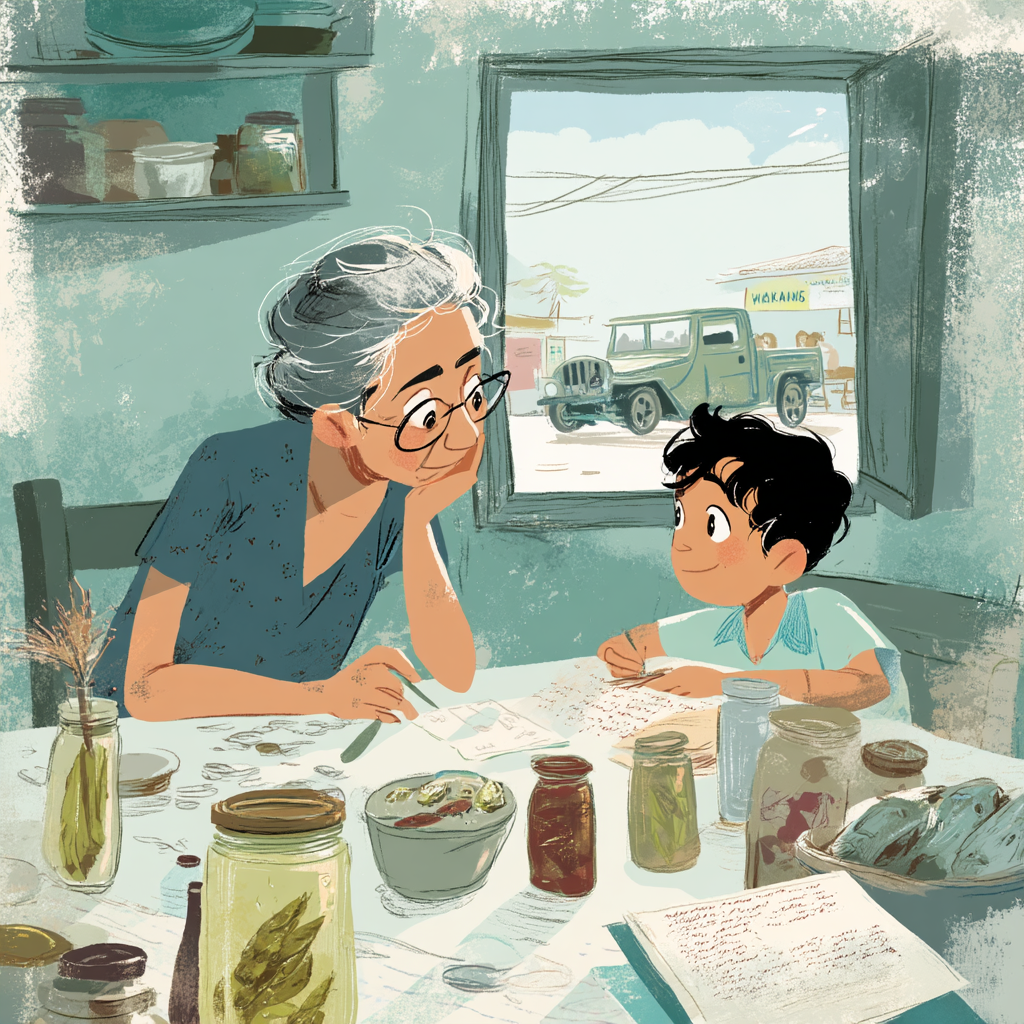
What comes back first is sound, not taste. A spoon scraping slow circles on glass while my Filipino grandmother bends over her atchara jar. The kitchen never quite bright, the window still fogged from the dishes she washed the night before. She hooks a few strips of green papaya with her fingers, squints at them, then nudges them against my mouth.
We needed a chair just to see the lid. It was older than I was, she said, carried through floods and brownouts, through three house moves. Each time the waterline crept up the walls, the refrigerator floated a little, and yet the jar survived. Inside lived not only pickled papaya, carrot, and siling pula, but her sense of order about food, thrift, and respect.
My Filipino grandmother measured nothing. She tilted the bottle of cane vinegar until the sound pleased her. She pinched salt with three fingers, slid it down the side of the jar, then tasted again. If the sour bit the tongue too hard, she added sugar; if it felt sleepy, she cut more ginger. The recipe had no written form. The only record sat in the repetition of mornings like this, with a child watching.
For many families in the Philippines, the first cookbook lives in a person. A lola with a chipped enamel pot and an instinct for the moment the kanin near the bottom starts to toast. A widowed aunt who rolls lumpia on paydays, counting each cigar on a floral plate before frying. A neighbor who stews kare kare in peanut butter from a plastic tub, stretching oxtail and banana blossom so every bowl on the table receives something soft to chew.
When people speak of “heirloom recipes,” the mind often travels to handwritten cards and printed compilations. In many Filipino homes, the heirloom rests instead in the body of a Filipino grandmother, in joints rising before sunrise, in hands no longer reading fine print yet still sure of the moment oil turns ready. Instruction settles in gesture and rhythm rather than in tablespoons.
In my own family, my lola’s jars held more than food. Pickled green mango waited to cut through pritong isda. Dark soy sauce with labuyo stood ready for sudden guests. A jar of pork fat scraped from pans waited for the next morning’s sinangag. She rotated them like a small library. Each jar carried a story of scarcity or bounty, of a relative arriving unannounced, of a Christmas when the budget shrank and the menu leaned on whatever the pantry already promised.
Through these jars, the Filipino grandmother teaches an ethic of eating. Nothing leaves the table without a plan. Fish heads become sinigang. Chicken bones flavor lugaw for a feverish grandchild. Leftover adobo transforms into siopao filling. “Walang sayang,” no waste. The phrase lives not in theory but in glass, cooled, sealed, and pulled back out in lean months when onions rise in price and meat turns into a Sunday luxury.
She guards not only ingredients but pace. In a time of deliveries and instant mixes, her kitchen insists on slow attention. Ginger must bloom in oil until the smell wakes the stomach. Coconut milk must simmer until it thickens and drags along the spoon. Rice must sit with the fire off while steam finishes the work of cooking. A Filipino grandmother often looks stern while she enforces these timings, yet beneath the strict eye sits worry and care from war, evacuation, or childhood hunger.
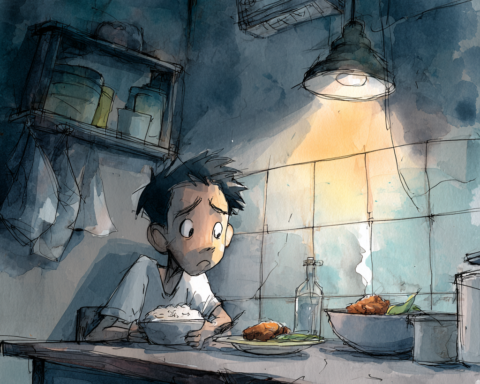
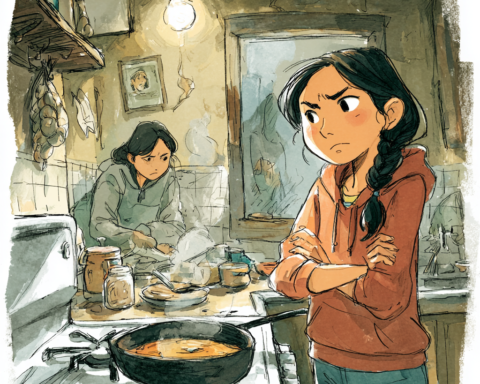
Watch how children move around her. The apo who sneaks a fried eggplant slice receives a light tap on the wrist, nothing dramatic, followed by a hidden extra portion on the plate. The teenager who complains about repeating ulam receives a story of rice lines, ration cards, Spam from relief boxes. In these small lectures, the heirloom jar expands beyond food. It becomes archive for a moral world in which each grain has value and each shared dish ties the eater to others who endured harder days.
Migration shifts the contents of these jars yet keeps their purpose. In a flat in Melbourne, the vinegar smells sharper, bought in bulk from a hypermarket, yet hands still search for green fruit to pickle. In a rented room in Hong Kong, shrimp paste travels in double layers of plastic, opened only on rest days. In Sydney or California, a Filipino grandmother watches grandchildren choose nuggets over tinola, yet she continues to stash bones for stock, herbs for tea, rice for lugaw when homesickness tightens throats.
Sometimes the archive weakens. A lola passes away before anyone writes her measurements. The family remembers the taste but not the sequence. Relatives argue over sugar, brown or white, over banana blossom, boiled first or salted. Memorial services fill with stories of her table, while the large glass jar she once guarded stands empty in a corner, waiting for another pair of hands brave enough to begin again.
Younger generations respond in uneven ways. Some record videos, aiming the phone over the pot while a Filipino grandmother laughs at the attention. Some open restaurants with “heritage” on the menu, plating humble dishes for customers who pay more for one serving of laing than grandparents once spent on a full market trip. Others step away, preferring food without memory, without lectures, without the weight of expectation.
Yet the jar remains a quiet invitation. To rinse and reuse. To observe the way salt draws water from sliced vegetables. To taste often, accept adjustment, forgive imperfection. Lessons stored there touch more than seasoning. They ask eaters to remember where food comes from, whose back carried a sack of rice, whose overtime paid for the gas, whose worry kept the pantry full.
When I lift the lid on our own family jar, the brine rushes up with its chorus of garlic and pepper. The papaya has softened over years of refilling, a little more translucent, a little less crisp. I think of my Filipino grandmother’s hands, their small scars from knives and hot oil, the way she pressed my fingers around a spoon and guided the first careful stir. Her body carried the archive of our household, yet the jar taught another lesson: memory needs tending, topping up, and sharing, or it clouds and disappears at the back of the shelf.