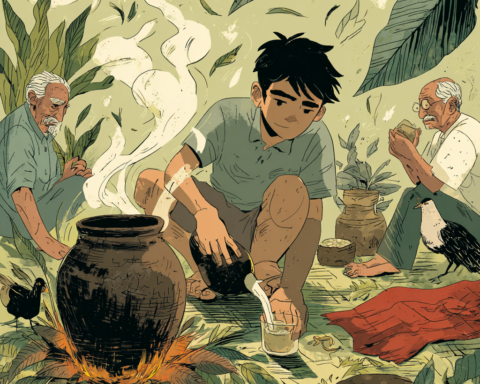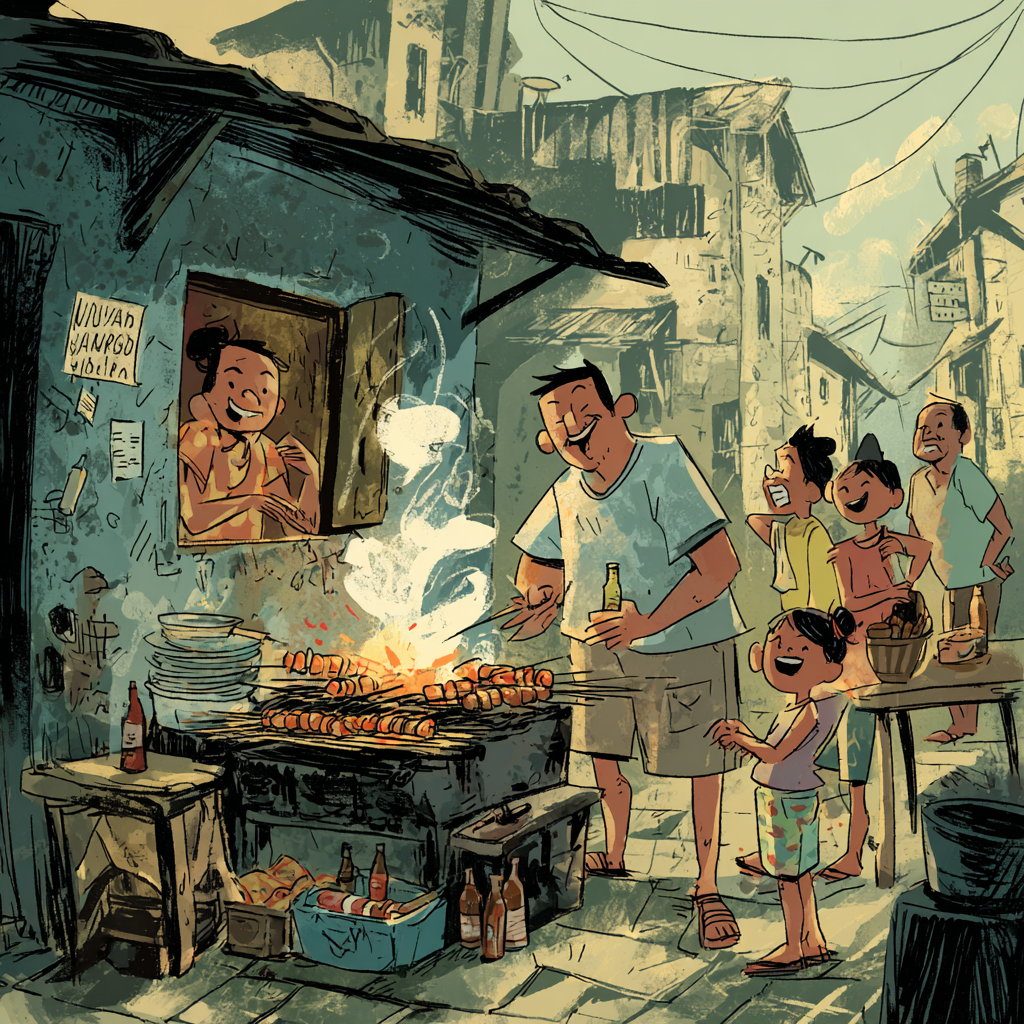
Smoke rises first, before voices. It clings to hair, roughens the throat, settles on shirts you still smell in the jeep home. Beside a sidewalk grill, a tito in shorts and tsinelas holds the tongs like a microphone. Pork fat drips, fire flares, someone jokes about pulutan and tagay. In many Filipino cooking traditions this becomes the picture of a man who “cooks”.
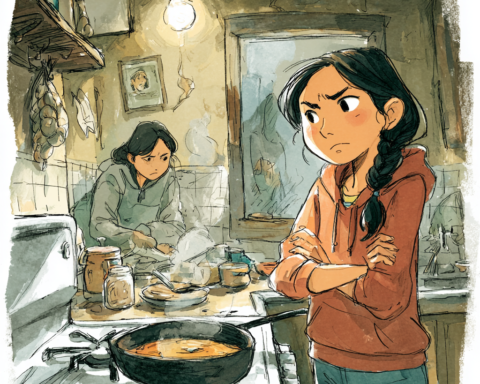
Inside the house, another fire waits, part of the same Filipino cooking traditions. A gas flame under a pot of sinigang, rice on the second burner, oil spitting in a kawali. An aunt, a mother, a lola moves between sink and stove, washing dishes, stirring whatever sits on the fire that day. No one calls friends to watch her lift a ladle. No one records a video when she pulls rice from the pot. Still, years later, many children remember this taste first.
Once you look for it, a pattern starts to show. Men step toward the grill when cooking moves into public space thick with smoke and loud talk. Women hold the work of lutong bahay, the daily feeding of bodies. Filipino cooking traditions place men beside open fire during birthdays, inuman, barangay gatherings. The same habits leave women in cramped kitchens on school nights and regular days when nobody lifts a phone for photos.
The grill often sits out front or along the street where neighbors pass, where guests praise the meat, where smoke announces plenty to anyone within smell. A man who tends the ihawan looks busy and important, face lit by orange coals. He stands on a small stage with props, tongs and marinade and a brush. Timing feels risky. Fire moves in ways people pretend to control.
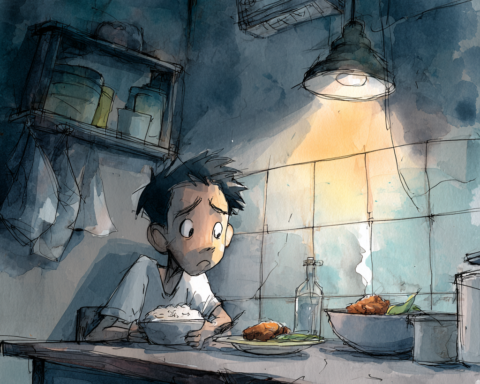
The stove is another story. In many houses the stove ends up in the back, near damp clothes and a low row of shoes. Work here runs long and quiet. Soaking munggo, washing rice, picking malunggay, slicing onions fine. No hero shot beside a pot of boiling tinola. Children grow used to the sight and stop seeing how much effort moves through those small actions. In many homes this work falls to women by default.
Fiestas and special days show the script in brighter colors. Think of the lechon table in a barrio feast, handled by men with knives and heavy cleavers, chopping in front of guests. Look at ihaw-ihaw stands near the plaza at night, where a kuya flips skewers in quick rhythm. Beside him his girlfriend or sister often collects payment, portions rice, wipes plates. The ruler of the flame stands clear. The one who keeps everything moving stays half hidden behind steam.
Language pulls in the same direction. People speak of lutong bahay with tenderness, as if taste carries the house itself. Carinderias paint the phrase on plywood signs to promise comfort, pointing to food cooked by women from early morning into noon. On the other side you hear ihaw-ihaw, a phrase that smells of smoke and payday, linked to male barkada, beer, and basketball talk. Both sit inside Filipino cooking traditions, yet only one often receives a masculine face.
Danger and dirt also play a part. Street fire looks risky, so it suits men inside the usual script of courage. Grease on the stove, blackened pot bottoms, onion smell in hair belong to the slow work handed to women. Men tell stories about smoke in their eyes while they guarded inihaw liempo. Few talk about long evenings spent cleaning kawali and refilling the water drum. The first scene sounds like a story to share. The second sounds like work no one names.
Kitchens shift over time. Migrant fathers learn whole menus while working abroad, then come home proud of their adobo or kaldereta. Young men in condos invite friends for grilled chicken on electric plates and post their efforts online. Some sons grow up frying their own eggs, minding their own rice. Lines blur in these spaces, yet the old picture of the ihaw man and the lutong bahay woman rests in many provinces and suburbs, steady inside these Filipino cooking traditions.
Memory helps keep the script alive. Think of the first time you tried to claim the grill. A teenage hand reaches for the tongs, eager to turn pork or fish. A male cousin laughs, “Ako na, pang lalaki yan.” An uncle says, “Sunog yan pag ikaw.” The lesson arrives through teasing. The grill belongs to them. A girl often gets nudged back to the sink to wash plates or set the table. A boy sometimes slips away from both jobs, free to eat and play while elders work both fires.
A Sunday in a park tells the story again. The family rents a hut. Men stack charcoal, argue about who knows real ihaw, wave off help. At the table the women unpack food. Plastic tubs of meat they seasoned last night, a bowl of onions, tomatoes in old ice cream containers, rice in a sack tied with string. After lunch the same hands scrape plates and fit what is left into reused tubs, already thinking about how those pieces of grilled pork will turn into paksiw for Monday. The grill serves that day. The stove carries the week.
Filipino cooking traditions did not appear from nowhere. They grew from years of colonial households where male power sat in public life while women held families together indoors. They grew from wage patterns where men bring cash and women stretch each peso into food. Fire shows these histories in small, steady ways. When men stand outside by the ihawan and enjoy praise while women stay inside with the gas flame, the old story simply continues.
Change inside Filipino cooking traditions rarely arrives through one grand move. Sometimes a tito who guards the grill also scrubs the greasy trays afterward. In another house a barkada agrees anyone who eats stays to wash up after ihaw-ihaw. A father stands at the stove with his kids and shows them how to see when rice is done, how broth shifts after a bit of salt.
The blue flame under the pot is enough.
She digs two fingers into the salt jar and throws a rough pinch into the broth. The spoon circles once through the pot. Her hand ends up on the faded dish towel by the stove.
Outside, whoever stayed with the grill hits the coals twice with a stick and then walks away.