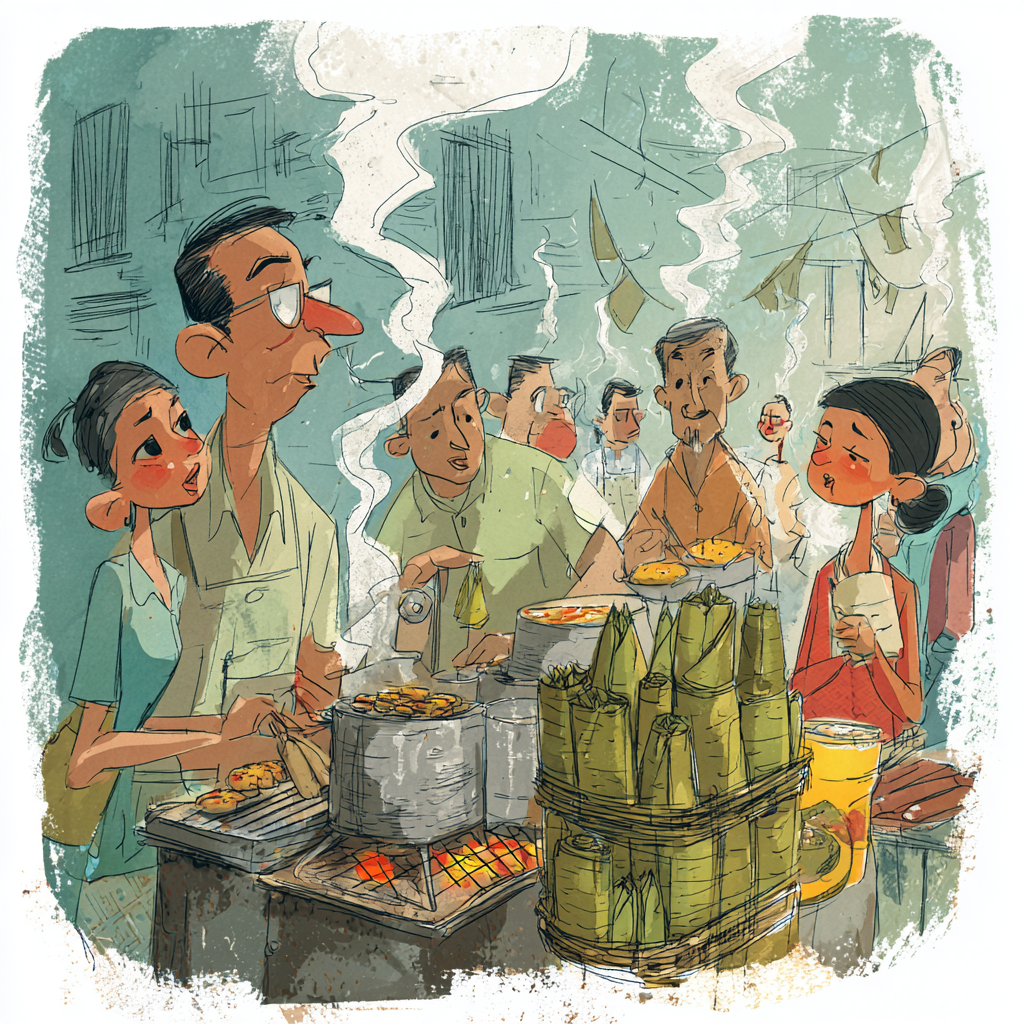
The first thing I see is steam escape in thin lines from the mouths of bamboo tubes. They stand in a battered metal steamer beside parcels of rice wrapped in banana leaf, edges darkened from the grill. It is still before dawn outside the church, the light from the tindera’s lamp turning the leaf bundles glossy and the bamboo a deep, wet brown.
I stand in front of her cart with a warm packet resting in my palm. On the other side of the steamer a bamboo tube waits for her short knife. Green from the leaf clings to my fingertips when I lift the edge. A breath of scent comes out, coconut tangled with smoke from last night’s charcoal. A purple cylinder of puto bumbong lies on another strip of leaf, the rice still hissing at the edge.
She tells me the leaf is never only a wrapper. She holds it over the stove until it shines, so the heat can loosen the stiff parts. A leaf treated that way folds without tearing. The veins soften and the color deepens. A thin layer of oil wakes up on the surface. When sticky rice lies against it for an hour of slow heat, the leaf pushes back some of its own character. There is a floral smell and a faint taste that sits between grass and tea. Long after the rice is gone, the hand still remembers that scent.
On the table behind her lamp sits a basin of water where trimmed leaves wait, stacked like green plates. She dips each leaf into the basin and then shakes off the drops. After that she moves it quickly across the flame. A small crackle answers when the heat touches the waxy skin. The work happens before most customers arrive. Later we see only the easy opening of packets and not the quiet labor behind each fold.
On the grill, a line of rolled banana leaves holds a mixture that will become tupig. The tindera turns them with quick movements, always by the ends, never in the middle where the rice wants to leak. Leaf splits a little where the flame licks too high. Smoke goes in through the cracks. A customer asks if she can switch to foil because it is easier to clean up. The vendor shakes her head and says the taste changes when the leaf leaves the work.
Beside the grill, the bamboo steamer breathes in short bursts as more steam breaks out between the tubes. Inside each hollow, glutinous rice sits with gata. Heat stays in the bamboo and clings to the grains. At the top a small opening lets moisture escape. When the tubes rest directly over coals, the outer layer of the stalk/chars. The inner wall toasts as the rice cooks inside. That light toasting moves through the rice as a shy bitterness. The sweetness of coconut and sugar stays clear.
An older man in a faded jacket waits beside me, hands wrapped around his own packet. He talks about the years when vendors like this one lined the road on all sides during Simbang Gabi. White cones of suman on banana leaf come to him for ordinary days and purple rice in bamboo for the weeks when Christmas draws near. As he speaks he raises the leaf toward his face. He draws in one breath before he bites, like a greeting for an old neighbor.
He tells me his sister married into a family from Pangasinan. In that town binungey cooks in young bamboo by the shore. Another cousin in Ilocos sends tins of tinubong for the holidays, the rice and coconut baked inside stalks until the outside blackens. Recipes travel with relatives. The words still tie them back to the soil of the first cooking fires.
Language makes room for the vessel in these dishes. Puto bumbong says rice and bamboo in the same breath. Suman sa dahon names the rice cake through the leaf that holds it. Even pinaupong manok carries the posture of the chicken in its name, seated over salt, sometimes resting on leaf so the skin does not burn. Where other cuisines might name sauces first, ours often remembers how the food sits and what holds it during cooking.
The vendor takes another tube from the steamer and cracks it against the lip. The rice slides out smooth because the inside of the stalk was rubbed with coconut oil before filling. She places the cylinder on a strip of leaf and adds butter and muscovado. Then she hands it across. The bamboo, now empty, still smells of toasted coconut and sugar. She will split it again later for kindling when the morning crowd thins.
Near her feet rests a sack of fresh banana leaves from the market. She trims thick ribs and wipes each sheet. Then she passes it over the low flame of a kerosene stove. For suman her niece shapes small rectangles. For rice-and-fish meals she cuts wider squares for packing into takeout bundles. Each type of fold marks its own use, like handwriting. Regular customers know their packet from a distance by the tilt of the fold or the way the end tucks under.
Sometimes a stainless pan appears on carts like this, a rice cooker humming in the corner for speed. The food comes out hot and filling. It sits cleanly in plastic tubs and paper boxes. People still line up for the bamboo tubes and leaf bundles, even when they cost a few pesos more. A woman in office clothes says rice from the bamboo tubes feels heavier. The vendor smiles. She says the tube adds nothing to weight. What the tube adds, she says, is a story carried in the smoke.
The sky lightens to grey as churchgoers stream past, some with puto bumbong, others with long rolls of tupig. Coins clink against the metal tray. Steam keeps rising from the steamer in thin white threads. My own banana leaf packet warms the inside of my hand. The rice shows a pale stain from the leaf when I finally open it. The first bite tastes of coconut and charcoal with a quieter note from the leaf alone.