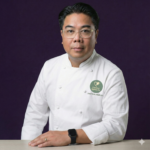
The kitchen is quiet compared to the street outside. The clanging woks are missing. So are the shouted orders. Just the low hum of induction burners and the sound of a knife moving through mushrooms.
Chef Carlo holds up a heavy skein of noodles. They are not the bright yellow of tradition, but charcoal gray. Almost black.
“Squid ink,” he says. “Mixed into the dough.”
He drops the bundle into boiling water. The steam rising from the pot smells of the sea rather than the usual yeasty dust of dried canton. This is pansit, he claims. But it looks like something dredged from the deep.
We are in a small space in Poblacion. The walls are bare concrete. The plates are heavy stoneware. It is far from the carinderias where pansit sits in plastic basins, orange with achuete oil, waiting for the afternoon rush.
Carlo watches the timer. “Two minutes exactly.”
Traditional pansit is forgiving. It can sit. It waits without complaint. Given time, the noodles soak up the broth, and something deeper settles into each strand. This version demands attention. It is selfish.
“You have to eat it now,” he warns.
He lifts the basket. The water drains.
He puts down the bowl. Swirls the noodles into place—dark, slick, quiet in the middle. They shine under the warm kitchen lights.
Pansit usually implies a group. People share it. They scoop it onto paper plates at birthday parties or extend it with cabbage when unexpected guests arrive. It is the food of “long life,” a wish stretched out into strands.
This dish is singular. One portion for one person.
An older woman at the counter watches him work. She has ordered the same thing. She tells me she grew up in Malabon. Her standards are high. She knows the taste of fat oysters and smoked tinapa.
“It looks wrong,” she says.
Carlo smiles. He is used to this reaction. He adds the toppings.
There is no heap of chopped cabbage. No scatter of carrots. Instead, he places three distinct items on the dark tangle.
Pork belly sits on one side, cooked slowly until the fat trembles. Next to it, a quail egg stained beet-red. Then oyster mushrooms, seared hard.
“The flavor is there,” Carlo says. “Just… organized.”
The woman picks up her fork. She hesitates. In her memory, pansit is chaos. It is a mix of textures—crunchy chicharon or soft liver. Sometimes snappy beans fight for space on the fork. This bowl is calm.
She takes a bite. She chews slowly.
“The smokiness,” she says.
Carlo nods. “Wok hei. We use a blowtorch on the mushrooms.”
I take my own seat. The steam hits my face.
It smells of garlic. That much remains true. No matter how much the noodle changes, the base note of Filipino cooking persists. The garlic is not minced, however. It is a confit, soft cloves hidden beneath the dark strands.
The first taste is shocking.
It is briny. The squid ink brings a depth less sharp than soy sauce. The texture is the real surprise. These are not soft, yielding noodles. They fight back against the teeth. Al dente, the Italians say.
For a Filipino palate raised on the comfort of soft bihon, this resistance feels foreign.
“We mill the flour ourselves,” Carlo mentions. “Local wheat. Higher protein.”
He gestures to a sack in the corner. It comes from a farm in Bukidnon. A tenuous supply chain, he admits. Sometimes the delivery arrives late. Sometimes the rain ruins the harvest.
Factory noodles are consistent. They never change. They taste the same in Aparri as they do in Jolo. This noodle tastes of a specific field, a specific harvest.
I wrap a strand around the fork. It holds its shape.
In the market, you buy miki by the kilo or sotanghon by the bundle. They are commodities. Here, the noodle is the protagonist. The toppings are merely the supporting cast.
I bite into the pork.
The flavor pulls both sweet and savory—familiar, like lechon kawali. But the skin has a softness, and the fat stays where it should. He says it stays in the water bath for a full day.
“People miss the mix,” Carlo admits. “They look for the calamansi on the side.”
There is no calamansi. He has incorporated the acid into a gel that dots the rim of the bowl. You swipe the noodles through it.
The space fills up. Young office workers. A couple sharing a bottle of wine.
They eat quietly. There is no passing of platters. No one says, “Get some before it runs out.” The anxiety of scarcity, so present in communal dining, is gone. But so is the warmth of the shared heap.
Pansit was born from convenience. The Chinese traders brought the noodle; we added the recado. It was quick food. Street food. Pansit literally means “convenient food” in its Hokkien roots.
This is not convenient. It takes Carlo ten minutes to compose a single plate.
I watch his hands. He pinches the cilantro gently, almost like it might bruise, and places it on top with quiet care.
Is it still pansit if it requires tweezers?
The woman from Malabon has finished her bowl. The dark sauce streaks the earthenware. She wipes her mouth.
“It is good,” she decides. “But I cannot bring this to a party.”
She is right. You cannot wrap this in foil. You cannot travel with it on a tricycle. It would die before you reached the destination.
This is pansit for the moment. Pansit for the self.
Carlo drops another bundle into the water.
The water turns gray from the ink. It looks muddy. Unappetizing to the untrained eye.
“Why change it?” I ask. “Why not just make really good traditional pansit?”
His eyes stay on the pot.
“I want the noodle to matter,” he says. “Usually, the noodle is just the carrier. I want it to be the flavor.”
He pulls the basket.
The movement is familiar. It is the same motion the vendor makes at the public market stall. First the wrist flick, then the drain.
Despite the tweezers, despite the sous-vide pork, the rhythm is the same.
I take another bite of my own bowl. The garlic confit has dissolved into the warm sauce. The mushrooms offer a meaty resistance.
The flavor profile is correct. Salty. Sour. A slow echo on the jaw. Some would call it umami. Around here, we just say it’s malinamnam—no need for borrowed words.
I think of a birthday long past—plastic tables under a tarp roof, one pot of noodles stretched to feed twenty. The host had little. Mostly noodles, not much else. Just soy sauce, oil, garlic. We ate anyway. We felt full. We felt lucky to be there.
This bowl is the opposite. That weight on the tongue comes not from time, but from cost. Each component carefully chosen, and paid for. Still, the sense of fullness lands in the same place. A quiet satisfaction, like after any good pansit meal.
Without lifting his eyes from the counter, Carlo pushes a new bowl across to the next diner.
“Mix it,” he tells the customer.
The customer obeys. He tosses the meticulously placed pork and egg into the dark noodles. The presentation is ruined. The distinct elements vanish into the tangle.
Carlo smiles.
In that moment, the artifice falls away as the fork goes in. The steam rises.
It is just noodles.
We eat.