Steam rises. Thick. Oily. Burnt garlic smell. That deeper smell—earth, salt, bones giving up.
The vendor scrapes the pot. Nails chipped red. Scar across her knuckle. Knife or pot lid. Who knows. Her apron’s stained yellow where annatto bled through.
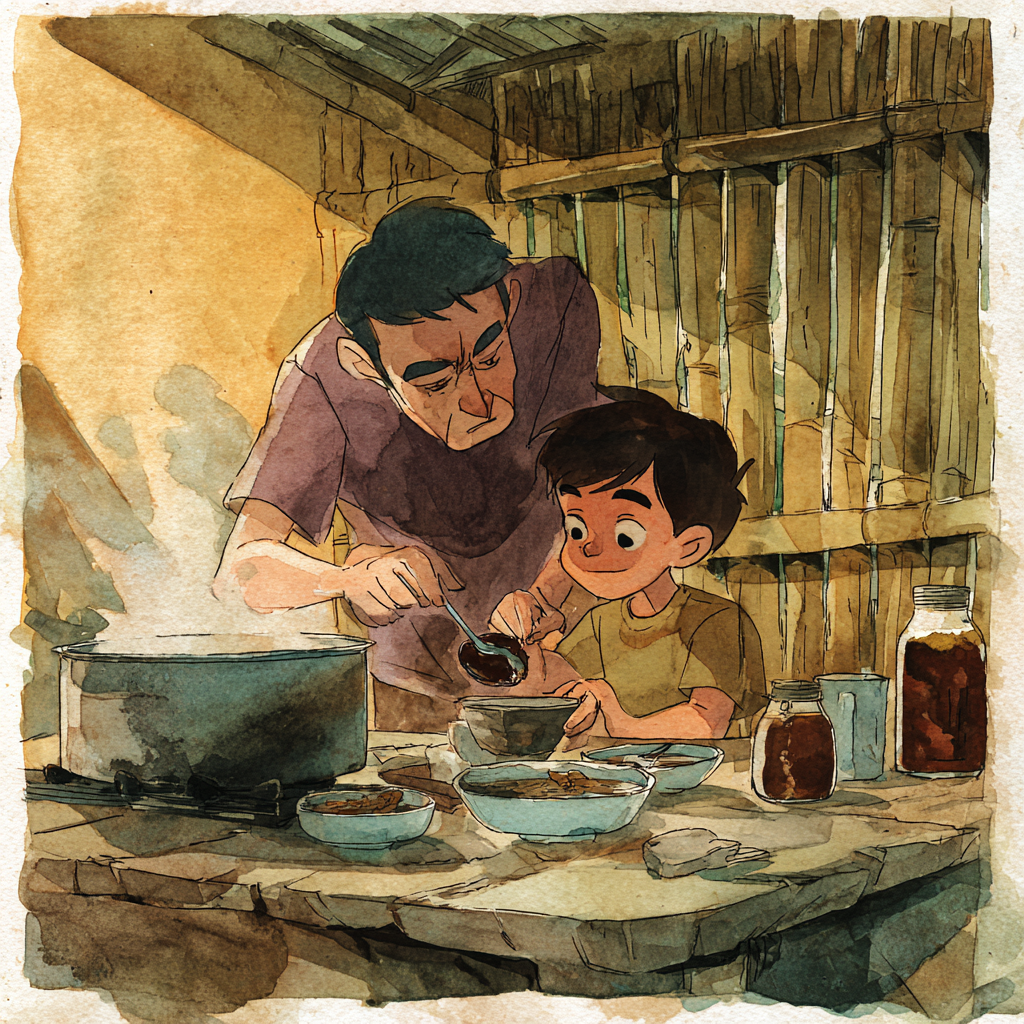
A mother leans over. Points. “Pwedeng walang mani?” Voice low. For the boy beside her. Big eyes. Plastic spoon clutched tight. Fingers sticky with turon from breakfast.
Vendor nods. Doesn’t ask why. Lifts ladle. Dips it behind her. Darker liquid. Sweeter smell. Ube. Cassava. Something rooty.
“Ube powder,” she says. Stirs. “Pang bata na ngayon.” Scoops a spoonful, blows on it. Holds it out to the boy. “Tikman mo.“
Kare-kare wasn’t always this way. How the sauce began with ground toasted rice. Burot they called it. Thickened the broth. Gave it that earthy weight. Peanuts came later. Hitched a ride on Spanish galleons from Mexico. Settled into Filipino soil. Became the taste people now swear by.
The vendor wipes her hands on her apron. “Mabilis magkasakit mga bata ngayon,” she says. Kids getting sick easier. Counts on her fingers. “Dati isa lang sa sampung pamilya. Ngayon…” Shrugs. Points at the boy stirring his bowl. “Parang lahat na.” Her voice cracks. “Kahapon, isa. Ngayon, tatlo.“
Her mother used peanuts. But never for the sauce base. Fried them whole. Topped the oxtail after. A garnish. Not the soul. “Dati, ang mani pang chichirya lang,” she tells me. Back then it was just something to chew while waiting. “Pang-aliw sa gutom.” To pass the hunger.
The boy dips his spoon. Tastes. Shoulders drop. Relief. His mother exhales. Not at me. At the steam.
Satay here tells the same story. Not the skewered meat. The sauce. Real Malay satay? No peanuts. Just chilies and tamarind. Filipino hands changed that. Added the ground nuts. Made it ours.
Vendor pulls out a small jar. Clear liquid. “Coconut aminos,” she says. For the boy who can’t touch soy. Mixes it with tamarind pulp. No fish sauce either. Uses mushroom powder. “Mas matamis pero keri,” she shrugs. Works. “Basta wag lang mani. At isda.” As long as no peanuts. Or fish.
Watches her hands. Same hands that crack oxtail bones. Now measuring substitutions like a chemist. No recipe card. Just instinct. Fingers know what eyes can’t see.
Older vendors say children got sick. Stomach pains. Rashes. But they called it lamig. Or sira ang sikmura. Bad digestion. Not an allergy. No blood tests. Just fasting. Bland rice. Waiting. “Ayaw naming magpa-test,” a lola in Divisoria told me. We refused testing. “Basta, pag umiyak, alisin ang mani.” If the child cried, no peanuts. Ever again.
In Ilocos, they use bagoong isda instead of peanuts for thickening. Fermented fish paste. Gives that umami punch. “Ala-ala na lang ng mani,” an old cook in Vigan told me. “Just the memory of peanuts.” She stirred her pot with a kamansi branch. “Mas nauna ito kaysa sa mani.” This is older than peanuts.
Cebuano kitchens swap in roasted squash. Purees it smooth. Sweetness cuts the bagoong’s salt. “Natural lang,” a carinderia owner said. “The squash was here before the peanuts.” Her kare-kare sat in clay pots. “Hindi naman nawawala ang lasa. Nagbabago lang.” The flavor doesn’t disappear. It just changes.
Vendor here uses ube. But it’s not cheap. Costs twice as much as peanuts. She charges the same. “Bakit naman tataasan?” Why raise prices? Taps her temple. “Dito nag-iiba ang utak. Hindi sa bulsa.” The mind changes. Not the wallet. “Minsan, kahit wala sa budget…” Sometimes, even if it’s not in the budget… She trails off. Scoops extra into the boy’s bowl.
No one talks about colonial ghosts here. Or global warming’s role. Vendor doesn’t care if allergies rose from factory farms or better doctors. She just sees the child eating. That’s enough. “Basta kumain siya,” she mutters. As long as he eats.
Her mother would’ve called it sacrifice. Giving up the peanuts. But this isn’t sacrifice. It’s adaptation. Like using guyabano leaves when dahon ng saging ran out during the drought. Like frying tuyo in coconut oil after the fish oil shortage. Filipino kitchens bend. Without breaking.
She stirs the pot harder. “Kaya natin,” she mutters. “Hindi tayo nagpapatalo sa pagkain.” Doesn’t look up. Like it’s obvious. Like she’s said it a thousand times to the steam.
Boy licks his spoon clean. Holds it out for more. Vendor laughs. Scoops extra eggplant. “Sana lahat ganito,” she murmurs. Wishes all kids could eat without fear. “Hindi ba’ng masaya?” Isn’t it happy? She points to the boy’s smile.
Jeepney backfires outside. Kids shout tumbang preso in the alley. Coins clink on the counter. Steam keeps rising. From both pots now. Original. Substitute. Blending in the humid air.
In Binondo, a grandmother’s spoon scrapes a clay pot. “1972 pa ‘to,” she says. Points at her sauce. “Wala pang mani noon.” Her knuckle knocks the pot’s rim. “Sa tingin mo nagbibiro ako?“
Mother pays. Leaves coins on the counter. Doesn’t say salamat. Doesn’t need to. Boy’s clean bowl says it. “Salamat, ate!” the boy shouts. Thank you, big sister! Vendor’s eyes widen. Then she laughs—a sound like sagasa hitting hot oil. “Balik ka ha?” Come again, okay?
Steam still rises. Carrying the smell of ube. Of coconut. Of peanuts forgotten.
Pot never stops bubbling.