Pale yellow juice hits the shaker. The bartender does not say what it is. Calamansi gimlet is on the menu. So is the mule. People at the bar tilt their heads at the word, a name they almost recognize but do not. They are about to have an opinion about it. Good enough.
A shallow bowl near the cutting board holds the fruit. Green, smaller than a peso coin. Behind the register, handwritten labels on small glass bottles. Exposed brick. The light is low on purpose.
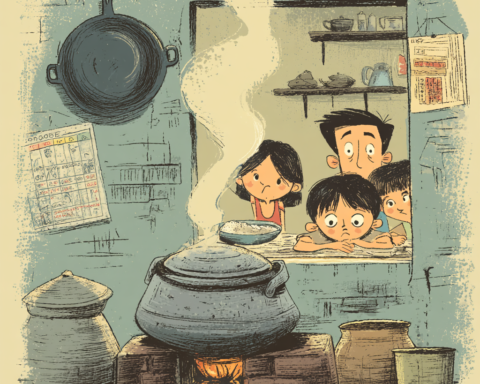
Kalamansi grows in pots outside houses in the Philippines, in gardens where nobody prunes it or worries about it because it does not require worry. It appears in the wet market in small bags, two dozen to a fistful, cheap enough that the price is an afterthought. Nobody in a Filipino kitchen makes a decision about it. Already on the table before the meal begins. Already there like the spoon. You squeeze it over the sinigang. The broth gets sharper. That is what it does.
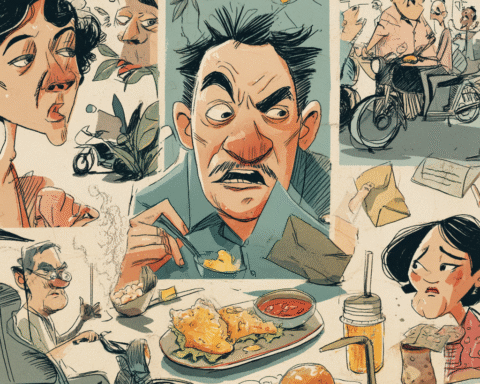
A carinderia counter, somewhere in Manila. Rice warming in a steel tray, flies on the glass cover. Off to the side, a plate of sawsawan. Toyo in a ceramic cup. Vinegar if you want it. A few kalamansi halves, some sili. Nobody decided where to put these. A man in a construction helmet on a plastic stool squeezes one into his toyo. Does not look at it. Same motion as scratching your arm. The fruit does not anchor the meal. It finishes it. From a distance those two functions look alike. They are nothing alike.
Ice goes into the shaker. The bartender shakes it hard, twice.
A woman two stools down asks what calamansi tastes like. “Lime, almost. Greener.” She tries the word out. Careful with it, her mouth working around the syllables. Calamansi. The bartender’s face changes. She likes handing over something unfamiliar.
What gets handed over is real. The room the fruit came from stays behind.
That room smells like charcoal. Garlic. Something damp, a kitchen going since five in the morning. A Lola in Malabon cuts the kalamansi fast, before the bangus comes off the grill. Dull knife, does not matter. Half a squeeze, fingers catching the seeds. She knows what the meal needs before it asks. The sourness — the asim — is not a finishing note. It is the grammar the food is written in. An old vendor in Pampanga once told me: “We do not add sour. The dish is sour already. Everything else follows.” He was selling kalamansi by the kilo from a wooden cart, plastic tarp over it. Yellow-stained fingertips from years of splitting the fruit. Not a garnish seller, in his mind.
A friend of mine found a video online. London bar, kalamansi in a cucumber cocktail. She watched it twice. “Ang laki naman ng ginawa nila.” Too much, she meant. Too big for what it is. Did not raise her voice. Not angry. Precise. We were eating lugaw near Quiapo. Plastic bowls, noon news on the TV above the counter. The rice porridge was too hot to eat and she was blowing on it while she talked. Her mother had her squeezing the fruit into hot water every morning. That never got written down. Not a wellness ritual. Tuesday. The fruit was part of the kitchen. Nobody thought about it separately.
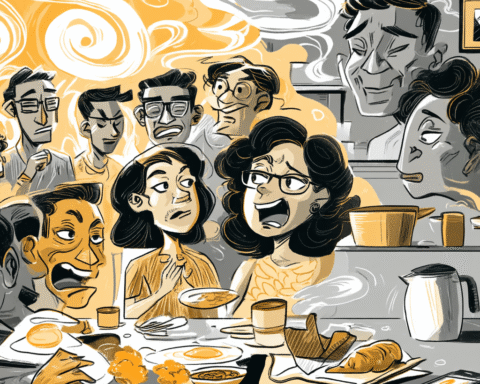
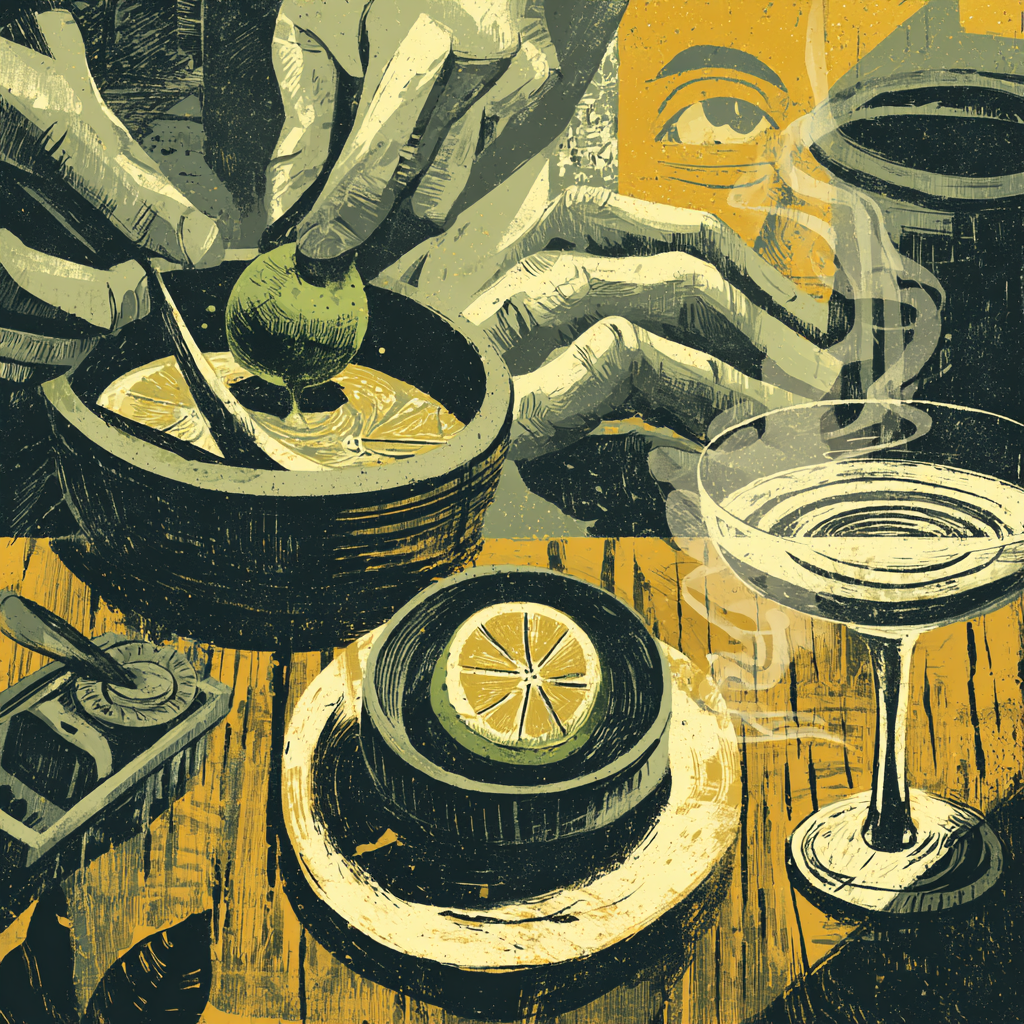
The gimlet arrives. Pale straw, salted rim, a thin wheel of kalamansi floating on the surface. Cold glass, wet on the outside. Beautiful, actually. A woman down the bar photographs it before her first sip. The bartender sees this and says nothing.
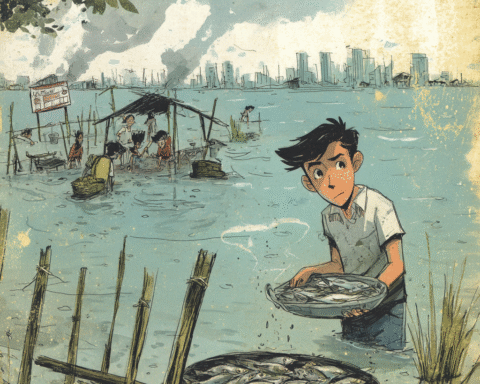
Cubao palengke. Divisoria stalls. The fruit sits in a pile and no one photographs it. Flies land on it. The vendor scoops a bag and ties it. Already looking at the next customer before the change is counted. Five pesos, ten pesos. You buy it by the bag and squeeze it into whatever needs it. The dish is what remains. The fruit already did its work.
In a cocktail glass, the fruit floats. Looked at. In a bowl of sinigang, the kalamansi is already gone. Squeezed into the broth before anyone sat down. You remember the broth. The fruit does not come up.
A fruit is a fruit and does not hold allegiances. The kalamansi is itself a crossing — kumquat and mandarin, two things that merged into something that belongs entirely to neither. It naturalized in Philippine soil and stayed. It could naturalize here too, on a cocktail menu, in the hands of a bartender who found it two years ago through a recipe she tore from a magazine.
She is slicing another one now. The cut is clean. Juice on her fingertips. The smell reaches me from across the bar, faint and green.
“Does it remind you of anything?” I ask.
She thinks about it without performing the thinking. “Rain,” she says. “Right before rain.”
That is not wrong. The fruit is green and sharp enough to suggest weather, a Philippine afternoon right before the sky opens. She arrived at something true. The route she took was different from the route the fruit knew first.
The gimlet sits between us. The wheel of kalamansi turns once in the ice, slowly, and stops.
Somewhere right now someone is squeezing the same fruit over hot soup. Not thinking about it. The fruit disappears into the broth and the broth is dinner.