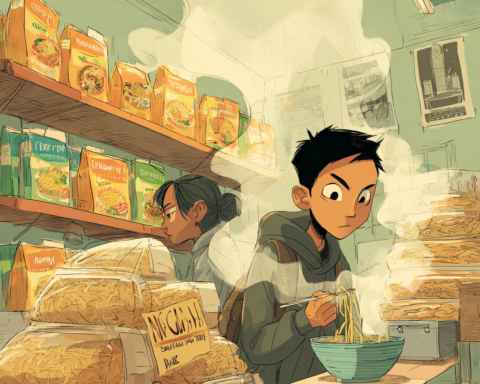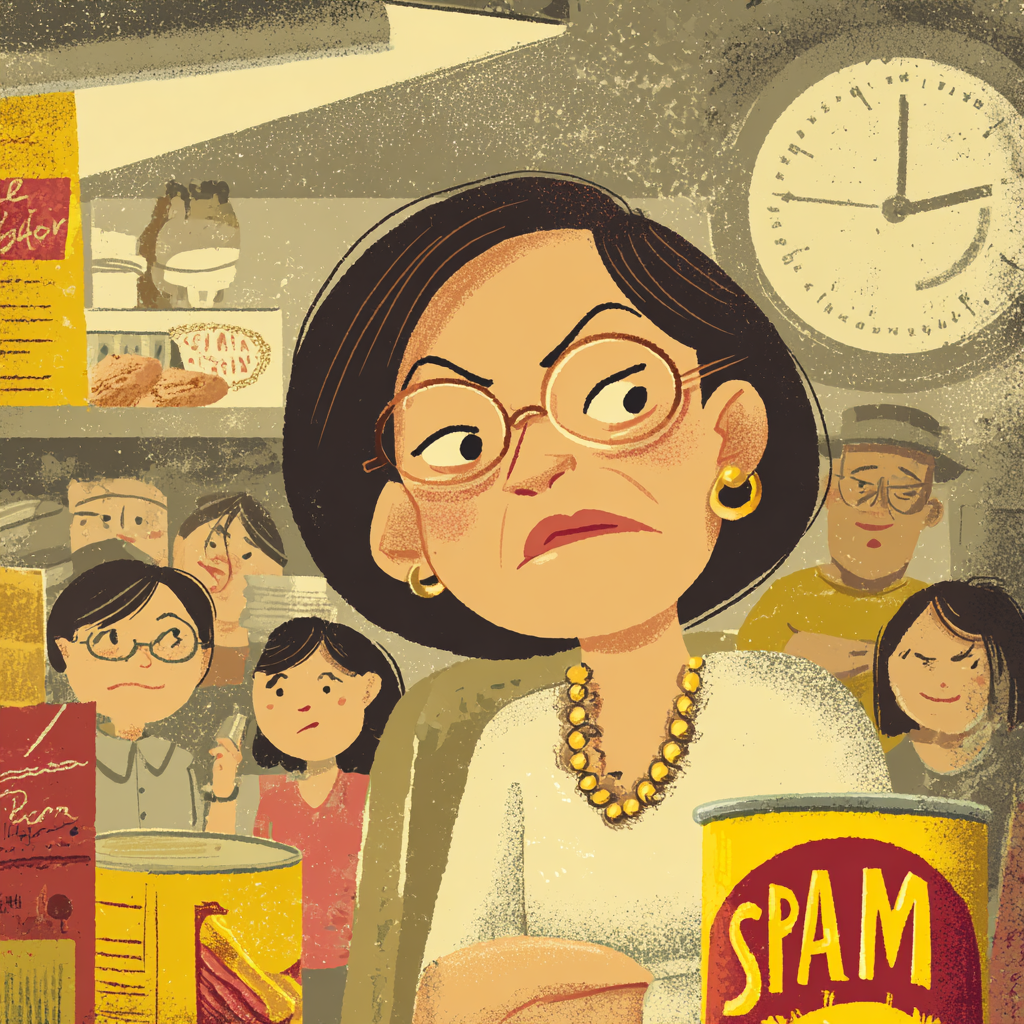

The cardboard sits open on the floor while she moves between the box and the shelf, pulling down the cans. Spam, corned beef, sardines in oil—the stack grows slow at the bottom layer, each one placed careful.
Every three months, she packs these from America back to the Philippines. The cans go first because they are heavy and fit the corners where space would waste. Seventeen times before this one. She knows the rhythm now. Which shelf to stand in front of. How long the line moves at the checkout. The weight of a full box settled against her hip.
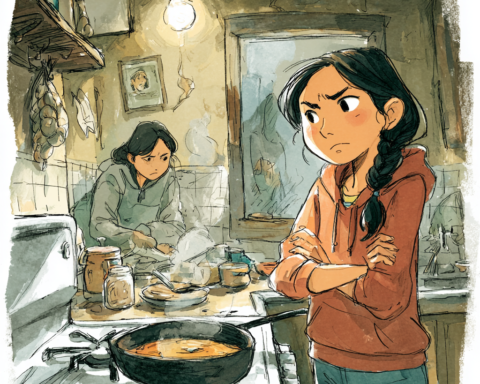
Her daughter asks why. “Mama, they have Spam there too.” She lives in Manila now, not the province. She does not understand what the province wants.
“Different,” she says. It is not a complete answer.
The Spam from America tastes like America. The corned beef from here tastes like what she used to buy at the sari-sari when she had no money. The sardines are proof. She went away and came back with something—not grand, not jewelry, nothing like a new refrigerator. Just the cans that say she was there.
The box fills with other things too. She throws in socks. Shampoo. Her sister mentioned she wanted beans from a certain store, the kind you can’t find there, so she buys those too. But the cans take up the real space. They carry the message.
Her cousin packed differently when she was still sending boxes. Faster boxes. She sent electronics, designer goods, things that had value. The boxes were heavier but faster to fill. She would pack things with receipts, proof of the life she was building in America. Then her cousin stopped sending them. One year, two years, nothing. The family learned she was not coming back. Or maybe she decided to stay. The boxes had stopped meaning anything. They were supposed to say something, but she never sent another one.
This woman, the one packing now, she still packs. Her daughter asks her again: will you retire? Will you come home? She keeps packing instead of answering.
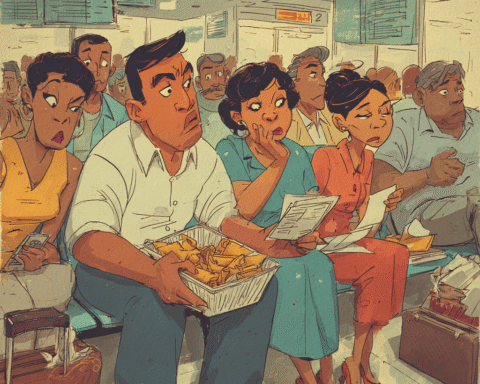
At the post office, she fills out the form. Canned goods, she writes. Toiletries. Clothing. The clerk doesn’t read it. She just weighs the box and tells her the price. She’s seen enough boxes to know this one will arrive. The cost to send exceeds the cans’ worth. This has always been true. She pays it anyway.
The aunt in Antique will open it in a week or two. She will see the Spam first. Maybe she will laugh. “Spam,” she will say to her neighbors, turning the can over in her hands. “Spam from America. My sister sends Spam.” The neighbors know what it means. My sister is still working. My sister is somewhere far away, but the Spam says she is thinking of us.
The aunt will not eat the Spam right away. She will put it in the cupboard. She will show people it first. Then, when a nephew comes hungry or when there is no time to cook proper, she will open it. She will eat it standing at the counter, a little guilty. The taste will be familiar and foreign at once. Too salty. Too processed. Not what they eat anymore. But it is there, and sometimes there is comfort in something that tastes like a time before you knew better. A time before you knew the difference between real and the other kind. The nephew won’t notice. He’s young. He’ll just eat it because his lola opens the can, and that’s reason enough.
The woman packing knows all this. She has seen the cupboards in her family’s homes. She watches how they arrange things, how they save things. The Spam sits there unopened for months, sometimes a year. A kind of shrine. Sometimes the cans stay so long they dent. The dents are from the journey, not from being used. The dent becomes proof. Proof the box traveled. Proof it was real.
She could send money instead. Wire it. It would be faster. It would be practical. The aunt could buy better food, fresher food, whatever food she actually wanted. That would make sense on paper. In practice, too, it would be efficient. Everybody knows this logic. She has done the math many times.
But the box is not about efficiency. The box is what says: I am thinking of you in this specific way. Not as a number in a bank transfer. As someone I am picturing while standing in a fluorescent aisle, deciding between this can and that can. The choice of which Spam, which corned beef, matters. It means I was standing there, my hand on the shelf, choosing this one for you.
She seals the box with tape. It takes several pieces. The tape has to be strong because the journey is long and the box will be thrown and stacked and sometimes left in rain. Each layer has to hold what’s beneath.
She writes the address in clear letters. The aunt’s name. The barangay. The province. She knows the address from memory. She has sent this address seventeen times. Eighteen now. She could write it in her sleep. Sometimes she wonders if the address has changed. If the aunt moved. If someone else lives there now. But the box keeps arriving. So the address must still be right.
The box sits on her floor for a day, maybe two. She walks around it. Steps over it. Then she takes it to the post office. Looking at the sealed box, she thinks: this is the only thing here that belongs somewhere else too.
This is what she is really sending. Not the Spam. Not the corned beef. Not the sardines. The proof that the box exists in both places. That she exists in both places. That she can hold a can in a store in America and think: my aunt will hold this can. And then she really does.