The scoop drops into the paper cup and makes a flat knock. Cold air seeps out of the tub carrying the smell of barako and grated queso de bola. Outside, jeepneys twitch forward and stall. Inside, the room holds cream, metal, and sugar tilted close to burnt. The first spoonful lands heavy on the tongue. It stays there, slow to explain itself, until a memory you were not looking for presses in from the edge of taste.
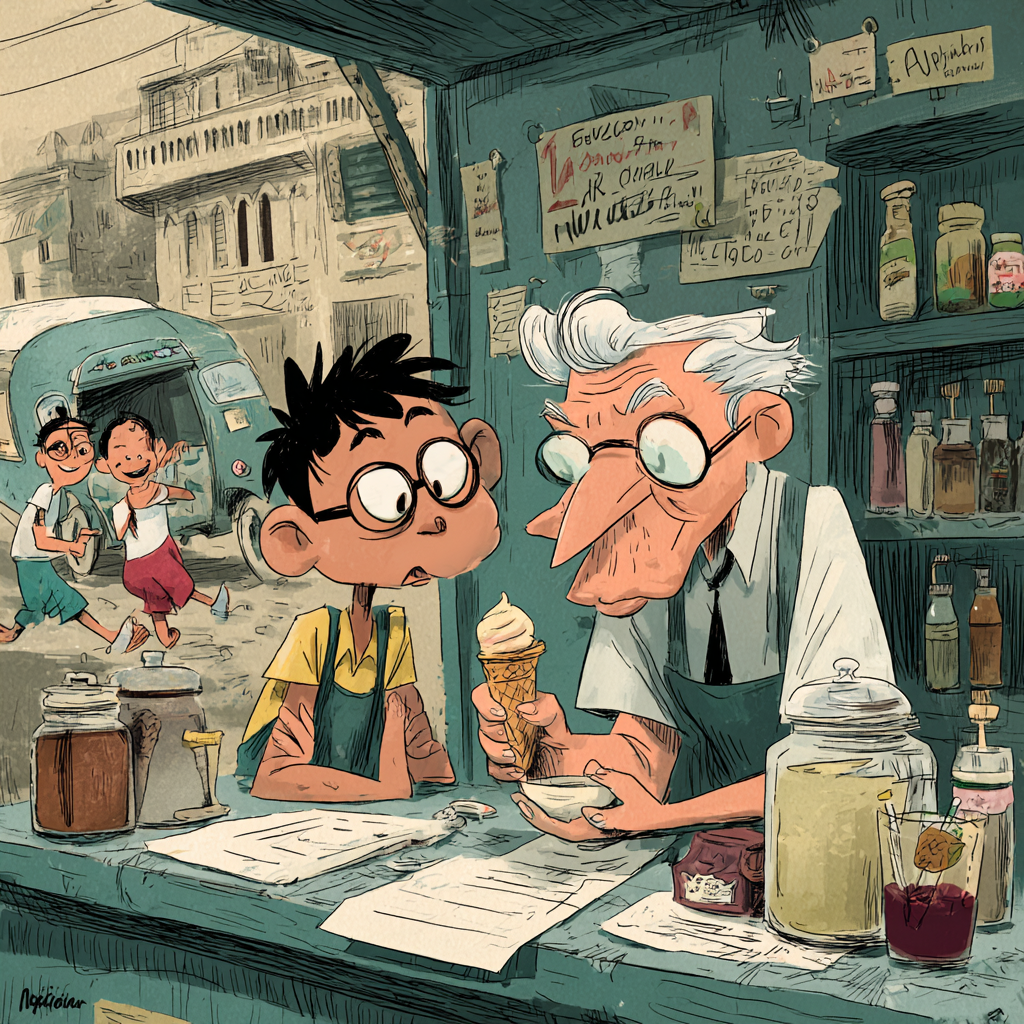
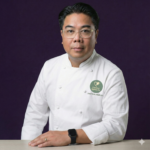
He waits behind the glass case, shoulders set from habit, hands showing the day in small aches. A sign by the door calls him sorbetero. That is all the introduction he allows. He first learned ice cream from the carts that rolled past his street, wheels rattling on broken pavement, the vendor’s bell reaching the houses long before the man’s shout. Those afternoons were ordinary then. Now they sit at the center of his work.
The place he works in is small enough that one wrong step sends him into a shelf. A block of queso de bola softens on a low table, wax dragging away in thin curls. Ground barako sits in a chipped bowl, still damp. A reused bottle of arnibal leans on its side until he props it upright and watches the syrup slide down the glass in a slow ribbon. He writes on old receipts taped to the wall, using whatever blank space is left. Numbers appear and vanish under pencil marks when the mixture in the pan refuses his first guess.
The first tub he sold was plain queso. Powdered milk, rough cubes of cheese, a base that made no attempt to be subtle. People kept ordering it because it tasted like school gates and subdivision corners, not because it promised anything clever. They mentioned carts from their own childhood streets more than they spoke about his shop. Those scoops paid his rent and bought him a sturdier machine. They also reminded him how easily Filipino ice cream could get stuck serving only one flavor of memory.
When he talks about his work, he starts with melt instead of recipe. If the base grows too rich, the scoop holds its shape in a way that feels wrong for a city that never really cools. If it runs too thin, it breaks into hard shards when the spoon goes in. He studies the streak of cream crawling down a cone, the drip that runs along someone’s thumb, the shallow puddle left at the bottom of a cup. The air outside writes itself on every serving. He reads those signs more than he reads manuals.
Some evenings, when the light outside has softened but the heat still presses on skin, an older sorbetero pushes his cart under the awning and stops. The younger maker hands him a small cup from the batch that has been bothering him. Today it is barako ice cream with soft taho curds and dark seams of syrup. The old man raises the spoon without hurry. His eyes fall half-shut as he keeps the cold in place. His jaw works in a slow turn, more like someone weighing a memory than tasting. A sound escapes him, low and brief, hard to read. He finishes the cup, leaves it on the counter, and lets one word fall between them – iba – before he settles his hands on the cart and moves back into the street.
That word sticks to the younger man’s thoughts while the next customers come and go. The shop opens onto a narrow road where vendors still call their ice cream “dirty”. The name clings to carts, to dust on tsinelas, to sweat tracing lines down bare arms. Inside, his tubs sit in neat stainless cylinders, yet the flavors inside lean toward that same street more than toward imported ideas of dessert.
In the back freezer, a short row of tubs rarely reaches the front. A pale buko pandan with the right color and a thin voice. A sago’t gulaman swirl that turned stubborn once the cold took hold. Another trial that tried to mimic halo-halo and ended up saying nothing clear. Friends and regulars get small spoonfuls from these experiments and answer him without politeness. He writes their words into a thick notebook. Some flavors refuse the freezer. He lets them go back to cups and pitchers where they make more sense.
The people who step into the shop arrive with their own heat and stories. A student who grew up abroad orders every flavor with ube, trying to piece together a country mostly known from relatives and screens. A delivery rider counts his coins twice, shrugs, and trades them for one scoop after a long shift threading between buses. A retired teacher from the nearby subdivision drops by on the same weekday, asking which tub today sits closest to the cart that used to pass her house when her children were small. Their talk slips into his memory as quietly as their money enters his till.
Now and then, someone reads the chalkboard and says the price out loud, comparing it to cones by the curb. He answers with plain facts. Milk from a farmer who doesn’t stretch it with water. Rent for a door on this street instead of in some hidden alley. Power for machines that cannot take the day off. Fruit and coffee that arrive as sacks, not flavored syrup. These details do not appear in the flavor names, yet they sit under the number drawn in chalk.
One rain-heavy afternoon, with classes cancelled and office workers stalled in their buildings, the shop grows quiet enough for him to hear every scrape of his shoes on the floor. He stirs a base of cooked rice beaten into cream, folds in crushed pinipig, and lets the mixture rest. When the batch has frozen, it tastes of streets under shallow floodwater, of rolled-up shorts, of kids watching the corner and wondering if the cart will brave the rain. He gives it a short name on the board and leaves the space under it blank.
The next day, a woman from a nearby office taps the board and asks for that new flavor without hesitation. She stays by the counter as she eats. Her ID swings against her chest, and her arm rests on the glass in a way that looks more like settling than waiting. Each bite changes her posture in small ways. A shoulder drops. Her grip on the cup eases. Her expression flickers once, brief and unfiltered. He turns toward the sink and rinses a scoop, giving her room without a word. Whatever that ice cream is doing for her sits outside his responsibility.
After closing, he locks the shutters and steps onto the street, the heat fading but not gone. He follows the route he has taken for years. When a bell slices through the noise—engines, music, voices—his hand lifts on its own, a habit older than the shop. The cone he buys bends on the first bite. Ice crystals crunch along the edge. The sweetness arrives all at once and leaves no echo behind. It still feels like the true starting point of everything he has tried to fix, improve, or protect.
Later that night, back in the quiet shop to check on the freezers, he sees the tubs lined up under their metal lids, each one holding a different guess at what Filipino ice cream might need to remember. Out on the roads, the carts keep moving in their own circles. His work sits between those two paths, not as a bridge, not as a verdict, just as another way of keeping a familiar cold taste alive for one more day.