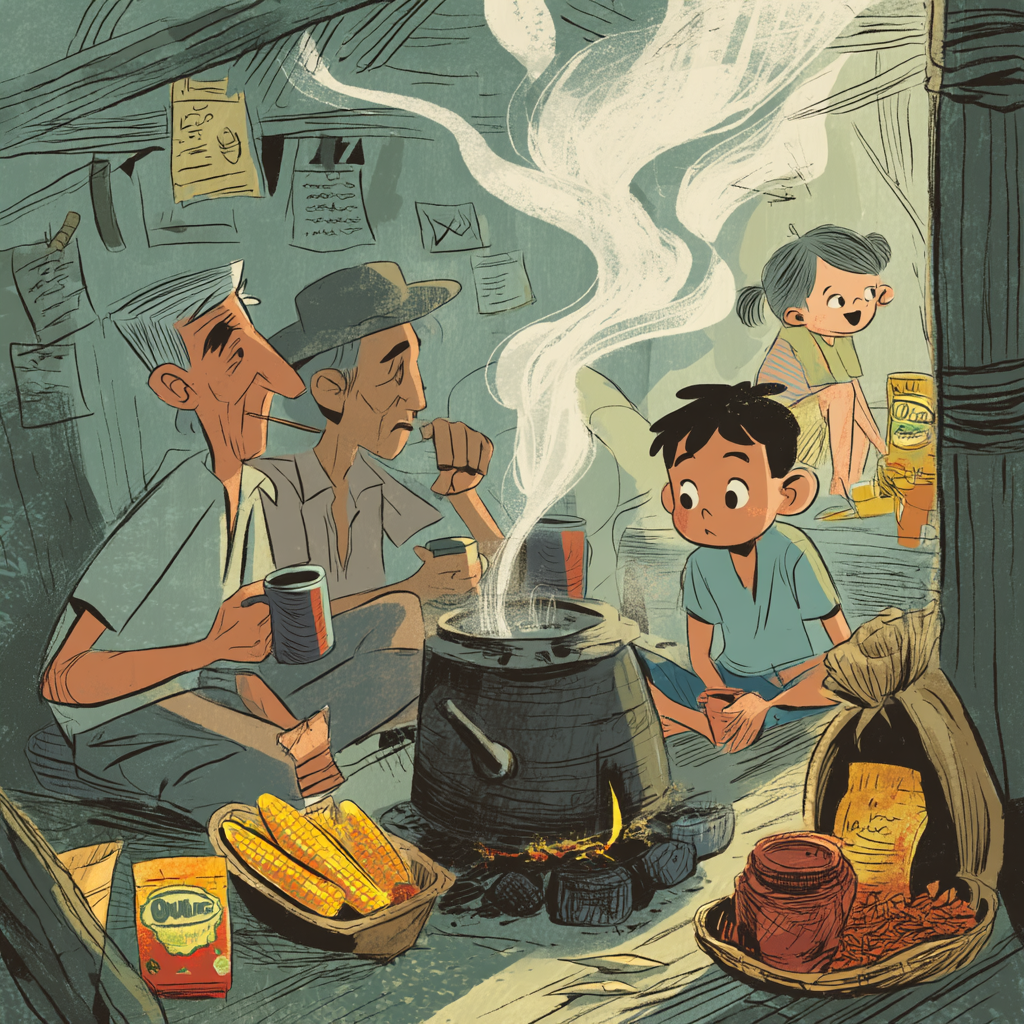

In the half light of a Mindanao morning, a small pot sits on three stones. The fire is small. Inside, cracked kernels of corn roll in the water, smoke and sweetness in the same thin steam. A hand moves a stick of kawayan through the pot and waits for the sound of the liquid to grow heavier. Long before packets of instant coffee found their way to these hills, a pot like this woke the house. One Lumad traditional drink, passed from hand to hand in a single chipped enamel mug.
The first sip does not hit fast. Warmth slides from throat to chest while the light outside grows stronger. An older cousin calls it kape mais. There is no coffee in the pot, only roasted corn on a pan long stained with smoke. For him it is something to drink before walking to the uma. For the grandmother on the woven mat, it is medicine for a stubborn cold, a way to coax out phlegm without buying tablets in town. In the same pot, work and healing simmer together. Lumad traditional drinks work in this quiet way, tying effort and illness to the same daily brew.
In many upland communities gathered under the name Lumad, hot liquids mark the day more than clock faces. Water rarely travels straight from jar to mouth. It meets what the environment offers and what memory holds: corn and rice scraped from the bottom of the sack, slivers of root, bits of leaf, thin shavings of bark. Knowledge about plants passes through hands as much as through words. Certain leaves help a body sweat out fever. Certain roots keep a tired worker on the trail. The result sits in cups that look plain yet carry long practice. These Philippine non coffee brews sit at the center of the table rather than off to the side.
From lowland eyes, it is easy to see these brews as substitutes, poor cousins of coffee and chocolate. Corn instead of coffee, clay cups instead of branded mugs. In many upland sitios, the order runs the other way. Lumad traditional drinks come first, shaped by what grows within walking distance and refined over many seasons of trial and story. Coffee in sachets arrives late and uncertain, tied to roads, trade stores, and the price of sugar. The roasted corn drink city dwellers now visit in cafes already kept people awake long before anyone sold “3-in-1” mixes by the box.
Some pots are stirred for labor. Before men and women step out toward the uma or the forest, a darkened liquid waits by the doorway. Corn or rice has been roasted close to black, pounded, then boiled until the water takes on a color near thin tsokolate. There is no thick froth, no café smell, only smoke and starch in the air. The mild stimulant sits in the warmth, in the slow sipping, and in the steady story passed down: drink this and your legs carry you through the slope and back. Belief joins heat and habit in keeping bodies moving.
Other pots belong to the healer. In different Lumad groups, older healers boil leaves, roots, and bark. The drink is for fevers, stomach aches, the weakness after giving birth, and the soreness from planting and harvest. A bitter decoction for a new mother is both tonic and something to share with the older women helping her bathe and rest. A root drink for cough circles the space as people talk about dreams, spirits, and errands coming up. No sharp line splits “drink” from “medicine” here. One slips into the other as easily as water into a cup.
Even bark has a place in the liquid story. In coastal and lowland areas, the reddish mangrove bark known as barok or tungog colors tuba, coconut sap left to turn strong, staining it deep orange and tightening its taste. In some upland homes, bits of bark or wood from other trees join roots and leaves in ordinary decoctions, not for color alone but for how the body feels after a few careful sips. Exact recipes rest in families more than in written records, so details differ from sitio to sitio, from one healer’s pot to the next.
Ritual gathers these threads and pulls them tight. Before a meeting among elders, before speaking of land or boundary, before hearing a long story of war or displacement, someone tends a pot. It might hold simple roasted corn. It might hold a mixture of herbs an old woman learned from a healer now gone. The elder gets the first cup, then visitors. The younger ones waiting at the doorway receive theirs last. Someone from outside might see only a polite gesture. For those seated close, the order of pouring carries weight, marking respect and calling on unseen listeners who also receive a share in words.
There are quieter, everyday rituals. Children returning from school in the lowland población bring back stories of soft drinks, powdered juices, energy drinks in bright bottles. At home, another liquid waits: rice-washing water boiled with a knob of luya, ginger, its sharpness softened by time on the fire. The children wrinkle their noses but drink. Years later, when a cold or sore throat starts, that pale, cloudy liquid comes back to mind. They put ginger in their own pots, even in a rented room in the city. With that first sip, the boarding house room shifts. The old yard comes back instead, the low fire, banana leaves darkened at the edges by smoke.
In some parts of Southeast Asia, sleepiness is handled another way. People chew betel quid. A bit of areca nut is rubbed with lime, wrapped in betel leaf, then left to rest in one cheek. The mouth heats, spit turns red, talk quickens. Regular chewers say the feeling sits close to coffee brewed too strong. In Mindanao, these little bundles move alongside hot drinks. Some hands choose chewing, others choose sipping, each habit tracing a path through work, age, and belief. Lumad traditional drinks sit in this larger field of small, local stimulants that carry place in each dose.
Today, sachet coffee and “3-in-1” mixes reach interior villages on market days. They travel in ukay bags, fill shelves in sari-sari stores at the edge of logging roads, and show up in relief packs after storms or fighting. For some families they taste like the outside world, a small treat. For others they serve as quick fuel, sweet and dependable, needing no roasting time. Even where these packets now line kitchen shelves, older brews still hold close to certain moments. The roasted corn pot appears when money runs thin or when an elder insists that this drink is kinder to the body. Bitter medicinal decoctions appear when a child’s fever shrugs off tablets from the health center. Ritual drinks appear when talk turns to land, ancestors, or the terms of staying.
To speak of Lumad indigenous beverages as “alternatives” misses how the kitchen fire orders life. For upland households, Lumad traditional drinks set the baseline. Coffee, soft drinks, and energy drinks arrived later. Under them lies an older ground, where hot liquid in plain cups carries the load. It rouses tired bodies, steadies a scattered mind, greets visitors at the doorway, and ties stories to the people who pour and drink.
Sit long enough by the fire and small rules start to show. One person always stirs. Another passes the cups. Elders drink before the young. In that early kitchen light, from the first crack of kindling to the last noisy sip, you see how people choose to meet work, pain, old stories, and each other. The steam drifts out through the gaps in the wall, and life goes on.