
Urban gardening starts on a cracked sill. A tin basin, two soda bottles cut open. Damp soil on the palms. The basil smells like—no, not basil, more like wet roads after the first rain. A child taps the leaf. The leaf taps back. Somewhere a tricycle coughs, then quiet. I wait. I listen. I think of lunch I thought.
I say the basil is malunggay. It is not. I pick a stem anyway. My fingers taste green and a little rusty. From the alley, a seller calls lugaw. Thin steam climbs, wavers, breaks. We water the plants with a tabo that leaks at the lip. We water again. Twice seems wasteful, yet not enough. A small start, and also an old one.
The first seed arrives in a pocket. A neighbor, Ate Lolit, brings saved mustasa. Wrinkled paper, careful tape. We shake two into a repurposed ice cream tub, poke holes with a barbecue stick. The tub sits beside an antenna that has not worked since the blackout of last summer. It becomes a fence. It also becomes a sign. Something is growing here, po.
It grows slowly. Then too fast, we say. The leaves crowd. We move them to a rice sack. The sack was rice, then garbage, now garden. The handle tears. We fix it with lastic. I tell myself this is efficient. Then I see the soil sag and I worry. The truth slips out. Beautiful, yes. Fragile, too.
In this street of concrete, food usually arrives in plastic. Sealed, priced, distant. Today we pinch kulitis with our knuckles. A bitter sweetness wakes the tongue. I swallow and flinch, a small stumble of taste. I wash the leaf in a bowl, twice, then once more. Once would do. I am not sure. I do it again.
A jeepney backfires. Soil jumps. We press it down and start talking about hunger without saying the word. Someone says tama lang. Enough. Someone says kulang. Short. I hear both and hear the same thing. A contradiction sits between us. We live in the city for work and buy vegetables. Yet we learned that vegetables will live with us if we let them. City as market. City as farm.
Our little patch becomes a meeting place. We trade seedlings for stories. Tomato for kangkong. Talbos ng kamote for three packets of patis. A kid brings a broken plastic crate from the sari-sari. We line it with old newspaper, cut a scrap of tarp, punch holes with a fork. Quick, rough, almost wrong. It holds.
Urban gardening here looks like invention rather than luxury. A ledge, a rope, a sunlit hour borrowed from overtime. Rooftop garden in theory, fire escape in practice. We adjust. A pail becomes a pot. A rain gutter becomes a trough when the downspout clogs. We say we planned it that way. We did not. Still, it works, then fails, then works again.
Morning habits change. We check leaves before messages. The group chat waits. The pechay sulks. We flick water from a bottle punched with tiny holes. The bottle drips. We let it drip. A slow drip makes sense. Then I worry about mosquitoes and swap the cap for a tighter one. Small correction, always late.
There is memory in this. Bahay kubo. That children’s song that listed vegetables like prayers. We sang it on school stages with cardboard hats. We thought it was about the past. In the elevator, bags bump my knees. I hum two lines, stop when the guard tilts his head. Maybe at me, maybe not. I stop. Then I do not stop. The song follows me to the roof where the wind catches our seed packets and throws them across the concrete. We chase. We lose some. We find enough.
Our nanay keeps a coffee jar of ash from the uling. Sprinkled around the stems to keep snails away. Char. Smoke. Kitchen and garden touch again. We add egg shells, crushed. Suka bottle for vinegar traps. These are not gadgets. These are habits. Old tricks dressed in new city dust. The smell of vinegar stings. I turn away, then turn back. It works. Or I tell myself it does. Both feel true.
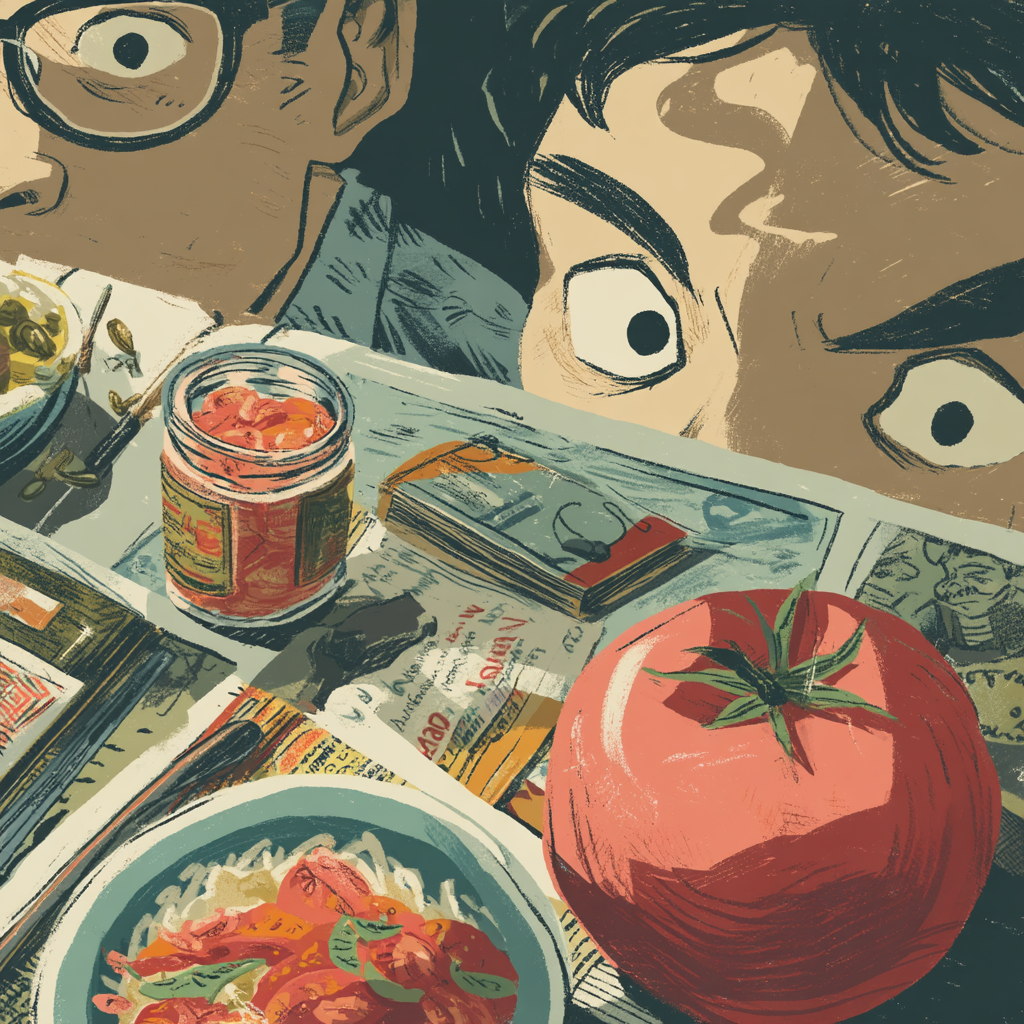
By noon, someone is pounding bagoong with kalamansi. The scent crosses the alley like a hand. We harvest three tomatoes that taste like the sun hit them then forgot. We slice them thin, add salt with two careless pinches. It could be ulam. It is ulam. I eat with rice saved from last night, fried hard at the edges. The oil pops, bites my wrist. I flinch and laugh. A small meal, a big boast.
Talk travels. A cousin in Quezon City messages. Her barangay has a workshop, she says. Seeds are free if you bring your own container. We bring cooked-pasta tubs. We bring paint buckets. We bring shame that looks like pride. Our hands line up at the barangay hall. A poster says food security, but what I hear is sama-sama. Not survival alone. Sharing.
The alley begins to look different. Less gray, and also still gray. Vines tease the top of the wall, then decide to stay. A shoe rack becomes a vertical farm. The fourth step grows spring onion. The first step stores slippers. From far away it reads as a garden. Up close it is a shelf with dirt, seedlings, and doubt. Life in between. Edges.
Some nights we guard the plants from cats and from ourselves. From harvesting too soon because payday moved, because prices changed. Urban gardening promises thrift. Then asks for time. Water. Attention we do not always have. The promise holds, then slips. I say it is worth it. I also say, not today. Both true depending on the bill at the end of the month.
I remember my lola’s yard in Pampanga. A real yard. Soil that swallowed your heel. You could plant saging and forget it until fruit. Here I plant mustasa and check it twice in the same afternoon. I catch myself narrating like a radio host. Overdone. I stop. The leaves keep growing, unbothered by my voice.
A small boy named Junjun starts counting worms like coins. He finds three. Then swears it is five. He holds one up, then drops it back, guilty. I tell him the worms make soil. He asks if they make lunch. I stumble. I say they help. He nods. He pretends to eat the air. We laugh. The ache of the question stays.
Harvest day is not a day. It is an hour tucked into laundry. It is a handful of talbos before traffic. We keep a notebook. No, we start a notebook, then it gets wet. The ink runs. The dates blur. Results still show up in the pan. Garlic, oil, a tangle of greens. One bowl becomes two bowls when a neighbor knocks. We give the second bowl away. We keep the first and feel taller.
I once thought city hunger had only one face. Queue, cost, utang. Then a window box taught me patience. Then a crate taught me luck. Urban gardening is not an answer in marble. It revises itself every weekend. It argues with the dry season, then apologizes when the rains come. We try again. We always try again.
At night the plants look like small flags in the wind. Quiet, stubborn. I tell myself this alley is a chapter of a longer story. Not a slogan. I stop before declaring anything solved. The rice sacks lean against the wall, speckled with soil, damp with effort. They do not promise. They don’t need to. They feed us, a little, and they teach us to say enough with our hands, not with a sign.