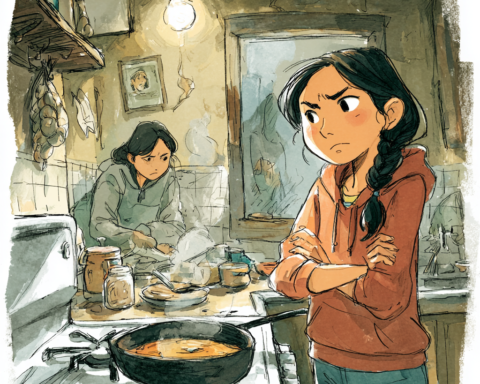
In a cramped Dubai kitchen the filipino pantry has taken over the top shelf. The rice cooker is wedged under it, so near the wall your knuckles scrape paint when you reach up. One soy sauce bottle leans a little, its paper wrinkled from weeks of steam. A plastic tub sits beside it, red lid warped at one edge, a dark ring dried around the groove. Next to that, bright banana ketchup, a packet of sinigang mix, three cubes of frozen laing in a reused ice cream container. The room smells of fried fish lodged in curtains, of onion browned a little past comfort. On day off the smell thickens. Someone unlatches the window for air. A bus roars past, a horn cuts through, and the window is pulled shut again, curtain caught awkwardly in the frame.
In many OFW homes, the suitcase becomes the first shelf. A jar of bagoong wrapped in socks, packets of instant sopas pushed flat along the lining, small tubs of atsara sealed in plastic upon plastic until the tape cuts into fingers. At NAIA, the x-ray machines know these outlines, the way glass jars press against T-shirts and pressed uniforms. A mother tucks in one last pack of dried mango for a child abroad. Or for herself, she pretends otherwise. The luggage looks full. It still swallows one more packet of noodles. Inside, folded between clothes, sit instructions whispered at the airport, reminders on how to stretch one tub of bagoong across six months.
After a few months abroad, the filipino pantry crawls out of the suitcase. At first it hides in one drawer, a few packets and a jar. Later it spills into half a cabinet. Then one day there is a shaky metal rack in a staff lodging or shared flat, mostly taken over by Filipino things. Back in the Philippines, pantry usually means a stuffed cupboard. Sometimes another one beside it. The shelves sag a little. Or maybe it is only the way the cans settle. Sardines stacked in a short tower, corned beef lying on its side, one sticky bottle of patis no one has wiped in months, coffee pushed to the back, a ripped box of powdered milk always a bit halfway out. Here the space shrinks. One corner of a shelf, one box under the bed, a hook on the back of the door. It looks complete for a moment. It never feels complete. A spoonful of bagoong on fried egg answers one kind of hunger, then opens a different one behind the ribs, a hunger no amount of rice fixes.
In a supermarket in Rome or Sydney, a tired worker on break stands too long in the “Asian” aisle. Bottles line the shelf in stiff rows. Mostly soy sauce. Some fish sauce from Thailand. One oyster sauce from Hong Kong that looks almost right from far away. None of the labels match the brands from home, yet the hand reaches for something anyway. A trial bottle, plain and unfamiliar. The first time it goes into adobo, the smell feels off. Too sharp, then oddly flat, a small stumble in the pan. Garlic hits the oil and smells almost burnt, no, more like sugar and garlic arguing. Later, after a trip home, a familiar Philippine brand of soy sauce arrives in the luggage, and the dish shifts again, closer to how nanay made it. Still not the same. The onions here are bigger, the pork cut different, the water from another river entirely.
In cities with big Filipino groceries, the filipino pantry gains more volume. Some shops keep whole freezers of longganisa from Pampanga, tubs of Bicol laing, even dinuguan in thick plastic pouches that look plain and tired. OFWs push heavy carts on Sunday mornings, arguing over prices in a mix of English and Tagalog. The air is thick with talk, frozen bangus landing in baskets with a flat thud. Photos of grocery hauls go to family group chats, bottles and packets lined on the counter like medals on a narrow table. Back in the shared flat, a helper stands near the stove and hesitates before frying daing or reheating paksiw with its sour vinegar fog. Housemates from other countries wrinkle their noses, wave a hand in front of the face. Pride stands in the pan. Apology waits near the window.
Some food once treated as ordinary at home arrives abroad vacuum-packed, labeled almost like something rare. Frozen saluyot leaves, malunggay pressed into tidy pellets, tuyo laid flat inside sleek plastic. In a Manila wet market these belong to the everyday pile, shared with neighbors, even hidden when guests with higher status visit. In a foreign city the same fish, the same greens, sit behind fogged freezer glass with a higher price, sold as “specialty” stock. A dish once called pang-mahirap fills the table in Paris as a treasured taste of home, served in a nice bowl for visiting friends. On screen during a video call, a parent in Laguna raises eyebrows, half amused, half proud, half unsure why this poor person’s food now stands in the center. Same dish, not quite the same meaning.
The filipino pantry abroad often travels through pasalubong. A seafarer comes home for a short contract break, unpacks chocolates and perfume for family, then repacks noodles, dried fish, lumpia wrappers, even native vinegar in recycled mineral water bottles for the return trip. In the kitchen, siblings hover as he chooses what to bring. This vinegar, not that vinegar. This suka carries the taste of home province, sharp with sugarcane and a memory of roadside stalls. He dips a spoon into one bottle, frowns, reaches for another, corrects himself. No, this one. The choice looks small on the counter. In his mind it sketches a route he will follow later in some distant port kitchen, one splash of suka at a time.
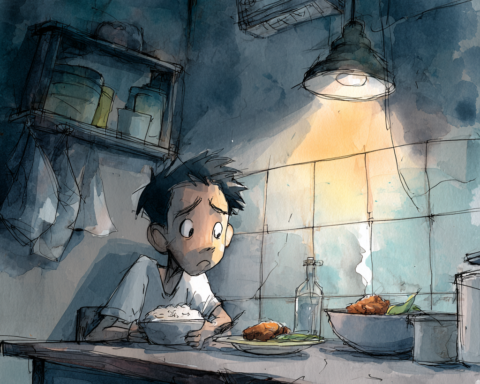
Children who grow up near these shelves live in a different distance. For them the filipino pantry smells like day off food, or hangover food, or last-week-of-the-month food. They know the labels, recognize Lucky Me and UFC and Mang Tomas, though their tongue leans toward school lunches from another culture. They stand at the threshold of the kitchen while a parent spoons sinigang broth over rice, steam fogging eyeglasses. Sometimes they ask for pasta instead and the request hangs in the air for a second. Sometimes they pour the broth over mashed potatoes instead of rice, an odd plate that looks wrong at first. Their mouths stop for a moment, then continue. Flavors share the same spoonful, bumping and sliding, almost fitting, then drifting apart again on the next bite.
On social media, the pantry turns into a small photoshoot. Shelves get wiped and rearranged for the frame, jars lined up under window light or a phone torch held by a bored housemate. Neat pictures of arranged shelves appear in feeds, soy sauce and dilis beside quinoa and chia, glass containers labeled carefully in English. The curated scene looks steady, even stylish. A tidy answer to distance, or at least a background for it. Off-screen, messages arrive from cousins in Cavite, asking about remittances, about delayed tuition, about a grandparent’s medicine. Behind the still image, time runs uneven. Work, send. Work, send. The same hand that arranged bottles for a photo scrapes the last bagoong from a jar, stretching it between paydays because there is nothing else in the fridge that smells like home.
By then the filipino pantry abroad holds more than food. It holds rules written on scratch paper, faded phone screenshots of recipes, secret shortcuts to getting close enough. A chipped mug measures rice “the way Lola did it”. A spoon dipped into soy sauce and vinegar tests the balance that once rested in her wrist. Sometimes the dish lands close and the table falls quiet in a good way, people reaching for second rice without comment. Sometimes the dish misses. No one comments. Someone reaches for the Jufran banana ketchup on the side, then another hand follows, and the plate tastes a little safer. The shelf stays as it is, the jars in their usual places, hands moving without thinking, open and pour and scrape. For a brief second the room leans closer to home. Then plates empty, the sink fills, and the distance sits again with the dirty dishes.