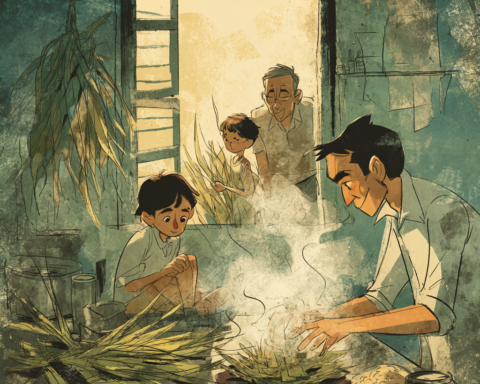
Zero waste cooking starts, for me, with the small splash of water at the back of my lola’s house in Pampanga.
Metal tabo hits a cracked plastic pail.
Fish scales cling to old newspaper.
Ginger peels curl on the cement floor, still damp from last night’s bunot scrub.
The smell stays.
Half onion, wet charcoal, a faint sour note from a pail that waited one day too long.
I reach for the bin, the big black plastic one for city collection.
My lola taps my hand, slow, almost gentle, then points to another container.
A low tin drum near the santol tree, streaked with soil and kitchen grease.
Inside, banana peels slump over malunggay stems.
Rice wash turns cloudy around them.
The surface shivers when a chicken hops up to peck on the rim.
No one calls it compost.
She says only, half to herself, ibalik sa lupa.
Return to soil.
A rule, not a slogan.
Later, after lunch, plates come back with the usual mix.
Half a spoon of kanin, a bit of pritong isda skin, one lone kalamansi.
My cousins reach for the big trash bag from the sari-sari store.
Again her hand stops us.
Bones to one side.
Rice to another.
Vegetable ends to the drum.
Another form of zero waste cooking, although no one in that house uses English words for it.
We like to say Filipino kitchens hate sayang.
No waste, no throwing away, walang tapon.
Yet in the same breath we laugh at kaning baboy, as if early morning walks with a pail for pig feed belong only to hunger, never to care.
Pride and shame stir in the same pot.
The line wavers.
Those older routines grew beside animals and soil.
The yard held chickens, a pig, sometimes a goat, and always a row of kamote leaves creeping up some wall.
Kitchen scraps slid easily into cycles.
Fish heads simmered again for sinigang.
Bahaw turned into sinangag, garlic strong enough to wake the entire street.
Whatever still remained went to the drum or the pig.
Waste existed, but in smaller, slower piles.
Then sachets arrived.
Silver foil strips from instant coffee, shampoo, powdered soup.
Small joys, cheap, quick, placed within reach of those with twenty pesos in a pocket.
These wrappers did not soften in rain.
They glared under sun, wedged in canal grates, caught in tree roots near the drum.
Zero waste cooking felt normal on the plate, yet the ground began to shine with plastic.
Inside new condominiums, the story shifts again.
No backyard pig.
No santol tree.
Only a narrow balcony with strict rules from the admin office.
Garbage collection stays reliable in the better parts of the city.
Food scraps leave the unit sealed in double plastic bags, scented, far from sight.
Lola’s drum does not fit beside a washing machine and two indoor plants bought during a lockdown sale.
In this space, zero waste cooking enters as trend.
Pretty glass jars on the counter.
A countertop compost bin on Instagram, clean and steel, lined with special paper.
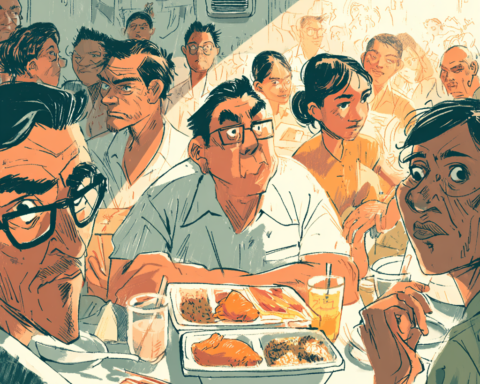
Workshops in cafes in Makati promise “sustainable habits” for a fee that matches a week of market runs in the province.
The language shifts from survival to lifestyle.
Nothing in those posters mentions kaning baboy or the old tin drum with chicken prints on its side.
Yet the old kitchen whispers under the new one.
Every time leftover tinola turns into rice porridge, every time fried fish skin crowns tomorrow’s lugaw, a thin thread holds.
Many of us still scrape meat from bones for paksiw.
Mothers stir ginisang gulay from stems and leaves someone else might sweep into a bin.
Zero waste cooking lives here, unnamed, woven into habit that sits close to poverty and skill at once.
Language gives clues.
We say tirang ulam, leftover dish, not “food waste”.
We say sinangag, fried rice, when we rescue the morning pot.
We name dishes after second lives.
Paksiw na lechon rises from party excess.
Arroz caldo starts with bones and forgotten meat in the fridge, not with clean cuts.
In recipe books, these shine as comfort food.
On the street, some still treat them as proof of not having enough.
Compost hides below all this.
Not only as soil practice, but as ethic.
A slow agreement with rot.
Peels soften, lose shape, turn into something hard to sell and easy to ignore.
Under the right mix of time, water, air, they feed talbos ng kamote again.
My lola never explained science.
She read sky, smell, texture on her fingers.
Her version of zero waste cooking did not need labels, although it used method and patience more strict than many online guides.
Today, a younger cook in Manila keeps a freezer bag for vegetable scraps.
On weekends, they simmer a deep stock, then send the limp pulp to a shared compost in a community garden in Quezon City.
A worker in Dubai saves rice from the hotel buffet to bring home, turning it into tortang kanin, rice pancakes, for roommates in a cramped flat.
An elder in Bicol sweeps fallen gabi leaves into a pit after trimming stems for laing.
Three lives, far apart, linked by unease with the bin.
All, in their own uneven way, practice zero waste cooking without full control over where their scraps end up.
Sometimes the effort stumbles.
The condo freezer breaks after a power interruption and the stored trimmings smell almost chemical.
One forgotten bucket of compost in the corner turns slimy, a home for flies, not earth.
I mix it anyway, hold my breath, then hesitate.
For a moment I want to throw everything into one black plastic bag and return to simple, fast disposal.
No sorting, no guilt, no sticky fingers.
Then I remember her drum, the scratched rim, the chicken jumping up, and my own hand stays in midair…
The truth sits in the middle.
Zero waste cooking will not fix flooding in Marikina.
It will not cancel corporate packaging on its own.
Filipino kitchens carry heavy work already.
Daily labor, unpaid, gendered, hidden.
Adding one more duty without support feels harsh, even cruel.
Yet to give up feels wrong in my bones.
So the kitchen becomes a small testing ground.
One jar for cooking oil, saved for soap makers.
A bowl on the counter for egg shells and coffee grounds, crushed later into balcony soil.
Leftover rice shaped into suman with a neighbor, laughter cutting through the fear of smelling poor.
Each act tiny, slow, incomplete.
Each one also a quiet refusal to forget earlier lessons from soil and drum and pig.
When I think of compost now, I see more than a garden project.
I see my lola’s hand on my wrist.
I see our own hesitation in front of the trash bag.
I see how a culture that once made room for shells, stems, bones, and peelings now runs on things that never break down.
Zero waste cooking in the Filipino kitchen becomes a way to remember, awkwardly, that our leftovers still belong somewhere.
Not only to land, but to story, to tongue, to future mouths who will not know why the soil near the santol tree stayed dark and sweet, only that it did.