Wellness culture arrives in a plastic cup before I feel ready for it.
In the mall café the blender starts up without warning. A blunt roar. Ice hitting metal. The smell comes late, sweet and grassy at the same time, like overripe mango beside cut leaves from a yard. My straw hits crushed ice first, then a thick green layer that clings a little to the sides. The board above my head spells out “detox,” “clean,” “glow.” A thin script. Outside the glass, a man with a taho bucket walks past exhaust smoke. Aircon on my neck, fumes in his lungs. Same city, two different temperatures in one step.
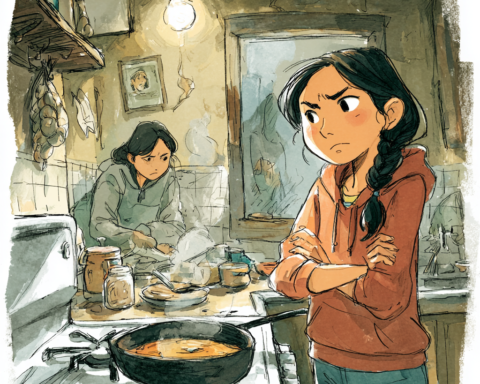
The phrase wellness culture hangs over the counter like another sign. Imported grammar. In my head it knocks against older words from my lola’s house in Pampanga. Hilot for sore backs. Himas on a child’s forehead. Salabat for a throat that felt scraped. Her kitchen smelled of boiled ginger and kerosene from the stove, not of frozen fruit and powdered protein. Wellness sounded like “rest,” “inom ka muna ng mainit,” “higa ka doon.” No slogans, no chalkboard art. Warm mug pressed into your hand with no measurement. When I stand in the mall café, I feel both languages inside my mouth. One English and smooth. One Tagalog and slightly rough at the edges.
In BGC and Ortigas, the posters for green smoothies show slim bodies, rolled yoga mats, white sneakers on bright floors. No plates, no sabaw, no auntie in a faded duster behind the counter. Wellness culture enters through these pictures that float above hunger. You see a color, a pose, a lifestyle. The drink below the photo costs more than one jeepney ride, sometimes two. In small letters a menu lists “with malunggay.” Our old backyard leaf reduced to an extra, tucked beside words like “kale” and “chia.” Malunggay once sat inside tinola beside chicken bones. Here it hides inside plastic, where you need a straw to find it.
For a long time many of us linked vegetables with shortage. With “kulang sa ulam.” With days when meat stayed thin or absent, when rice stretched meals for a whole family. Children teased classmates who brought ginisang ampalaya for baon, while burgers meant progress, or at least a field trip treat. Now wellness culture lifts the same bitter taste onto glass and steel. The leafy thing once called pang-mahirap turns into “gut-friendly” on a menu in English. I watch office workers in lanyards drink what they refused at home. I say I dislike the drink. I still order it again the next week, almost without thought. A small betrayal that sits quietly in the stomach.
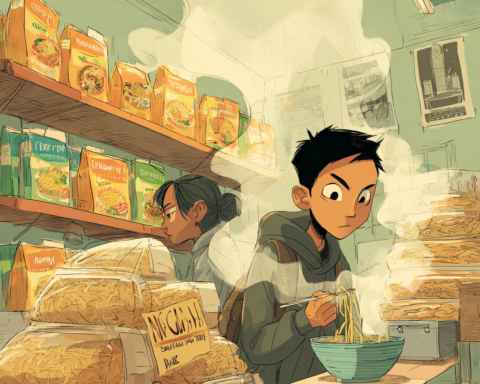
In one corner of the city a small karinderya still ladles out Friday munggo, thick with malunggay, a thin shine of oil resting like a film on the surface. The smell stays low and heavy near the pots. Across the street a narrow stall lines up glass bottles of cold-pressed juice on crushed ice, labels neat, caps straight. Both windows show green, both talk about health in their own way, yet the numbers on the handwritten price board and the glossy sticker quietly push the two crowds apart. Same street. Different doors. Different wallets. I repeat it in my head while I cross, unsure which line I belong to, which door fits my body today.
Some mornings at home I lift my own blender from under the counter. Habit now. I drop banana pieces inside, then ice, then a careless handful of spinach from the supermarket bag. Leaves still a bit sandy. I rinse them fast, not enough. One time I skip the rinse, or half skip. I press the button and the motor stutters. Not a smooth sound. It grinds for a second, then finds its own pace, louder than it needs to be for breakfast. The kitchen feels small when it runs. One glass near the edge starts to move. I open the lid too soon. Cold mix jumps out and hits my wrist, and I swear under my breath. Cold, thicker than I expect. The drink smells loud. No, not loud. Sharp and flat together, if that makes sense. I tell myself it tastes fresh. No, not fresh. Thin and sweet at the same time, like it forgot to decide what it wants to be.
On my phone a neat chart explains a perfect plate for health. Grains in one corner, greens in another, small portion of meat. Next slide praises quinoa and draws a heavy red circle over pork fat. The graphic runs straight into my memory of lechon kawali with cousins at a birthday table. Grease on our fingers, rice piled too high, vinegar with onions on the side. No talk of “bad fat,” only tita’s warning about high blood pressure that sounded half serious, half joke. Our grandparents did not carry gym cards. No wrist trackers blinking numbers at them. They carried water in buckets instead. They bent over basins and scrubbed clothes on rough cement until their backs complained. Many walked far in plastic slippers that wore down faster than the month. They moved all day without calling it exercise, without calling it anything at all. Their days held work in heat and siesta in the hottest hour. Not yoga retreats in airconditioned rooms. Part of me trusts their rhythm. Part of me keeps scrolling the chart again and again, wondering which body stayed stronger, which body simply endured.
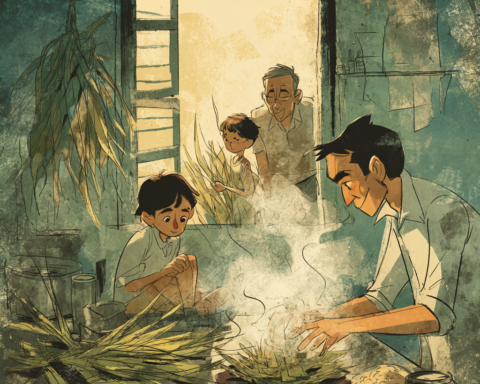
Older recipes wait under all these new images like stones under tiles. When my throat hurts, my first impulse still leads toward salabat. Ginger sliced thick, boiled until the house smells sharp and slightly smoky. Brown sugar dropped in without counting. Steam fogs my face, makes my eyes sting a little. The mug warms both hands at once. No one posts a photo. No one calls it detox. Yet the relief feels plain. The next day I still open a health blog about “anti-inflammatory drinks,” read advice from strangers abroad, and nod along. I trust my lola’s method and some stranger’s list at the same time. Two maps stored in the same cupboard.
Wellness culture rarely arrives alone. It brings products, timers, slogans, guilt. It also brings certain small gifts I hesitate to dismiss. Some parents remember malunggay for sabaw after seeing it praised as a “superfood,” an odd circle from backyard tree to foreign label and back to the pot. A few cafés in Manila try to meet the middle. They blend guyabano with kale. They serve iced drinks named after salabat, ginger strong, sugar reduced, poured into tall glasses with metal straws. The taste surprises the tongue, not always in a pleasant way. Still, in that confusion something interesting opens for you, if you stay long enough with the sip and the memory together.
So the blender in the mall keeps roaring. The taho vendor still walks outside, calling in a voice you know from childhood mornings. At home a pot of lugaw thickens on a small stove for someone who woke up weak. Three versions of care in one city. All of them claim to heal. All of them leave marks on how you see your own body, your own hunger. The question that lingers near the sink is simple and stubborn. Whose idea of health reaches your cup first. Which recipe for feeling whole earns a signboard and a logo, and which stays handwritten on the back of an old envelope, folded, stained with ginger, still waiting on top of the fridge.