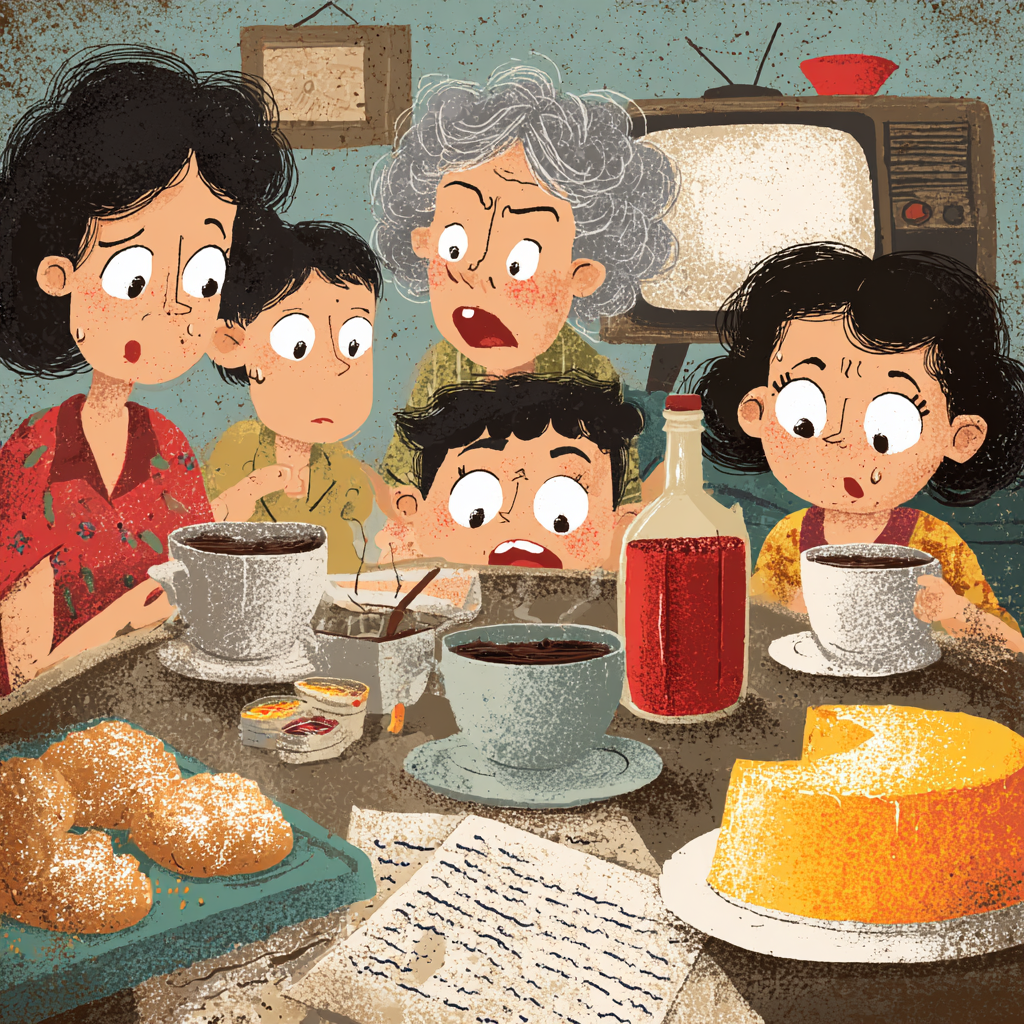
The story of sugar and health sits first in the mouth as a thin line of white sand on the saucer, waiting for hot coffee to pass through it.
Lola tips the spoon, pours the grounds, stirs until the cup turns almost black, then keeps stirring, hunting the last rough grains at the bottom.
Small clinks, slow circles.
A morning ritual that feels faithful, stubborn, a little tired.
On the table there is a plate of pandesal, already sliced, some pieces small and some too thick, left open and waiting for margarine.
Sugar is pressed into the soft crumb. Some spills to the plate, sticks to the fingers, disappears before it ever reaches the bread.
Sweet on bread, sweet in coffee.
Sweet almost hiding the salt of dried fish at the side.
We say we worry about sugar and health, yet we refill the cup, the glass, the pitcher.
Old fear of hunger, new fear of illness, stacked on the same table.
The TV in the corner runs a segment on diabetes, the volume stays low.
Rice steams. A bowl of minatamis na saging cooling in syrup that glows faint in the kitchen light.
The syrup smells burnt, or no, more like late afternoon caramel stuck to the pot.
Banana, brown sugar, a dash of vanilla from a small bottle saved for big days.
Once, sweetness signaled blessing, extra pesos from overtime, a cousin home from abroad.
A reward, rare and shining.
Now sweetness crowds the day.
Sachets of powdered drink on the sari-sari shelf, rows of soda, tall milk tea cups sweating on plastic tables, pearls knocking on teeth.
Children in uniforms clutching bills for recess, wide-eyed at flavor names printed in cartoon fonts.
Afternoon bell rings, and the street hums with plastic straws.
This is not simple greed for sugar.
It arrives from a long history of ships and cane, of labor and quotas, of hacienda names whispered with mixed envy and anger.
Sweetness once traveled as wealth and power, crossing oceans in wooden hulls.
At the end of that route, thin brown hands cut cane under a white sky in Negros or Tarlac.
In the middle of the archipelago, sugar estates shaped whole towns.
The bell did not only mark Mass or curfew, it held the rhythm of harvest, of milling, of export.
Bodies moved to keep up with the crush of the mill, the steam, the noise.
A different kind of sweetness rising, not in the tongue but in loans, in school fees, in city trips.
On another island, far from those fields, a child grew up believing sugar meant simple joy.
Fiesta trays of leche flan shining under plastic wrap, gulaman quivering beside buko salad heavy with condensed milk.
Family photos hold more dessert than faces.
The camera leans toward the table.
Later, in a Manila boarding house, sweetness kept the student awake.
Instant coffee with three spoonfuls, then four during exams.
Soft drinks from the nearest sari-sari, logged in a small notebook of utang, shrugged off as small, forgettable.
Energy in a bottle, comfort with bubbles.
In clinics today, numbers rise.
Nurses take a weight, prick a finger, jot down numbers without much talk.
In the waiting room the smell is alcohol swabs mixed with old floor wax.
The door opens, then pauses, then opens again as another name comes out.
It sounds easy to say, stop.
Keep sugar away, talk about discipline, about choice.
Sentence after sentence points a finger at the grocery basket, at the tumblers lined up for unlimited soda.
Yet the hand reaches out again, because sweetness also quiets something private.
Sweetness quiets an empty salary envelope.
Quiet thoughts of unpaid rent, school projects, political speeches about progress that seldom reach the alley.
A twenty peso turon at the corner stall answers no policy question, still, it softens the walk home.
Flaky wrapper, sticky fingers, the small relief of a treat that feels earned.
There is a contradiction in every sip.
We praise self-control, yet we celebrate with sugar heaped on the plate.
We repeat health slogans, then slip another packet into the cup, saying we need the strength.
A country anxious about sugar and health, still reaching for sweetness morning to night.
Marketing helps.
Billboards along EDSA splash smiling teens running with clear bottles, promising light, activity, a future free of worry.
The label lists grams of sugar in tiny print near the seam.
No room on the poster for a foot swollen from neuropathy, for the uncle who now visits the center three times a week for dialysis.
I once thought sweetness was neutral.
A personal preference, like music volume or paint color.
Then I stood in line at a community health center, watching patient after patient step onto the scale, eyes fixed somewhere beyond the wall.
The doctor spoke about numbers and risk and diet, and my aunt only nodded, her fingers tracing the rim of the saucer, as if the sugar still waiting for
Perhaps surrender is the wrong word for our relationship with sugar.
It feels tougher, more entangled, like vines on an old fence.
Surrender suggests full awareness, a clear giving up.
Here the story moves slower, wrapped in habit and hospitality, in the wish never to appear stingy with guests or with children.
Still, sweetness once named privilege, then comfort, now illness.
Three roles living in one white scoop, depending on who holds the spoon.
The tongue remembers before the mind does.
One sip, and a flood of older mornings arrives.
Inside many homes, adjustments begin.
Half-sachets, shared dessert plates, ampalaya cooked a little more often, grandmothers learning to say no with a wince.
Conversations grow awkward at the table.
Someone passes the juice and adds a quiet reminder about sugar and health, then grows silent, hearing their own words as scolding.
Change moves unevenly.
Some barangays grow full of clinics and posters. Others still wait for a visit.
One neighbor starts walking every night around the plaza. Another laughs off the suggestion and sits back down at the videoke table.
Sweet, sweet again, the chorus in every song.
In time the story of sugar and health in the Philippines might sound different.
For now it stays tangled in memory and the simple comfort of a sweet sip after a long day, with history muttering in the background.
No clean ending here.
Only a table where the coffee cools, the sugar bowl sits half-empty, and someone reaches out, hesitates, and then decides, almost without thinking.