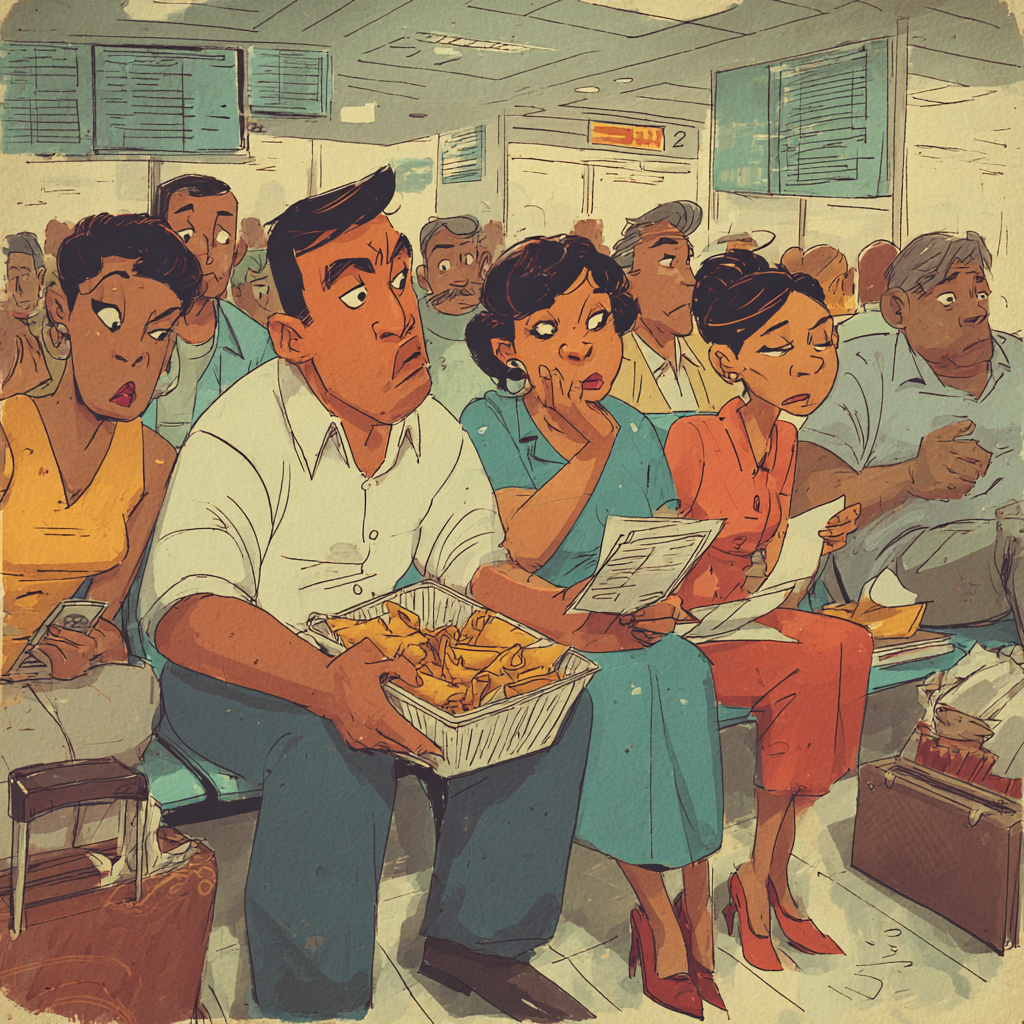
Filipino lumpia waits on the table, wrapped in foil that still holds airport cold. Grease already seeps through. The rolls lie in rows, tight, a little cramped. Beside them, a small container of suka with floating garlic, confused by the chill of air-conditioning, as if it belongs somewhere humid. Someone says, “Huwag mo munang buksan, mamaya sa bahay,” and then opens it anyway. The first smell escapes early. Too early, my aunt mutters. The scent hits, sharp then no, more sour than sharp.
In the old house in Pampanga, lumpia arrives hot, never jet-lagged. The crackle reaches the ear before the teeth. A roll rests on fingertips, passed from a plate lined with old dyaryo, and the oil marks the headlines. There, the filling stays modest, giniling with bits of carrot, a little singkamas if the palengke offers some, more bread crumbs when money feels thin. Ordinary food. Everyday, my mother says, then hides it for birthdays. Small contradiction on a Sunday table.
Migration shifts the calendar of frying. In California kitchens, lumpia turns into project work. Weekends only. Giant bags of frozen wrappers from Seafood City. Aluminum trays stacked higher than the rice cooker. We roll on vinyl tablecloths covered with flowers that never wilt. Someone plays Side A on cassette. Someone else argues over how much meat. We wrap and wrap. Wrists grow sore, stretch, then return to the pile. Work that looks like plenty but smells faintly of fear.
I once believed the recipe traveled intact. That it boarded the plane with us, declared nothing at customs, glided through x-ray unchanged. Then I watch my aunt in Toronto. She swaps singkamas for celery because the Filipino store sits two bus rides away. She adds more ground pork when a yellow sticker appears on the pack. Then, almost shy, she mixes in a spoon of cream cheese. “Para magustuhan ng mga bata,” she says. I want to protest. I reach for a second piece instead. I learn my loyalty has a soft center.
The label moves first. On party invitations in the States, the menu line reads “Filipino lumpia spring rolls.” Food folds into a more familiar frame. At church potlucks, elders still say paboritong lumpia ni Tito. The kids at school say “those egg rolls your mom makes.” Same tray. Different name at each end of the table. The dish begins to live between languages, like its makers. Not quite at home in either, yet not lost. Suspended, like a voice on hold.
In Sydney or Chicago or Dubai, lumpia also travels along class lines. In the barrio back home, some still say pang-handaan lang. Filling stretched with more carrots than meat, wrappers thin, oil reused. In glossy Western food magazines, Filipino lumpia appears as “heritage street food” or “new Asian snack,” framed on ceramic plates under soft studio light. Same crunch. A different story arranged around it. The distance between those two descriptions feels wide and odd. Hard to swallow. Swallowed anyway.
The sauce keeps changing its mind. One week it is suka with too much garlic, sharp enough to sting the nose. Next gathering someone puts out sweet chili from a plastic bottle, the kind with a flip-top cap that always sticks. Once, at a modern Filipino place, staff serve Filipino lumpia with some pale orange fusion dip. I forget the name, something with “aioli” buried in it, but the taste stays, a little confusing, a little kind. In a cramped apartment where guests sit on the bed, or in a wide suburban kitchen with an island bench, when a plate of Filipino lumpia lands in the center, talk drifts toward it without anyone calling. Hands reach in. Someone says “Ang init pa,” then bites anyway. Conversation slows for a moment, chews, then starts again from a slightly softer place.
Inside families, the roll also works as border. One cousin dips in pure vinegar with siling labuyo. Another pushes the tip into that sticky sweet chili. An older uncle frowns at the bottle, as if the sauce scrubs away a line of memory. The younger cousin shrugs, keeps eating. Spring onions appear. Banana ketchup appears. On the same tray, quiet negotiations of taste mark who leans toward here, who leans toward there, who stands in the middle and double-dips without thinking. A messy map on a paper plate.
There is the question of who rolls. In Manila, lumpia work often falls on aunties, household helpers, older daughters. Fingers move fast, wrappers stay whole. In the diaspora, sons who grew up on microwave dinners line up to learn the fold–tuck–roll pattern on a rare free Sunday. The gesture looks clumsy on unfamiliar hands. Wrappers tear. Filling leaks. A small mess on the table. Someone laughs, someone says “Ako na, hindi pantay,” then lets the new roller continue anyway. Imperfect rolls head for hot oil. They still vanish first from the serving tray. Uneven shape, no penalty.
Every migrant carries one food refused to translation. For some, it is dinuguan, never “chocolate meat.” For others, bagoong that keeps its own stubborn smell. For many, Filipino lumpia sits in that role, yet steps forward as bridge. Easy to like. Crisp shell, savory center, finger food at any party. So we send it out as friendly ambassador. Taste this. Start here. Taste us, a corner of us. Not the more difficult parts. Not yet.
At the same time, the roll draws a thin line. You offer it to a new friend, watch how they bite. Do they drown it in sauce first. Do they peel the wrapper to inspect the filling. Do they return for a second piece without polite prompting. Answers shape which story follows. The full one, with gossip about who rolls fastest, which aunt hides shrimp in the mix. Or the shortened version, trimmed for small talk near the office sink. The lumpia on the plate decides, in silence.
Back home, a tray on a plastic table might signal birthday, wake, graduation, campaign rally. Chairs borrowed from neighbors. Children loitering near the kitchen door. In the diaspora, the same tray signals arrival of a different kind. A family has settled enough to host, to borrow chairs from co-workers, to fill a freezer with pre-rolled stock. Some people still point to a house and say, ayan, success. Keys on a ring, mortgage schedule on the fridge door. In our family, my auntie points to the second-hand chest freezer in the garage instead. The lid looks a little rusted. The light inside flickers. It hums beside the washing machine. Same corner as the mop and the old tabo. Inside are stacked ice-cream tubs and scuffed takeaway containers of frozen Filipino lumpia, piled in uneven layers.
Some lids have dates, some only names in smudged ballpen where the ink has bled from freezer sweat. When a car turns into the driveway without warning, he jabs at the remote, mutes the TV on the second try. The news stays frozen on some bad headline. He shoves his feet into his old tsinelas, one heel folded under. He leaves it like that. He looks at his hands. Starts toward the sink, stops, wipes them on his shorts instead. Outside he pulls at the freezer lid, once, then again. It opens with a short, ugly scrape. Cold air spills out. He rubs his nose with his wrist, already thinking about the pan on the stove. He smiles, small, not the one used for photos. “May pang-merienda tayo,” he says, to the guest at the door, to the tubs of Filipino lumpia, to himself. The freezer hums a reply.
Years later, a child raised in Melbourne or New Jersey says “Filipino lumpia spring roll” in one smooth breath. No pause between terms. No hyphen in the mouth. For this child, the dish already belongs to two places at once, like the accent drifting between syllables. When that child asks for the recipe, the measuring spoons fail. “Tantsa lang,” the older relative says. Then adds more salt. Then shifts the heat. Then forgets to mention one small step. The method crosses the ocean with tiny gaps. The child fills those in with guesswork and online videos, screen propped against a jar of oil. The written version always lags.
So the roll that crossed the ocean stays itself and also not itself. The wrapper thins or thickens. The filling shifts with sale items and cravings. The dipping sauce swings between suka, sweet chili, and some new blend from a place whose name slips my mind. In one kitchen the sound of frying feels like comfort. In another it sounds like extra work, oil popping on a long day. Yet in every cramped apartment or wide suburban kitchen, when a plate of Filipino lumpia lands on the table, bodies lean toward it. Hands reach in without waiting for permission. Someone argues over the last piece. Someone grabs two pieces, wraps them in foil, mumbles “para bukas,” then pushes them into an old plastic container. The lid is from another set and never sits flat, but they press it down anyway. When the visitors leave and the chairs scrape back to their corners, there is a faint smear of grease on the table edge. It needs more than one wipe.