Before sunrise in Hoskyn, the smoke reaches the nose first. It smells of old dagsa driftwood, seaweed, and something faintly sweet from coconut husks. Near the shore, a wide iron kawa rests on a low clay stove, fed by bamboo and gathered branches. Inside, brine trembles in slow bubbles. This is how Guimaras artisanal salt begins, not in neat crystals, but in a low roar of fire and a patient boil.
The men move without hurry, although the work never lets up. One tends the fire, breaking down blackened wood with a bolo. Another hauls more seawater, already strained through columns of ash packed in woven kaing. The ash comes from days of burning driftwood and plant matter gathered along the shore, the remains of storms and tides. On this coast, the sea leaves its trash and its future salt in the same pile.
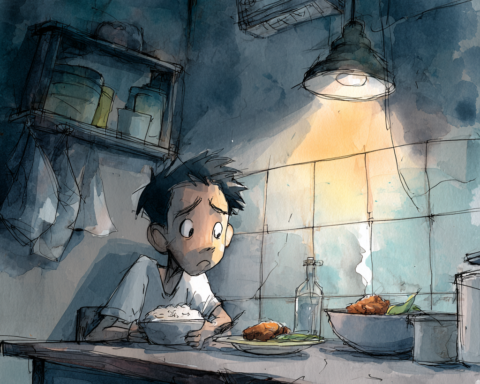
They call the finished block tultul, sometimes dukduk, a squared tablet of rock-like salt. It looks plain at first glance, the color of dried clay with faint streaks from coconut milk. Inside, though, the salt holds smoke, sea, and oil. A thin shaving on hot rice brings out a deep savor, as if the shoreline itself had been grated over the plate.
Along the Visayan coast, people once drew sea salt from fire and ash in many forms. In Bohol, there is asín tibuok, dome shaped and sold with its broken clay shell. In Guimaras and nearby Capiz, the block is flatter, dense, and brick like. Both start with weeks of soaking leaves and husks in seawater. Later, these dried bundles go into the fire. The ash they leave behind strains the next batches of seawater, so the liquid comes out already heavy with salt.
Guimaras artisanal salt, the tultul of Jordan town, adds one more layer. Coconut milk, or gatâ, joins the brine during the long boil. Under the watch of the salt makers, the liquid thickens slowly, pulled back from the edge of scorching, poured and poured again into molds, until almost nothing moves. When the fire rests, what remains is a bareta, a compact tablet with a faint aroma of smoke and toasted coconut.
In Barangay Hoskyn, the story of this salt sits inside one extended family. The work passes from elder to younger through practice, not through written recipes. Children learn which pieces of driftwood belong in the ash pile, how to read the color of the flame, when to stop feeding seawater into the filters. Each step ties sea, shore, and kitchen in one circular route.
The tablet of Guimaras artisanal salt once served as pantry stone. Older Guimarasnons remember shaving tultul straight over steaming rice with a little oil. Others recall mornings where a chunk of the salt block stood in for meat, touched into sabaw then bitten like a small side dish. The block sat on the table, wrapped in paper, less seasoning than presence, a quiet reminder of coast and labor in inland homes far from the beach.
For much of the country, salt moved away from this script. A national push for iodized salt favored large scale suppliers and inexpensive imports. Traditional salt makers along the coasts closed one by one. Work needing whole families, long dry months, and steady access to clean shores had trouble standing beside bulk sacks of industrial crystals stacked in the palengke. Guimaras artisanal salt stayed in part because it stepped into the language of heritage and rarity.
Now tultul, known today as Guimaras artisanal salt, appears in Slow Food catalogues, in small specialty stores, on restaurant menus where cooks name the island and sometimes the barangay. Online listings describe it as heritage rock salt from Guimaras or as the only salt block shaped with coconut milk. The block once waiting in a corner of a kitchen now travels in bubble wrap, its rough surface photographed for distant readers. A product, yes, although still also a proof of survival.
Survival has its own price. The salt season faces shorter dry months and more erratic rain. Firewood grows more expensive as coastal vegetation shifts and rules on cutting tighten. Younger family members look toward other work, in Iloilo or overseas, where income does not depend on weather or on small batch orders. Development pushes on the shoreline, as tourism and building press against the spaces where driftwood gathers and fires once burned without complaint.
Even now, the work moves in the same slow order. Driftwood and old plant matter, once stranded on the sand, end up in the fire and crumble into ash. Seawater passes through the ash and becomes dense brine. Brine thickens over flame until it no longer flows. The block cools, is wrapped, travels, then returns to water in a pot of sabaw or in the steam rising from rice. What leaves the coast as Guimaras artisanal salt enters the body as a small memory of shoreline work.
In a way, each bareta also records a brief history of Philippine salt. It remembers a time when salt makers, or asinderos, held a clear place in local economies. It traces the shift toward imported and industrial salt in plastic packs. It carries the reach of law, policy, and trade into the smallest act of grating salt over food. In one household, this reach shows in fewer batches each year. In one barangay, it shows in fewer hands tending the fires along the beach.
When a cook in Manila sprinkles tultul over tomatoes and itlog, the flavor reaches the tongue in seconds. The story behind it stretches across weeks of soaking, gathering, burning, filtering, and boiling, all pressed into one small shaving of salt. The taste sits on the tongue while pieces of driftwood crack in memory, while collars of smoke rise again from the stove in Hoskyn.
Guimaras artisanal salt sits on the plate as ingredient and record at once. It carries the way a small island answers the pressure of law, market, climate, and time with skill learned at the shore. Each tablet comes from people who keep boiling seawater over bamboo fires because this work still feels needed, even when easier paths pull from the city. Somewhere along the coast, a block cools on a table, waiting for a knife and a bowl of rice, while an older salt maker watches the fire and decides if there will be one more batch next season.