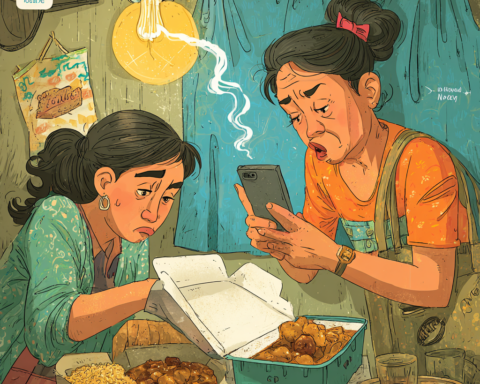
The tindera leans against the counter at four in the afternoon, phone in one hand, calculator in the other. A customer asks for Tide in sachets. She reaches behind without looking. Her thumb scrolls while her fingers count change. The sari-sari store has a new rhythm now. Orders come through the screen as often as they come through the window.
“Ating, may Sky Flakes pa?” a voice calls from outside.
“Meron, kaunti na lang,” she says, still looking at her phone.
The store has occupied the ground floor of her house for twenty years, metal grille half-open until nine at night, shelves holding sachets of coffee and small bottles of cooking oil. Candy sits in glass jars. The freezer hums near the back. It holds ice tubes for neighborhood kids, frozen juice in plastic bags, the occasional tub of ice cream. The same products that filled this space before the apps arrived still fill it now. What changed is how people ask for them.
She tells me she joined GrabMart last year. A nephew set up the account for her. He took photos of the shelves and uploaded the prices. She pays him fifty pesos per delivery that comes through the app. Most days, she gets two or three. On weekends, more. The orders are small: a kilo of rice, a bar of soap, instant noodles for one meal. People who live four blocks away order through the screen instead of walking over. “Hindi ko maintindihan,” she says, watching them pass the store on their way to work. They see the grille and the light inside. But they open the app at night when they need something. She stopped trying to understand it. She just makes sure the phone stays charged.
Her neighbor runs a mini-mart two streets over. Airconditioning, bright lights, aisles you can walk through. The mini-mart sells in bulk. The sari-sari store sells one stick of cigarette, one sachet of shampoo, one egg if that is all you need. The mini-mart does not offer credit. She does. The names in her notebook go back years. Some pages have been crossed out. Some are still waiting.
A regular customer arrives and buys Marlboro and a bottle of Coke, then mentions his daughter’s scholarship exam while she asks about his wife’s recovery from the flu. He mentions a cousin looking for construction work. She knows someone and writes a number on a scrap of receipt paper. He folds it into his wallet. The transaction took three minutes. He bought twelve pesos worth of cigarettes. The store gave him more than that.
The delivery rider arrives on a motorcycle. He shows her the app screen. She checks the order: two cans of Century Tuna and a pack of Skyflakes, then puts everything in a plastic bag. He leaves. She marks it complete on her phone. The customer lives in the subdivision behind the barangay hall. She has never seen their face.
“Mas mabilis para sa kanila,” she says. Faster for them. They avoid the line and the small talk. They get what they need without the rest. Some customers want that. Some still walk to the window.
Her daughter comes home from school and pulls frozen juice from the freezer, biting off the corner while settling onto the stool near the counter with her phone. The tindera glances over. Her daughter is watching a video about skincare. She asks if they can stock a certain Korean face mask. The tindera says she will ask her supplier. Suppliers now visit with catalogs that include things she never sold before: protein bars, oat milk, sheet masks. The neighborhood is changing. The store changes with it.
An older woman stops by. She needs to borrow twenty pesos until tomorrow. The tindera opens the cash drawer, hands it over without asking why. The woman thanks her, promises to return in the morning. This part does not go through the app. There is no button for it. It happens because the woman has lived on this street for fifteen years, because her son buys Tanduay here every Friday, because the tindera knows her face.
The phone buzzes. Another order. She reads the order and packs items from the shelves. The rider will come in ten minutes. She returns to the window. A kid asks for candy. She lets him pick from the jar. He counts coins into her palm. She drops them into the drawer. The app does not track this sale. It does not need to.
People who study these stores talk about resilience. They talk about adaptation. The tindera does not use those words. She says the store does what it has always done. It sells what the neighborhood needs when they need it. The apps brought new customers. They also brought competition. The mini-mart opened last year. The convenience store chain is planning a branch two blocks away. She hears these things from other store owners. They meet sometimes, compare notes. No one is panicking. No one is closing. They adjust.
The phone stays on the counter now. It buzzes, she responds. The calculator still sits beside it. The notebook with names and balances stays in the drawer. The freezer hums. The grille stays open. Customers come through the app and through the window. Others arrive on foot. The store remains what it was. A small opening in a house where people get what they need without going far.
The street fills at six in the evening. Neighbors walk past on their way home, stopping to wave. The tindera stays at her post when the phone buzzes again. She reaches for the shelves while the light inside the store glows warm against the dimming street.