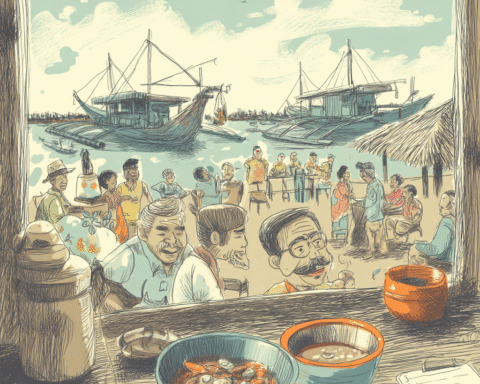

The old market at Talayan happens only in the months of plenty. They call it that—the months when the Pulangi rises and pushes water into the low fields. When the water comes, the fish come. Banak, tilapia, smaller fish all slide or spill into the overflow channels and submerged gardens where nobody planted anything. You go to the market and fill your bucket with what the flood brought. Then you move on. No bucket, no transaction. Just the season, the water, the abundance that lasted three or four months before the river learned to stay inside itself.
The kangkong grows in those months too. The tender shoots come up through the wet soil of backyard plots and abandoned fields. People harvest it with both hands, using basins. You cook it fresh—the same night or the next morning. Garlic and shrimp paste work. Or into a sinigang with the hollow stems soaking up the broth. The taste is different in flood season. More alive. That’s what the older women say, and nobody argues.
Malunggay comes the same way. The moringa leaves get thicker and greener when the rains push hard. You see this in the leaf size, the tender upper branches. A malunggay soup in those months carries flavor that winter versions don’t. The leaves haven’t had to fight the dry season. They remember the water. When you bite into them, you taste that ease.
But there is also the fish work. The work that happened in July and August when the Pulangi wouldn’t stay in its channel. Fishermen set traps along the edges where the water spread out. A fish trap is patient work. You wade into rising water. At dawn you check the trap. You empty what the river sent you. Banak comes through, that slender silver fish that tastes clean and salt-free until you cook it. Some of it dried for storage. You don’t do much to dry fish in the flood months. Just hang it in the smoke of the morning fire, let the heat and salt air work on it while the humidity hangs heavy around everything. Three or four days and you have something that lasts until the dry season starts and the river pulls back.
The root crops moved into cleared floodplain areas after the water receded. November comes, the Pulangi sinks back into its normal path, and the alluvial soil is exposed—darker, richer than the ground above. People planted gabi there, fat corms that grew in mineral-heavy soil with no extra water, no fertilizer. You harvest them in February and store them. They last. The same soil gave good yields for kangkong grown in succession. December planting reached harvest by February, then another round could go in for April. But this only works if the water returns. If the pattern holds.
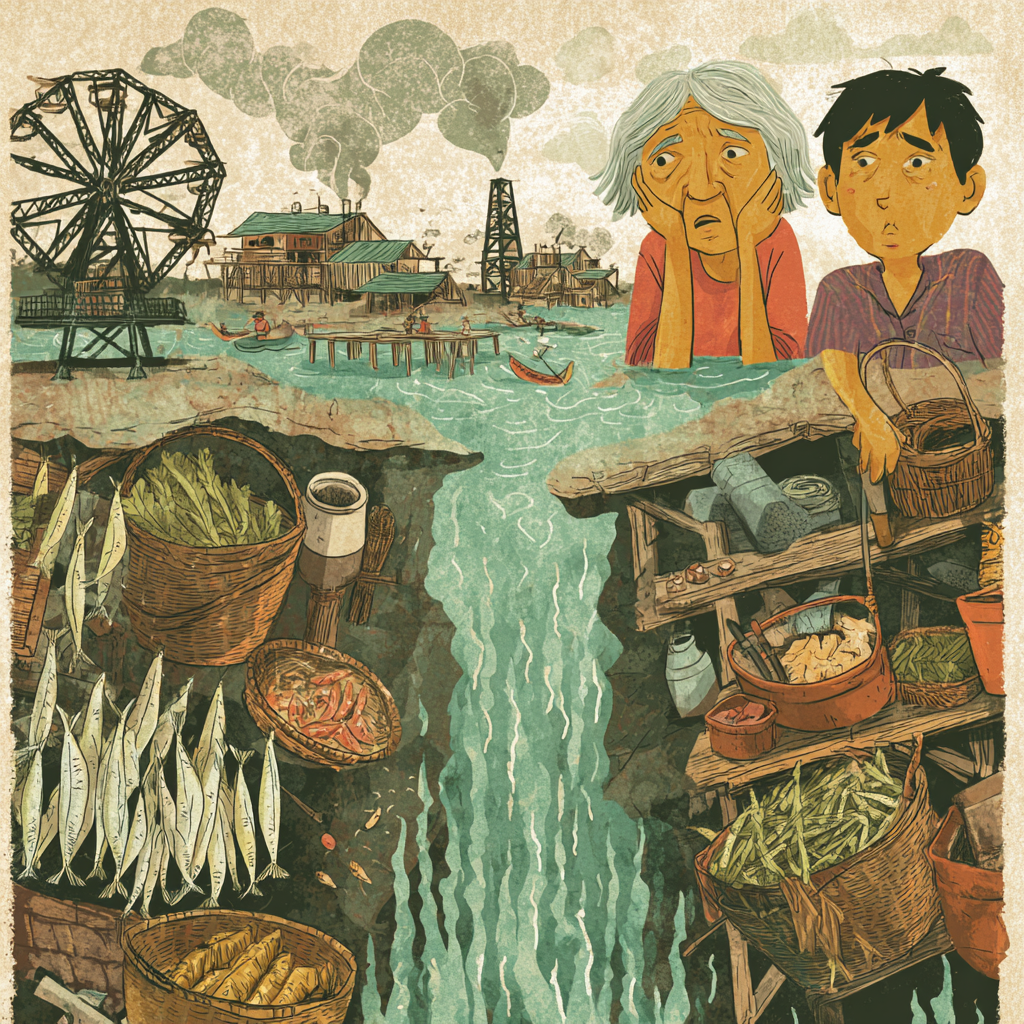
That trust is what the dam broke.
The Pulangi IV plant went live in 1985. Three turbines. The river was controlled now. Water released according to electricity demand, not monsoon rhythm. The abundance disappeared. What used to feed communities dwindled to almost nothing. Eighty-six percent gone. The numbers sit in documents now, institutional facts.
But what lives in the numbers is smaller. It’s the knowledge of timing. The understanding of when the banak would come, why the kangkong grew thicker in those months, what the floodplain soil meant for next season. This knowledge was oral. Passed through demonstration from harvester to watcher. It didn’t need to be written down because it was proven every May when the rain came hard and the river rose.
Now the river rises sometimes. The dam releases water when it needs to generate power. This might happen in June or September, unpredictably. The timing is no longer the monsoon’s. The fishermen still go out, but they don’t know which month will bring what. Ask the women if it’s worth planting kangkong in the floodplain. They don’t know. The water might not arrive. Or it comes too fast. Or not at all. You can’t depend on something separated from its own rhythm.
The season still happens. July still feels like July, the heat still exists. But the visible marker is gone. The water that used to announce itself, the fish that used to arrive with the heat, the fields that used to wait for overflow and know what to do with it—all of this has disappeared from the calendar.
There is still fishing on the Pulangi. There are still markets where women sell vegetables, still kitchens where sinigang is made with kangkong and malunggay and fish. But it is smaller now. More careful. The abundance learned to hide. It no longer arrives with water spilling through the banks and floodplain fields and seasonal markets that opened only because the season promised.
An old fisherman who knows the river before the turbines was built says he misses the certainty. Not because of nostalgia. Because certainty meant abundance. When you knew the water was coming, you prepared for more than you needed. You had extra—to trade, to preserve, to give. The river was generous in that way. Not in the amount it gave, but in the reliability of giving it.
Now you fish without knowing if abundance will come. You plant and wait without certainty. The Pulangi continues downstream, feeds irrigation systems, and generates electricity for cities that need light. But the seasonal bounty—the food tied to the month, the water, the reliable arrival—that knowledge is scattered now. Some was forgotten by people too young to have lived the abundance. Some lives on in how someone’s grandmother cooked, in hands that remember the work even when the season offers nothing.
The river is tamer now. That tameness has its own cost. It’s not measured in kilograms or electricity output. It lives in the space between months—in the months when the water used to mean something, when the food that came with it tasted like certainty.