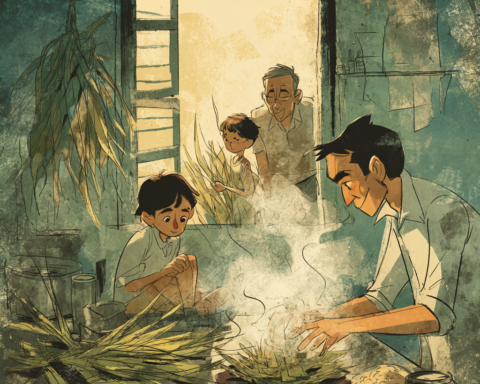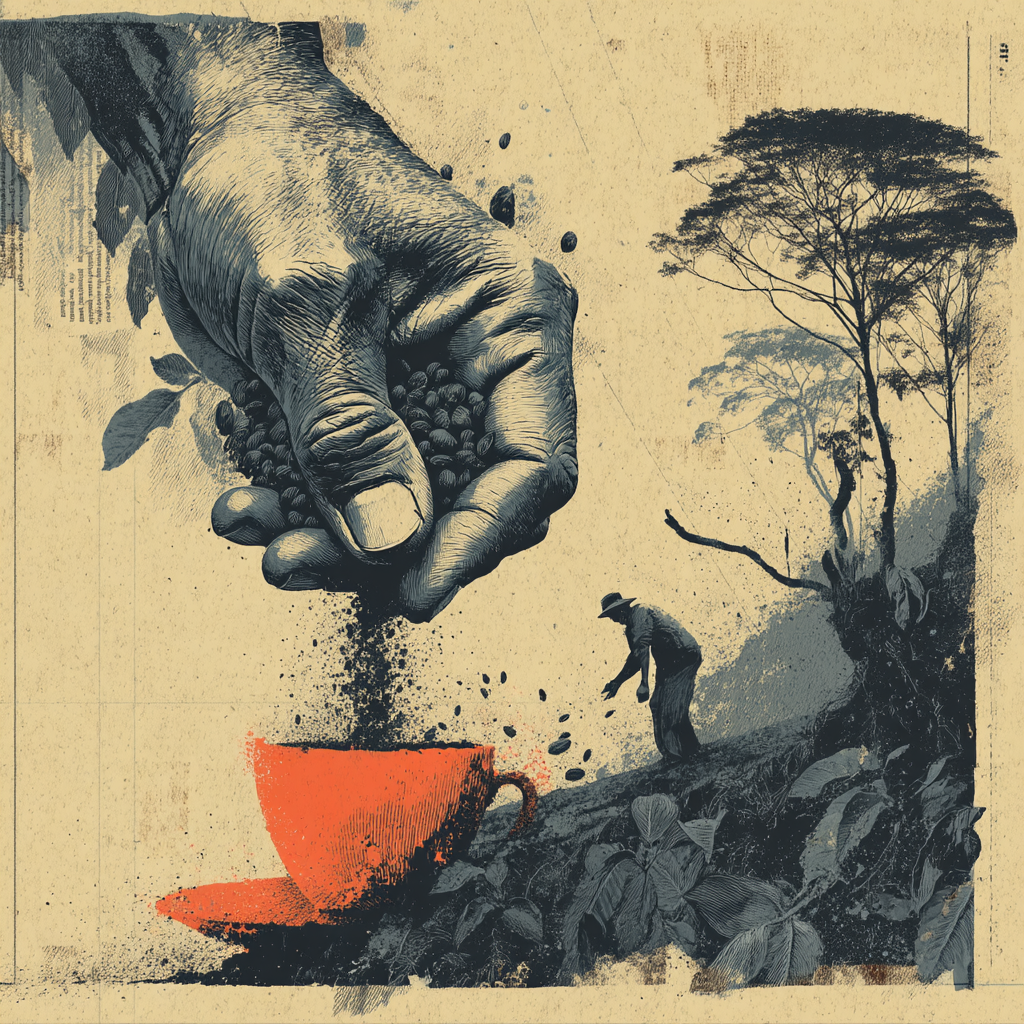
The tsokolatera sits on a low flame, and the smell reaches you before anything else does. Dark, faintly bitter, with something underneath it is almost earthy, almost sweet. A woman lifts a wooden batirol between her palms and rolls it back and forth until the liquid inside the clay pot begins to foam. She does not measure anything. Breaking one disc of tablea from a paper-wrapped stack and dropping it into hot water, she waits for the chocolate to become itself.
This is breakfast in many Filipino homes, and has been for centuries. The tablea she uses is nothing more than roasted cacao ground to a paste and pressed into small rounds. No sugar added, no stabilizers. The bitterness is real. When she finally pours the tsokolate into a cup and pushes it toward you, the foam holds for a moment before it settles.
Cacao arrived in the Philippines aboard the Manila Galleon, carried from Acapulco sometime in the late 1600s. The Spanish brought the tree, and then the custom of drinking it followed the tree as colonial rule spread southward from Luzon into Mindanao. By the time the tradition had rooted itself into Filipino kitchens, it had already changed shape. The Latin American molinillo became the batirol. Drinking chocolate of colonial courts became a morning drink for ordinary households. Filipinos took the Spanish word for tablet, tableta, and renamed the small disc tablea, making it the unit by which chocolate was measured and sold. The renaming was an act of ownership — the word changed, and so did everything around it.
Davao took to cacao the way few places did. The region now accounts for roughly 80 percent of the country’s total cacao production. Drive through the hills outside the city and you pass farms where the trees grow under taller shade canopies, their pods hanging directly from the trunk in shades of yellow and deep red. The soil there and the particular elevation of certain hillsides — all of it ends up inside the cup. Narding’s family has worked a small plot in the foothills for two generations, and he puts it plainly. “You taste where it came from,” he says. “Can’t separate it.”
What Narding describes is not a poetic idea. Cacao is sensitive to temperature in ways most crops are not. The trees grow best below 32 degrees Celsius. Above threshold, photosynthesis slows and flowers shrivel before they can set fruit. Pods do form tend to rot before harvest. The International Cocoa Organization notes cacao also needs between 1,500 and 2,000 millimeters of rain annually, with no dry stretch longer than three months. Davao has historically offered both. Increasingly, it offers neither with any reliability.
Narding walks the row of trees nearest the road and stops at one whose canopy has thinned. The pods on this tree are smaller than his fist. He says the dry months have been arriving earlier and staying longer. Last year, two trees on the upper slope died outright. He replanted them but is not confident the new seedlings will establish before the next dry season hits.
The tablea on the woman’s kitchen shelf came from a market stall, wrapped in brown paper with only a handwritten price on it. She does not know which farm it came from. Most tablea sold this way carries no origin information, nothing to trace it back to a specific hillside. But the taste encodes itself regardless — in the fat content of the cacao and in whatever the fermentation drew out of the beans before drying and grinding. “My mother bought it from the same vendor for twenty years,” she says, without looking up from the pot. “Same taste every time.”
Consistency is now harder to guarantee. When heat stress reduces pod size and forces earlier harvests, the chemical composition of the beans shifts. Fermentation, which converts the sugars in the cacao pulp and shapes the final flavor, depends on the condition of the beans going in. Stressed trees produce stressed fruit, and stressed fruit ferments differently. Nothing in the cup announces this. The change is subtle enough most people would not name it. But it is there.
Filipino chocolate has never occupied the international market the way Ghanaian or Ivorian cacao does. Philippine farms turn out roughly 8,770 metric tons annually, a fraction of global output. What it produces, at its best, is distinct: tablea made from well-fermented, carefully roasted local beans carries a flavor mass-produced chocolate does not replicate. A few small producers in Davao have begun marketing single-origin bars and tablea to buyers who want to know which farm the cacao came from. It is a small movement, and the farms feeding it are the same farms facing longer dry seasons.
The woman at the stove lifts the batirol and checks the foam. Satisfied, she pours. Dark in the cup and slightly grainy the way it should be, the tsokolate smells of roasted earth and something faintly smoky. She sets a piece of puto beside it, nobody asked her to.
Narding is back on his farm by now, checking the soil near the younger trees. The cup and the hillside have always been the same thing. Geography is the only distance between them.