The vinegar rises fast—sharp, wet, electric on the tongue. Garlic catches next. Then soy, not too sweet. Adobo doesn’t need filters. But Grab needs photos.
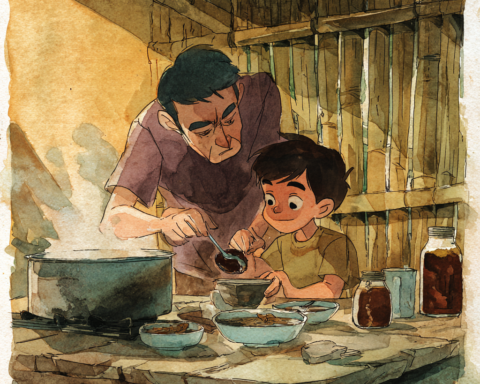
She’s cooked adobo for twenty-three years—bone-in chicken, rough-chopped garlic, vinegar from Quezon, not bottled. Now she prepares two versions. One for trays. One for the platform. The tray gets flesh. The platform gets shine.
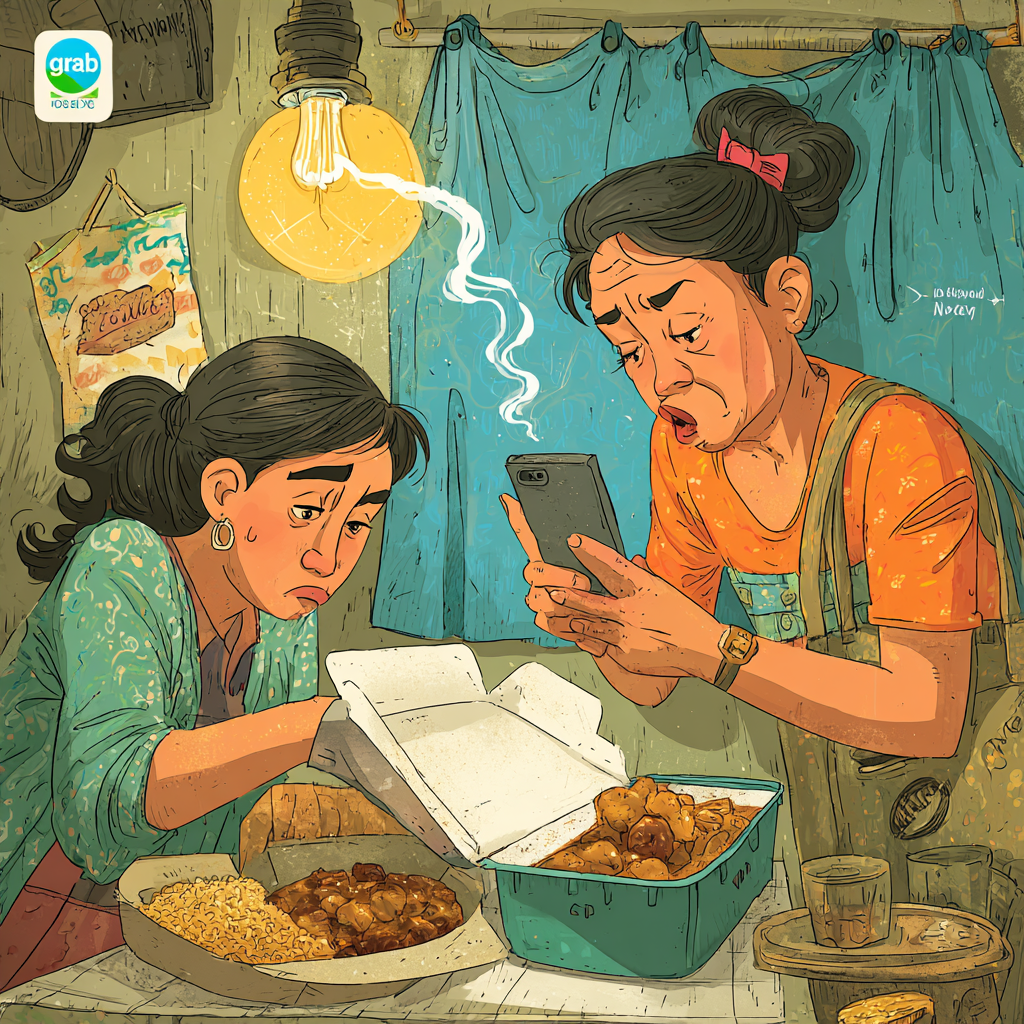
“This one,” her daughter says, tapping the screen. “Turn the egg. White on top.” They flip it, crop tight, lift brightness. No bay leaf anymore. Leaf means old. Clutter. “They like it smooth. Looks expensive if it’s clean.”
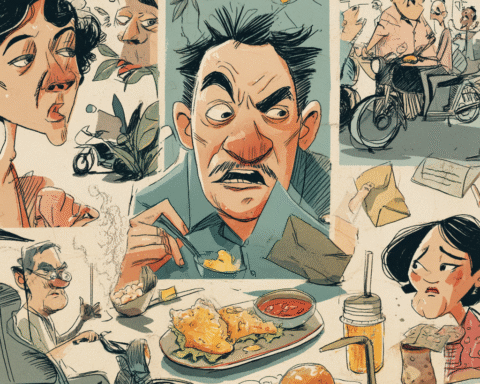
Customers scroll. Then tap. Don’t read. Don’t smell. “Adobo Meal Set B,” the order says. No notes. No name. Grab takes 21%.
“₱95 order, less ₱20 to Grab,” the vendor counts, wrist deep in sauce. “₱15 to delivery. ₱9 to styro and tape.” Chicken leg is ₱40 this week. Garlic and oil, ₱15. Rice, ₱10. The egg used to be standard. Now it’s ₱8 extra. “If I don’t give egg, they rate me lower.”
A review last week:
⭐️⭐️⭐️ “Chicken was OK. Rice was wet. Not worth ₱100.”
No refund. No recourse. The system closes the thread.
Ginataang langka used to sell well. Tangy, thick. But the photo got flagged: “Unclear. Product not defined.” Twice. “They thought it was mush,” the daughter says. “Brown. Messy. Disposable-look.” Grab dropped it. Visibility gone.
Five carinderia stalls used to line this street. One sells load now. Two went home after ECQ. One drives for Foodpanda. Of all the cooks here, she’s the only one still ladling sauce in the morning. Still cracking garlic with the same knife. Still marinating by hand.
“The customer doesn’t know the vinegar changed,” she says. “Used to be palm. Now? Whatever’s cheapest.” The soy comes from a brand now. Looks better. Measures easier. Flattens faster. “They want their adobo to match the photo. That’s not cooking. That’s memory erased.”
Her daughter, sixteen, handles the chat. “Ask for ratings,” the app says. “Respond politely.” She copies a template. At night, she turns ₱70 of leftover margin into ₱10 loads. Online class starts at eight. If they forget to charge the phone at dawn, she gets marked absent.
Adobo works because it survives. Vinegar carries it through heat loss, delays, wrong addresses. Customers say “tastes like home” while rating it like packaging. “Sauce spilled. Box damp.” That one came with a frowning emoji. The platform reminds her to reply.
Grab suggests bundles. “Add gulay,” the daughter says. “They like seeing green.” So they boil kangkong at six a.m., fry eggplant that wilts by noon. It adds cost. No one refunds it. They do it anyway—to stay visible.
She moves with certainty. Seasoned hands. No timers. No measuring spoons. Just memory rendered edible. But Grab rewards output. Ignores knowing.
“We sold adobo fine before,” she says. “People came. Ate. Talked. Lifted the lid.” Now she’s invisible unless rated. Her taste, demoted below spoon weight.
She cooked the adobo long before Grab. She boils it still. But now without the egg, without the jackfruit, without line of sight to the people eating it.
She asked not to be named here. But she’s visible every day between 8 and 11 a.m., stall facing the road, blue curtain tied back.
Grab calls this democratization. Charges 21% for the service. The rice is still wet.