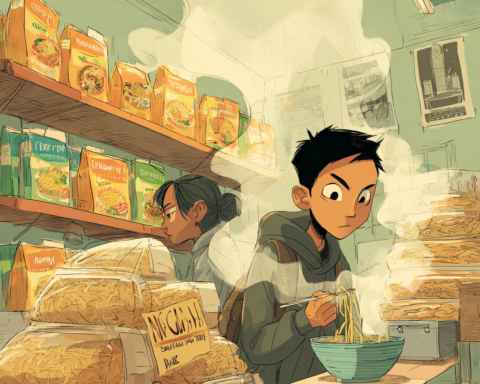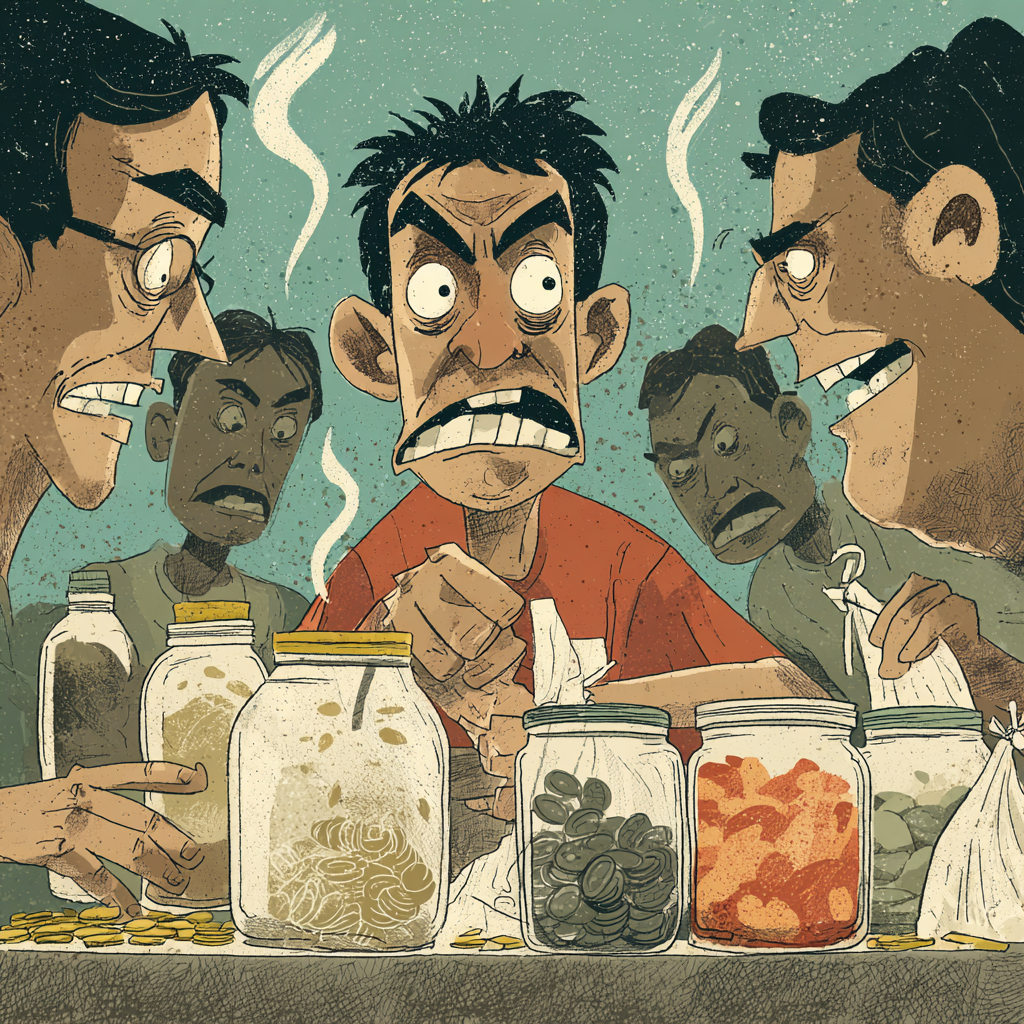
At the edge of the palengke a woman sets a tray of jars on a low table. Plastic lids catch the light. A sour smell lifts as a lid turns, sharp as clean sweat. That toothpick holds a strip of pale green papaya.
“This one wakes you,” she says, naming it atchara. Her fingers catch the jar’s threads. She twists the lid tight. A handwritten label leans on the glass. Ink runs where brine has crept.
People pass with chicken in a bag. Coins click near the taho vendor. The woman watches the flow and holds her place, ready for a question.
I ask about the smell. A nod answers first, as if the question has always belonged here.
“My mother said the asim keeps the body honest,” she says. That mother sold fermented rice at home when money ran thin. Trust lived in smell, not in a thermometer.
Behind the jars a cooler holds packets wrapped in plastic. One packet rises in her hand and gives under her thumb. She calls it buro, rice fermented with fish, and the name lands with a small seriousness.
The scent lifts and hangs. Rice comes to mind at once. Her laugh meets my face, then her voice follows with a steady line about first reactions.
People call it maasim with a wrinkle. Return comes later, when appetite learns a different kind of courage.
A young woman in a gym shirt stops at the cooler. Half a kilo changes hands. Plans for after training spill out in quick phrases about the gut and “good bacteria,” the kind of words that arrive from screens and coaches.
Amusement shows on the vendor’s mouth. “If it helps you, eat it,” she says. A tap on the packet signals what matters, and cold storage gets the final reminder.
Cooking enters the talk as a practical detail. Garlic can meet buro in a pan, and the taste stays while the sharpness eases.
The young woman leaves. New words remain in the air, and “microbiome” is one of them. Customers say it with confidence, the vendor says it with care.
Medicine is not her label. Food that lasts is. A finger points at the salt line on a jar, and rot becomes a thing that can be held back.
Sourness arrives when microbes eat sugar in vegetable or rice. “They do the work,” she says. A smile follows, offered to helpers no one can see.
From a greens stall, a man leans in. Buro belongs on the table on days with no fresh fish, he says, and memory supplies the rest. Clay pots sat in shade, and eyes stayed on bubbles.
Weather lives in that image. The man says bubbles told him when the batch was ready. A belly that feels light is his proof, not a label.
The vendor listens and lets him talk. An uncle appears in his story, loyal to sour food after a long night out. Laughter passes between them, and coffee is named as the city’s fuel.
I taste the atchara again. Vinegar and sugar hold it in balance, then salt pulls the mouth open. Her voice marks a split in preference, sweet for some, sharper for others.
Method comes out in short instructions. Her hands grate the papaya and rinse it. A firm squeeze sends water out. The jar takes the shreds.
Vinegar goes in with sugar and salt. Waiting follows. Smell becomes the clock.
Proof matters to modern wellness, she tells me, and labels do the talking now. This jar carries judgment instead, and trust sits on top of the lid.
A nutritionist friend sometimes drops by, she says. “Fermented” does not always mean “alive,” the friend warns. Heat can quiet microbes, and the vendor repeats that warning as if it needs respectful handling.
Vinegar pickles turn sour from the vinegar. Long ferments sour as microbes work. She holds those words for a beat. Then she lets them drop.
Customers ask if atchara can heal the stomach. She tells me that. Promises do not come easily from her stall.
Sour food can help some people, she says. Slow is her advice. One man with reflux hears it as a small rule, spoonful first, attention after.
I ask about tapay, and her face shifts. Stock is not here today, she says. Another vendor across the aisle makes it with glutinous rice and yeast cakes, and the smell comes out close to ripe fruit.
A chin points across the walkway. Cloth lifts from a basin. Glossy grains show themselves, and warmth sits under the cover like a hand.
Rice wine enters the talk without ceremony. Tapay goes to fiestas, the vendor says, and she sells a little for those who like the taste on its own.
An older man stands beside me at the basin. Harvest time rises in his voice. A starter came from a neighbor, and sweetness meant something beyond starch.
Cloth ties again. “Natural” is the word people use now, she says, and patience stays the real demand. Cold weather slows the batch.
Back at the first stall, a spoon rinses in a small pail. Water runs off her wrist and drops to the ground. She sells more jars now, she tells me, and five years ago she sold less.
Less sugar is what younger buyers request, she says. The taste is what they want. Bite is what they name when they grin.
Home sits behind some purchases, she says, and people miss it. Office lunches go fast, and rice waits at night. A jar in the fridge tastes like a meal, and sourness anchors the week.
Across the walkway the market keeps its rhythm. A plastic bag swings from a wrist. Radio hums from somewhere behind a tarp. Sourness threads through it all, quiet and ordinary, as if it has always been part of the air.
The smell of buro stays in my nose as I step away. Jars sit steady on the table. Her hands wipe lids and wait for the next question.