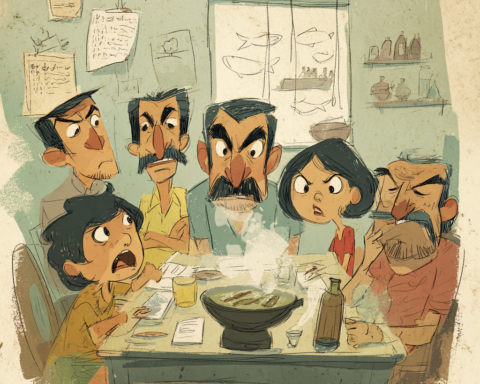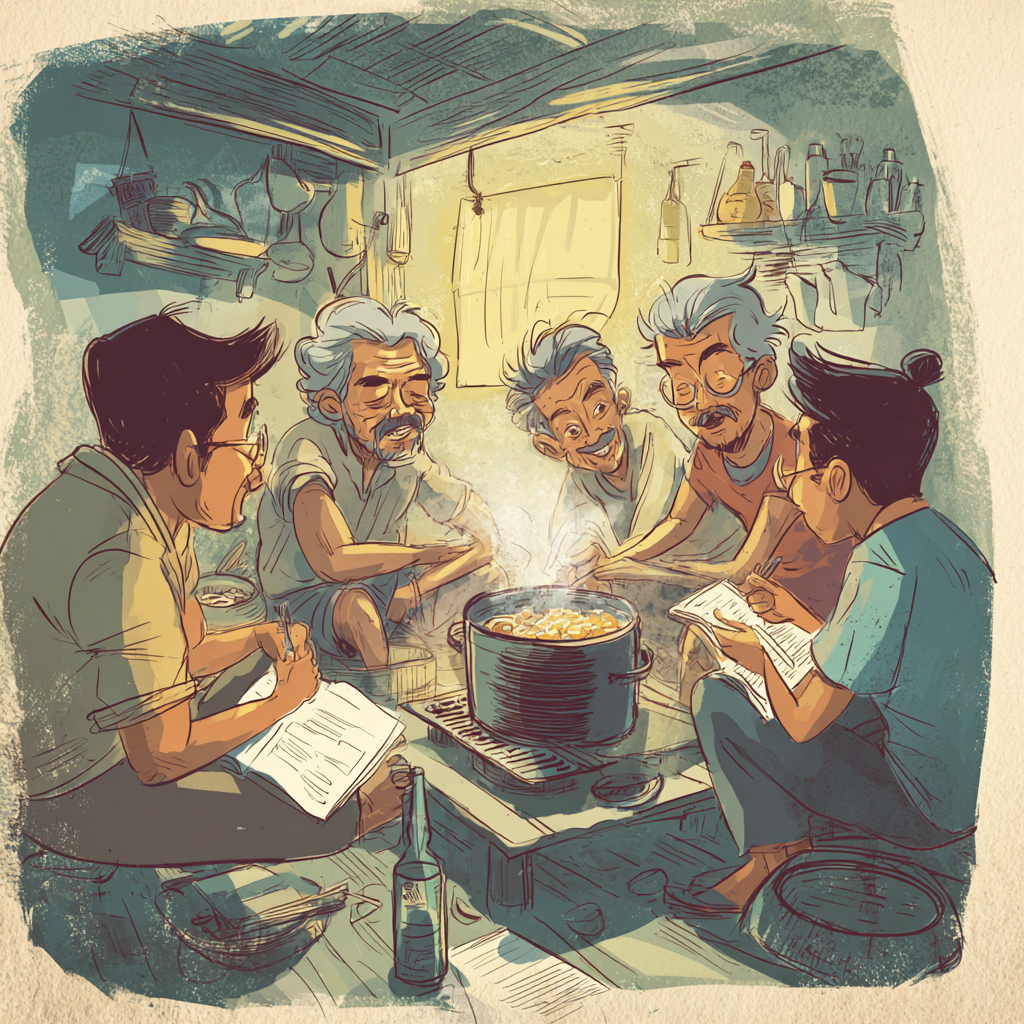
Cordillera cuisine sits on the low wooden table while the elder tests the broth with the tip of her finger. The pot sweats in the dim kitchen light. Old smoke in the rafters. The steam smells sharp at first, too sour, no, more like slightly smoked water that held rice once. A chipped enamel plate on the floor waits for etag, the preserved pork, salted and dried on beams over years of fire and patience.
She lifts the lid with a rag, not a cloth, only a portion of old shirt with a faded print of Baguio pines. The broth looks thin, then suddenly rich when she stirs the bottom. Small bones rise. The pinikpikan chicken dish, beaten before cooking, floats there, a ritual in pieces. Each stir turns into a story. Short, uneven, with long pauses. I hold a notebook, useless for a moment.
Harvest talk circles the room, not in straight lines. One uncle speaks of rice terraces under fog, and of carabaos slipping on wet stone. Another voice cuts in to remember a season when the granary felt empty even after threshing. The ladle moves again, knocks once on the rim by accident. A small stumble in the sound. Like a word mispronounced during a prayer. Someone laughs, then looks away.
Here, Mountain Province food lives in two long seasons, celebration and loss, yet often on the same plate. The smoked pork appears when rice overflows and when a coffin rests in the front room. The same broth, same salt, same fire. It feels wrong and true at the same time. A contradiction with no wish for resolution. On the bench, a small bowl of tapuy rice wine waits, clear and sharp, for the first sip offered to elders and to memory.
She tells me recipes stay in the body, in joints that ache in the cold, not on paper. Her fingers show where to cut fat from meat, where to slice lean. No measurements, only words like “enough” and “for neighbours” and “for visitors who might arrive.” I write awkward lines in English while she speaks in Kankanaey, then shifts to Ilokano for my benefit, then smiles at my accent. My handwriting grows thin, cramped. Her broth grows thicker.
Once, I say the phrase “Cordillera cuisine” out loud, proud of the term from books and tourism leaflets. She frowns a little. She hears category, not home. She prefers names of dishes, names of rice, names of seasons. Intuno, grilled meat. Inlagim, a chicken dish for ritual. Words with smoke at the edge. I hear my own sentence fall flat. I cross it out, then write it again, stubborn. We need both, she finally says, the scholar word and the name you whisper to call people to the table.
In another house, a wake stretches into days. Coffee boils black and strong in a dented pot. On a low table in the next room, the same etag stews with greens, with ginger, with onions that sting the eyes more than grief will admit. People arrive, sit, stand, shift weight from one foot to another. No speeches, only chewing, refilling, small talk, a joke that lands crooked but still lands. We eat to remember. We eat to forget. We eat to remember. The repetition sits heavy, almost rude, yet no one objects.
I once thought mourning food should taste gentle, soft, without smoke. I am wrong. Here, the salt bites, the smoke clings to hair and shirt. The fire stays busy as visitors come at odd hours. Someone presses a bowl into my hands without a word. Cordillera cuisine sits heavier in the room than the incense. Even more than the hymns drifting in from outside. In the corner a small transistor radio mutters the news from Manila. Half of it lost under the scrape of bowls and low talk. No one listens for long. The pot draws more attention.
Later, at a harvest thanksgiving, the same elders sit outside near rice stalks tied in tight bundles. Children chase each other between piles of straw. A small plastic bottle holds tapuy now sold with glossy labels in town, Igorot traditional food turned into souvenir. The elder next to me shrugs. Good for school fees, she says. Good for bus fare. Her grandson left for Baguio last year, works near Session Road, eats fast food more often than pinikpikan. He still comes home when the rice turns gold. Not every year. Almost.
On my second visit, I arrive with printed articles that praise Cordillera cuisine as heritage and healthy tradition. Photographs frame the food in careful plates, white, expensive. No chipped enamel, no plastic basins, no dogs sleeping under benches. She looks at one photo of etag sliced thin on a wooden board, neat, almost shy. Then she points to the hanging slabs in her kitchen, rough and dark. Real ones, she says. She does not mean the photo is false. Only incomplete.
I ask her to repeat a word for a harvest dish, my recording too faint. She starts patient, then stops mid-sentence to scold me for stirring the pot wrong. Wrist too stiff. Not enough circles. I correct my grip, nearly drop the ladle. A small splash jumps to the fire, hisses. She laughs, covers her mouth, then continues the story as if no break happened. For her, language and movement stay bound, inseparable. My transcripts later look thin, stripped of gesture.
At night, I read my notes under a weak bulb. Sentences line up, obedient, yet the room still feels empty. I search for one phrase that might hold the way smoke wrapped around the rafters, the way tapuy warmed chests of men who spoke of ancestors in low voices. The phrase does not arrive. I fall back on simple words. Soup. Pork. Rice. Grief. Harvest. Partial truth on a full page.
Outside, someone slaughters a chicken for morning. I listen for the rhythm elders follow, slow, deliberate, with prayers in each movement. My stomach turns once, in discomfort, then settles with the smell of ginger waking in fresh water. Cordillera cuisine here grows from acts that disturb and heal at the same time. No clean border between sacred and daily. Between hunger and plenty. Between harvest table and mourning bench.
In the end, or what feels like an end but stays open, I watch her pack a small piece of etag in old newspaper for me. For your bus ride, she says. For your city that forgets smoke. Her hand lingers above the package for a second, then pulls away. I think of all the meals never written, never photographed, buried instead in memory, in taste, in the quiet way elders lean toward the fire when stories grow close to pain. The pot cools. The ink dries. The kitchen still holds something unrecorded, still speaking, even after we step out into the sharp Mountain Province air and fail to name it fully.