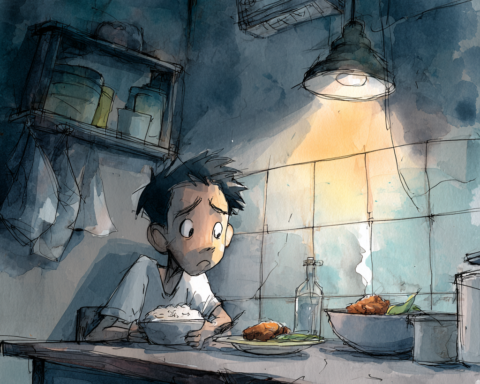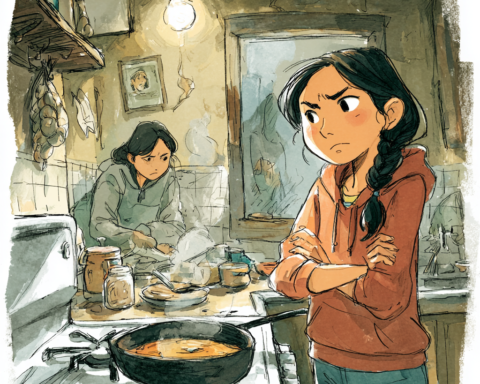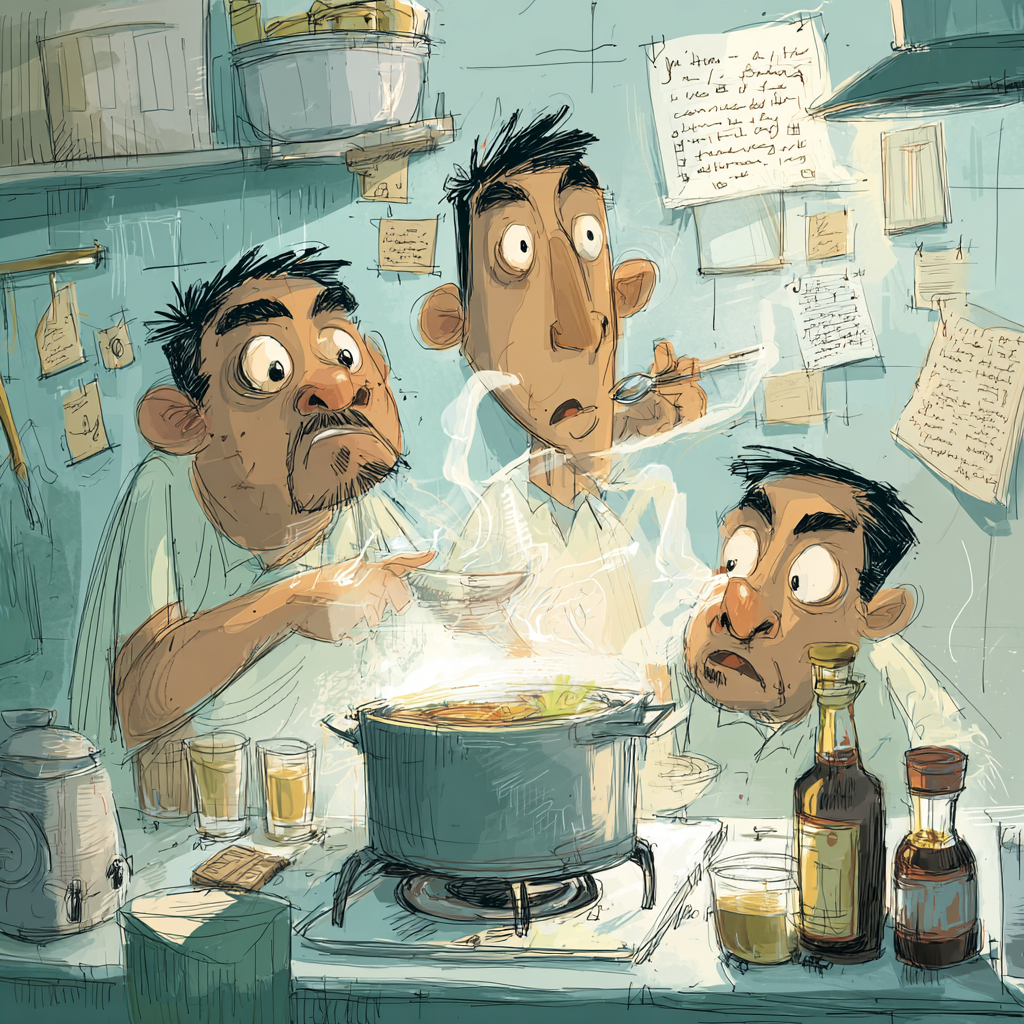

The first saucepan of Filipino adobo abroad sits on a strange stove in a strange flat. Rented, a bit wobbly on one leg. Soy sauce from a bottle with unreadable script. Vinegar from the supermarket’s cheapest shelf. The garlic hits the hot oil and turns sticky, a bit slow, almost hesitant. Steam rises which smells part home, part aluminum pot, part cold air sneaking through a thin window frame. On the counter, chicken pieces sit too neat, trimmed by a butcher who has never heard the word adobo. One spoon left in the sink. Another half-wet on the table.
You taste the first spoonful of Filipino adobo abroad and pause. The salt sits heavier on the tongue, the sourness pulls to one side, slightly off-balance. Too sharp, then somehow dull. You reach for the soy bottle again. No, backtrack, add water first. Then pepper. Then more garlic you sliced too thick. In the small kitchen, with its humming fridge and thin walls, the dish starts to argue with the room, and a little with you.
Back home, Filipino adobo behaves differently in memory. A pot on a charcoal stove or on a gas burner stained by spills from many old ulam. Vinegar strong enough to sting the eyes, toyo poured without measuring. No written recipe, only words like tantsa-tantsa and tikim muna. The chicken shares space with pork, or with liver, or with potatoes which break apart too fast. In the city or in the province it sits inside routine. A dish for payday and also for days when rice stretches thin. A dish that felt ordinary, except later it does not feel ordinary at all.
In another country the first shift starts on the shelf. You stand in front of rows of clear and green and dark glass. First comes plain white vinegar. Next visit you try apple cider, then a Korean rice vinegar someone at work mentioned in passing. On another shelf a slim Italian bottle looks over the others, more price than taste in that moment. One night you come home tired and hungry and only a small bottle of balsamic waits in the cupboard, thick and sweet while your tongue looks for that clean sting from home. You pour less than you want, then stretch it with water and salt and a small shrug.
Garlic shifts too. Big cloves with mild flavor replace the small fierce ones from the palengke. You crush them hard so the smell rises stronger, then notice it still falls short of the memory in your nose. So you add more. Onion joins in, sometimes even herbs from a Western pantry, stray bay leaves which taste slightly different from laurel at home. Something in you resists this, then accepts it, then pulls back again. The recipe refuses to sit still. The cutting board starts to look like a small argument laid out in pieces.
At the table, translation deepens. A partner from here tears off bread and drags it through the sauce. Says it feels comforting, like some stew from childhood, but off to the side. Children spoon Filipino adobo over mashed potatoes instead of rice, or fold it into tortillas, or fish out only the meat while the sauce sits in the plate’s shallow curve. You watch the mixing on their plates and feel both pleased and slightly out of place at the same time.
Names travel too. On a potluck table in Sydney or Toronto, you write “Filipino adobo chicken” on a paper card so no one mistakes it for Mexican adobo or for some generic “Asian stew.” The word Filipino turns into a tag, a border, an explanation. The dish suddenly carries national identity in a way it never needed in the barangay where everyone already knew what sat in the pot. Pride rides in such a label. Also a small sense of trap, as if every spoonful must prove something larger than dinner, larger than you.
Language in the kitchen shifts in quieter ways. You tell a child, “This is baon for tomorrow,” then switch into English for a friend listening nearby. You call the leftover sauce sarsa under your breath, then “gravy” out loud. On the side, a small bowl of sawsawan holds vinegar and pepper and sometimes calamansi from a frozen packet, its taste dulled by distance. The smell from the bowl comes out confused, citrus then plastic then vinegar. Still you pour it. Still you dip a piece of meat in it twice, out of habit, out of something harder to name.
Not every change feels gentle. One housemate lifts a hand to wave away the first harsh breath of simmering vinegar, gives a small cough that carries through the thin door. Another person along the hallway jokes about “strong dinner again tonight” as you pass by with a trash bag. You adjust. Cover the pot earlier, crack a window even in cold weather, time the sangkutsa for the hour when most of them step out. The dish pulls back into quieter forms: less vinegar, shorter simmer, sometimes a “dry” version with sauce cooked down until it clings politely and stays close to the meat.
Money shapes the pot as well. In some cities, Filipino adobo leans on chicken thighs from discount packs or on wings bought in bulk. In others, pork turns rare, almost luxury. Canned mushrooms stretch the dish, or tofu, or eggs hard-boiled and stained brown by the sauce. During a sale or a bonus, you buy belly sliced thick and let the fat enrich the liquid, the way older relatives liked it. The dish remembers feast and shortage at the same time. You tell yourself it has always done this, then think of fancy restaurant plates and hesitate.
Sometimes you return home for a visit and taste Filipino adobo there again. In a cousin’s house, the sauce bites strong, fragrant with native vinegar. Rice piles high beside it. A small shock runs through your mouth at the force of it. Then a kind of ache. Your tongue has shifted abroad. The dish from home now feels too much and not enough in one plate, even as you go back for extra rice. You think your own version overseas turned weak, then realize it simply walked in another direction, dragging you with it.
Back overseas, you try to copy the remembered flavor. Extra vinegar, longer simmer, more garlic, even a splash of fish sauce which fills the kitchen with a sharp sea smell, no, more like low tide in a frying pan that someone forgot. Yet the taste refuses to match. Different water, different meat, different pot. The soy sauce brand holds its own history inside the bottle, and your hands follow new habits. Memory leans forward, survival edits the script, and you stand somewhere between the two, spoon in hand.
Over time Filipino adobo in diaspora kitchens stops behaving like a fixed recipe. Turns into a kind of running commentary instead. A line of quiet talk between supermarket aisles, work schedules, school lunches, and the pull of lutong-bahay you still call home, or say you do. Each version slightly off from the last, each one insisting it carries the real taste, or near enough. Comfort sits inside such looseness. A small grief sits there too, not fully spoken.
Late evening, you stir the pot again, rice steaming nearby. The sauce turns glossy, nearly sticky, clinging to the meat in a way you remember from childhood plates and from every changed batch since. You taste. It does not match the one from home. It does not feel foreign either. Somewhere between those two, in a small uncertain middle, Filipino adobo goes on simmering. You begin to reach for the soy bottle once more, then stop, hand hovering, listening to the quiet kitchen.