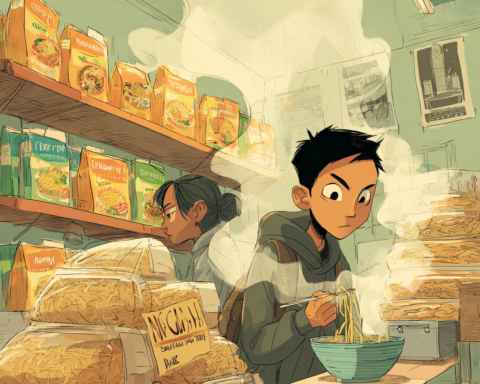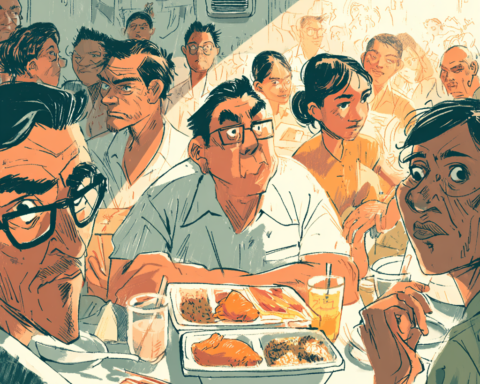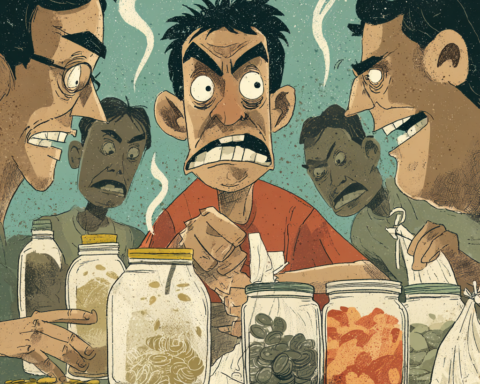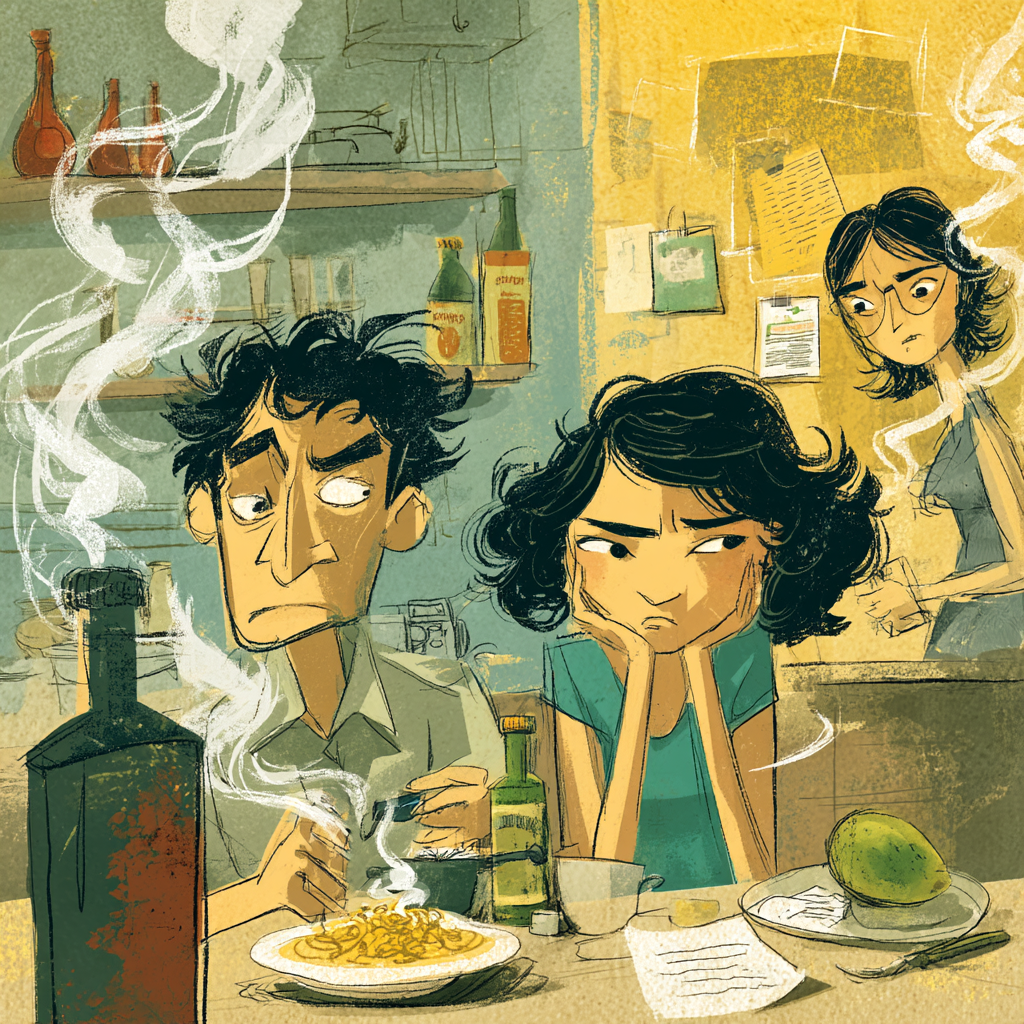
Filipino bagoong opens and the room tightens. A pink blur on the spoon. A salt-copper bloom that feels like tidewater in the throat. I steady the bottle. No, the bottle. I get it wrong, then right.
The first bite tags everything it touches. Rice. Green mango. Even the air. My son steps in, sniffs, and steps back. A small retreat. Not anger, more like weather.
I say it is only lunch. He calls it a smell. A whole history reduced to a word that hovers. And keeps hovering. I tell him Filipino bagoong is a kind of map. He hears boundary.
Once, we learned to eat bagoong on the floor. Banana leaves, sticky wrists, a bowl of alamang warmed in oil. Loud neighbors. Louder uncles. I said I didn’t mind the smell. I mind it, sometimes.
Across oceans, the scent grows louder. Apartments shrink. Windows stay shut. The lift catches whispers of dinner and tells the whole building. Filipino bagoong travels farther than our passports. It arrives before we do.
Second generation kids build new grammar. Bento boxes, peanut allergies, no-fry policies. Heritage reduced to what fits in a lunchroom rule. A dip becomes a problem. A problem becomes a secret. I pack bagoong once, then not again. I wait, and wait.
He tries a pea-sized dot. Hesitates. Calls it bitter, then salty, then too much. A sensory stumble. I reach for language and drop it. Pick it up, slower.
What we used for green mango feels harsh on strawberries. Wrong fruit, wrong season. We search for a bridge and land on tofu crisped in the pan. Filipino bagoong thinned with calamansi, sugar, a touch of water. Not the old sauce. A cousin, maybe.
Some days he asks for none. Other days for very little. Then, surprise. He wants it on roasted Brussels sprouts, char tipping into smoke. Filipino bagoong finds a new partner and acts shy about it. It works anyway.
I catch myself guarding the rules. Raw mango, not sprouts. Hot rice, not quinoa. I hear my voice harden. Then soften. The point was flavor held in a jar. The point was never the jar.
There is a word for the moment you learn your own nostalgia has edges. The word doesn’t arrive. An unfinished thought. I look at his plate and see care moving in a different direction. Not away. Sideways.
History rarely fits a school lunch. Language leaks. Labels spread. Filipino bagoong shifts from marker of home to test of tolerance. Then to experiment. Then to Tuesday dinner with friends who laugh and try and cough, a little.
On the phone, relatives ask if he eats bagoong. I say yes. I say no. Contradiction that tells the truth. He eats his version. I eat mine. We meet somewhere between spoon and story.
I remember learning from elders who measured with four fingers. A pinch that was not a pinch. Steam fogged the windows. Oil popped and scared us in a fun way. Filipino bagoong went in last, and first, and in the middle. I repeat myself. I repeat myself.
In Australia, the market stocks three brands. Four if you count the fancy one with a tidy label. Same tide, new bottle. Filipino bagoong tastes brighter here, or maybe I am the one who changed. I start to adjust the heat, the sugar, the vinegar. Careful. Then not so careful.
When he cooks, he adds lime, not calamansi. Spring onions, not sibuyas Tagalog. A tablespoon, not the thumb-wide pour. I start to say that’s not how we do it. Stop myself. I taste. I correct myself again. It works.
Our elders feared forgetting. Our kids fear standing out. Different fears, same table. Filipino bagoong sits between them and waits. Patient, stubborn, a little loud.
There is a smell we call shame and a taste we call home. The border moves. We move with it, or we stiffen and watch dinner pass us by. I choose movement. Not always. Often enough.
He asks where bagoong alamang comes from. I say shrimp, salt, time. Too simple. I add hands, towns, boats, payday, the small joy of an extra spoon on rice. I leave things out. Then put them back in.
One night he serves roasted eggplant with a glaze. A soft shine. Sweet first, then the tide rolls in. Filipino bagoong diluted, coaxed, friendly but not timid. I expect to miss the hit. I do not. The room loosens.
We still keep a small jar for the old way. For green mango sliced thin, for kamatis and onion. For when memory wants the straight path. Some days the path zigzags. Some days it stops at the stove and refuses to move.
If a smell defined belonging, what defines it now. Maybe the reach across the table. Maybe the small spoon he sets on my side and not his. Maybe the yes tomorrow after a no today.
Filipino bagoong once said home without speaking. Now it asks questions. Who are you feeding. How do you carry salt across generations. Do you allow a new grammar without erasing the old. I answer slowly.
I tell him this taste taught me patience. He tells me patience tastes less salty when he’s the one holding the spoon. We stand by the sink and laugh. Not a big laugh. Enough.
The kitchen keeps both versions. The loud one. The careful one. Filipino bagoong stays on the shelf, not as relic, but as option. We choose. Then we choose again.
In this small choosing, belonging breathes. A jar opens. The room tightens, then eases. I reach, then pause. I get it wrong, then right.