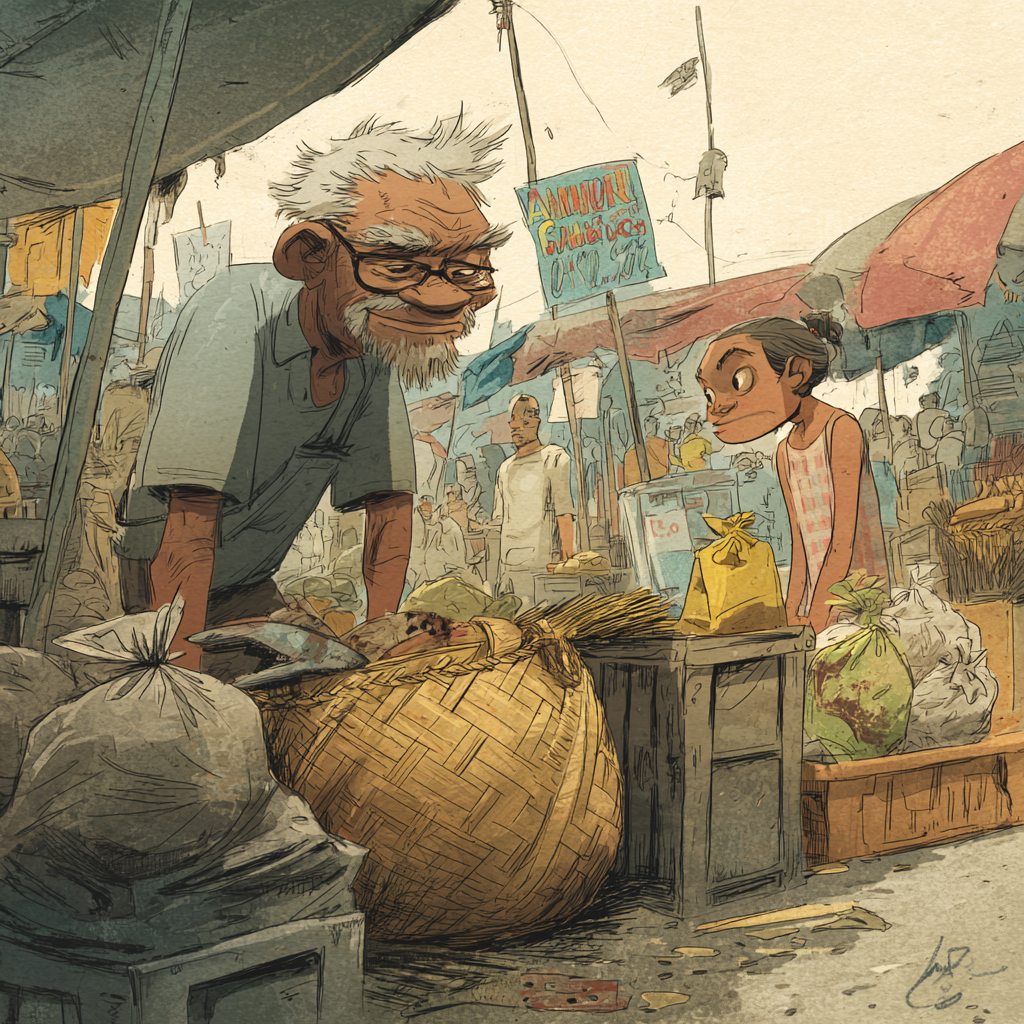
In a damp corner of the wet market, close to a slow leak from the ceiling, the air holds a faint smell of palm. A few leaves and half finished Filipino bayong sit behind plastic basins and tomato crates, pushed into the dim space most buyers walk past without seeing. Beside the fish section, a short row of bayong hangs on a bent nail, handles softened by many trips home. A vendor glances at them, then at the hands reaching for plastic, and goes back to arranging galunggong on ice.
Older vendors remember when one corner stayed full. Freshly woven palengke bayong arrived before sunrise, still a little damp from yesterday, strips of buri or pandan holding the cool of dawn. A new market helper received a bayong before a name tag. You carried rice, fish, a few vegetables, and gossip. Weight pulled on your shoulder, and the mind stayed light because every strand would go back to the soil.
A Filipino bayong begins far from the city, in fields where buri palms rise beside carabao trails and irrigation canals. Hands cut leaves with a slow rhythm, not in a rush, mindful of every shoot. Older weavers taught younger ones to leave enough for new growth, to see each tree as relative, not raw material. Knowledge of harvest schedules fit with seasons, fiestas, school calendars. No one named it sustainability. It was simply how life held together.
Inside small houses, leaves dried on bamboo poles, then softened with water, then sliced into strips on worn wooden stools. Fingers worked without rulers. Width arrived from memory, from years of market use. A strip too thin sliced into a hand. Too thick and the bag creaked instead of bending. Children learned by sitting near lola or nanay, pushing a few clumsy rows while radio drama played. Stories of aswang and heartbreak braided into the base of each bag, alongside everyday worry over rice prices, jeepney fare, tuition.
The Filipino bayong carried more than groceries. It carried social agreements. You went to your suki with your own bag, which signaled respect for both goods and relationship. A strong bayong meant you planned to return weekly, perhaps daily. The bag hung behind the kitchen door, close to the pamaypay and old calendars, ready for sudden rain, a neighbor’s request for help, a last minute trip for vinegar or onions. When children borrowed it for school events, for field trips or class plays, the woven pattern entered new spaces, extending the life of the artisan who made it.
Plastic entered quietly, like background noise. A few stores offered it as convenience during weekends, promising dry rice and fish without leaks. Thin handles bit into fingers, yet buyers accepted because bags came free, stacked in rolls on hooks and counters. Within years, plastic spread across the palengke floor, under tables, around drainage holes. The Filipino bayong stayed on its nail, used mainly by elderly women, jeepney drivers with aching shoulders, and vendors stubborn about old ways.
People began to say bayong as if it belonged to the past. Something for cultural shows, tourism fairs, window displays in air conditioned malls. Government campaigns spoke loudly about reusable bags, yet seldom mentioned the weavers who already supplied them for generations. When supermarkets brought in cloth totes with English slogans, local weavers watched from stalls near the exit, their own work hanging quiet, priced in pesos which barely matched a day’s labor.
Circular economy has become a phrase in reports, diagrams, and conference halls. In many Filipino homes the idea once sat on the floor. The Filipino bayong moved in a circle. Fields to weaver to vendor to suki to kitchen, then back to soil as it frayed and softened. Trimmings lined chicken coops. Old bags became mats between table and floor, or padding for the tricycle seat. No separate category named waste. Frayed pieces re entered daily life until rain and time returned them to earth.
Weaving kept more than leaves in circulation. It kept relationships alive across distance. City relatives ordered bayong from cousins in the province, asking for certain sizes, certain patterns. Payment moved through bus drivers, hand carried envelopes, or balikbayan tips left after Christmas visits. A single Filipino bayong in Quezon City or Davao carried stories from Samar, Bicol, Ilocos, Negros. Each bag served as quiet evidence of connection between paved streets and dirt paths.
When the art of the bayong weakens, an entire web of knowledge loosens with it. We lose words for stages of leaf drying, for patterns of weave with names rooted in plants, rivers, saints. We lose small rites, like blessing new bags before first sale, or testing strength with measured kilos of rice. We surrender shared calibration of weight and volume held inside a certain size, learned not from written labels, but through years of carrying.
In many markets, a few weavers remain. You see them near the back, beside sacks of charcoal or bundles of firewood. Their hands move slow. Not sluggish, only careful, as if each strand deserves a full measure of attention. They greet long time customers by name, or by face when names slip away. Some now add plastic baskets or imported goods to their table, yet they still keep a line of Filipino bayong in front, partly for sale, partly as quiet statement.
A market without bayong looks cleaner at first glance. Rows of uniform plastic bags, neat boxes, metal carts. Shoppers move fast. Trash trucks arrive heavier, drains clog more often during monsoon rain, and barangay meetings include long segments on flooding. Ecological cost hides behind each single use handle, paid by people who never asked for plastic in the first place.
Returning to the Filipino bayong will not repair every river or reef. Work lies far beyond baskets. Holding one in hand invites a different pace. It prods memory of earlier trips to market, faces of weavers now gone, mornings when the floor did not shine with plastic film. It presses toward questions of who supplies daily containers for food and where their knowledge moves in a century ruled by convenience.
When you next walk through a palengke, search for the quiet corner, the bent nail, the row of woven bags. Lift one Filipino bayong, run your fingers along the pattern, feel the small roughness where leaf meets leaf. Payment will travel through calloused hands, out into communities where weaving still survives. The bag will return to your kitchen door, then to the market, then back home again, each trip tying you softly into an older circle which never needed any new name.