
The smoke from the ihawan sits low over the street, clinging to clothes and hair. Pork fat hisses on the grill. On one plate the pancit slides to one side, skewered barbecue stuck in the noodles, a strip of lechon and a red hotdog caught in the pooled grease. The thin plastic bends a little in your hand. Beside the karaoke speaker, a trash bag already fills with cups and spoons and wadded paper napkins, and the Filipino fiesta has only started.
On days like this, the whole barangay measures love in food. A proper Filipino fiesta means no guest leaves without a take-home pack, no chafing dish looks empty while people still wander in, no table space stays clear. Abundance signals respect. Shortage hints at stinginess. No one wants that label, so more trays go on the table, more ice, more softdrinks, more single-use everything.
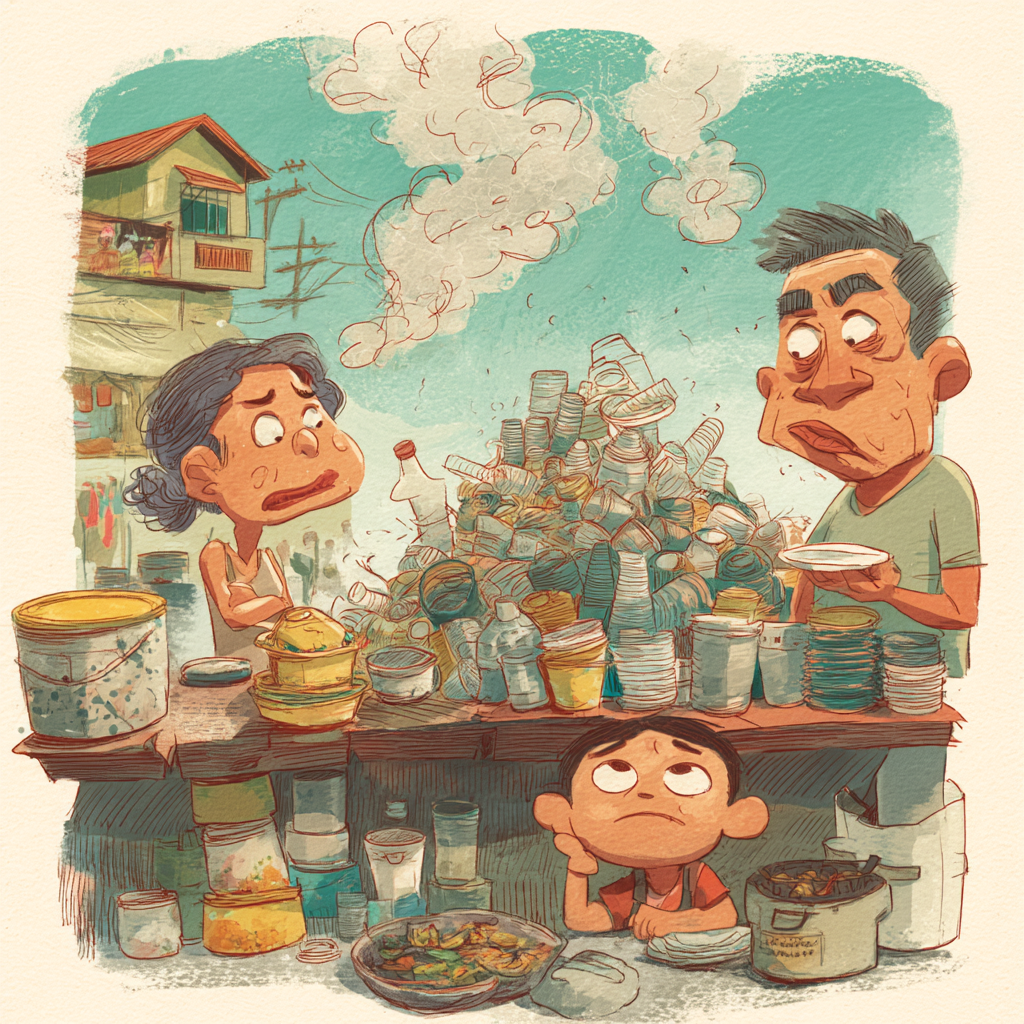
Behind the joy sits a quieter ledger. Charcoal sacks stacked beside the house, some sourced from hills where trees thin each year. Thin white plates that crack under lechon skin then head straight into the trash. Clear cups lined in rows, used once, smudged with lipstick, then tossed. In the rush of hosting a Filipino fiesta, hands reach for what feels safest: convenience, disposability, excess. No one tracks how many kilos of waste ride the garbage truck the next morning.
The cultural script runs deep. Fiesta means handa: meat stewed for hours, rice by the kaldero, halo-halo, fruit salad heavy with cream, lumpia stacked on trays. The host often goes into debt. Electricity runs full blast for the karaoke, the freezers, the extra fans. A Filipino fiesta carries the memory of famine and war, so the present feels obliged to answer with surplus. Hunger once haunted the table. The response turned into overfeeding.
In many towns, the soot on the pots carries the cost of trees far from the party. Charcoal traders knock on doors before fiesta season. Some charcoal still comes from old forest, cut bit by bit, burned in pits, sold cheap. Each stick of inihaw na manok carries a faint trace of that hillside, though no one sees it between the marinade and the fiesta lights. When we say masarap, we taste sugar and smoke, not erosion and loss.
Then there is plastic. Fiesta supply stores sell party sets, stacks of plates and cups, a scoop of plastic spoons and forks, rolls of table cover, a bundle of printed bunting. One quick trip and the whole Filipino fiesta appears in pastel colors and thin white discs. After the guests leave, helpers gather everything into giant bags. Some barangay streets still see trash burned at the back of the lot. Smoke rises again, darker this time, carrying the fiesta into lungs and sky.
Food itself often turns into waste. Hosts overestimate, out of pride and fear of shortage. Trays return to the kitchen half-eaten, noodles swollen, salad separating, kakanin hardening at the edges. In theory, leftovers move to neighbors, helpers, relatives. In practice, some food turns bad before anyone reaches it. The fridge fills, then the bin. A Filipino fiesta rarely admits a small, measured table.
The impulse comes from care. No one in the family wants guests to see them counting pieces of chicken. Still, another language of care waits under the old habit. People already share pots between houses when budgets feel tight. Families already borrow chairs, tents, and big pots. The same spirit shapes a different Filipino fiesta that honors the ritual without swallowing so many resources.
Alternatives do not need big slogans. They sit in small choices. Some families now rent plates and glasses from party suppliers or the local canteen, washing instead of throwing away. Others pool money across cousins to prepare fewer dishes in larger batches, then plan the menu with tomorrow’s meals in mind. A Filipino fiesta table with three solid ulam and thoughtful portions still feels generous, especially when the host moves through the crowd with ease instead of anxiety.
Meat holds special weight. For many, the sight of a whole lechon signals success. At some smaller gatherings you notice the vegetable dishes edging forward on the table, laing, pinakbet, ginataang kalabasa, and the pork or chicken turned into thin slices at the side, still there, but no longer the star. The Filipino fiesta plate shifts a little, and soil somewhere breathes easier.
Containers tell another story. Ice cream tubs and old biscuit tins already live in Filipino kitchens as storage. Extending that habit to fiesta take-home packs cuts single-use plastic without any banner or speech. Guests who bring their own containers meet a host halfway. It looks simple, almost old-fashioned, like bringing a pot to the karinderya. Still, each reused tub means one less flimsy clamshell in the canal.
Then there is scale. Not every fiesta needs to match the loudest one in town. Smaller guest lists, staggered visiting hours, and shared schedules between neighbors ease the pressure to overfeed. A Filipino fiesta that leans on the misa, the procession, the games, and the music leaves more memory in stories and less in landfills. The table stays central, but no longer stands as the sole measure of worth.
Some changes start with the youth in the family. A niece who studied environmental science, a nephew active in a campus group, a child who watched ocean videos online and worries about the fish. They see the garbage bags after the Filipino fiesta and ask simple questions. Do we need this many straws. Where does this bag go. The older generation sometimes shrugs, sometimes listens. Over time, the questions settle into the planning list beside “borrow chairs” and “call the videoke guy.”
The fiesta will stay. Towns will still hang banderitas across the street. The drum and bugle corps will still rehearse. Children will still run around with orange soda in hand. The goal is not to scold the Filipino fiesta into silence, but to let it grow up a little, the way families grow, the way towns adjust when rivers shift and roads appear.
The next time the smoke from the ihawan drifts across the yard, the pile of charcoal beside it might look smaller. The plates on the table feel sturdier in the hand. The trash bag sags a bit less. Guests eat well, sing off-key, go home with enough food for breakfast. The fiesta passes through the neighborhood, leaving most of its weight in memory rather than in the soil and sea that hold us.