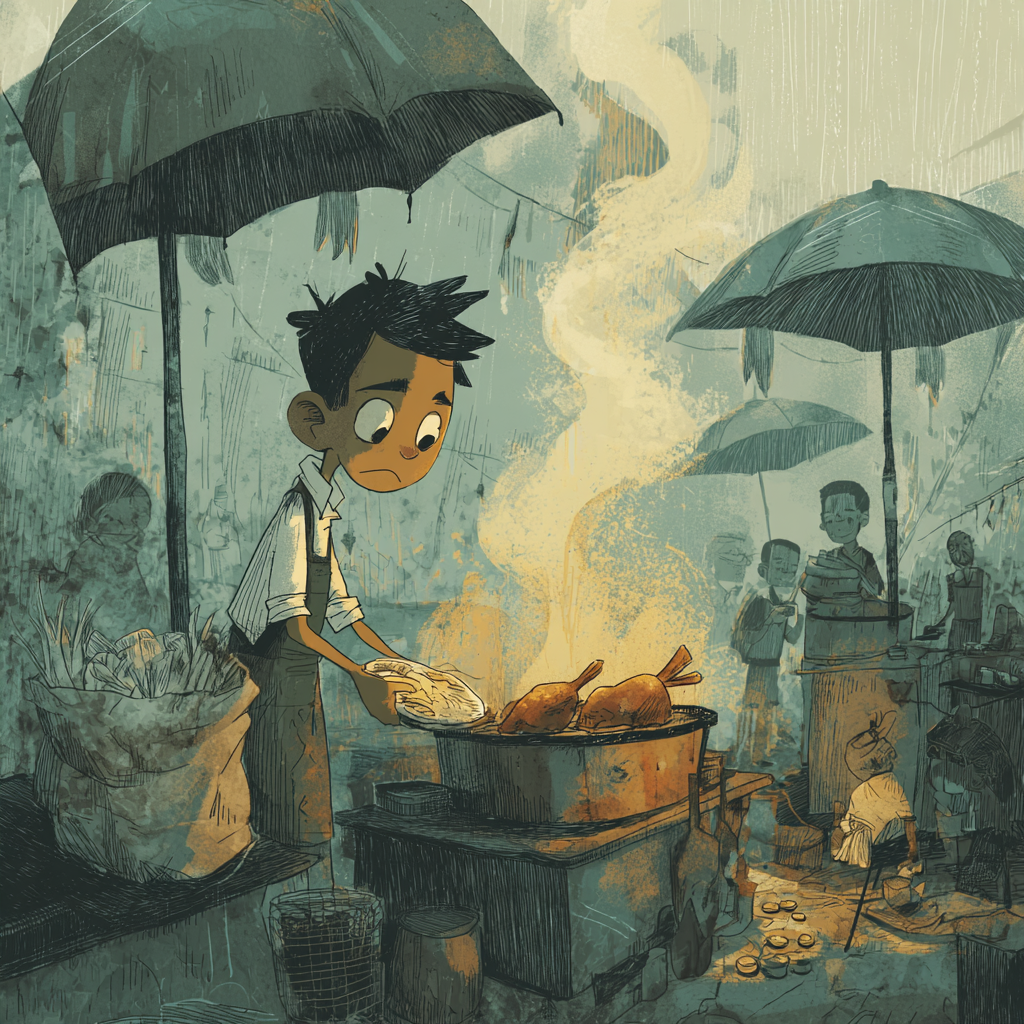
Steam clings to the blue tarp roof above the stall, heavy with the smells of garlic and reboiled meat. In the pan, the oil sizzles again. Another batch—dark chicken pieces, battered and browned—drops into the waiting basin. I wait by the low counter where the vendor wraps portions in old wax paper. She hands one to a man in a tank top, who presses it once to test for warmth. Still hot. He nods.
“Dinner,” she says.
Not quite dinner, you might say—at least not to those who have options. But to him, to many in this alley off the main road in Tala, this bag holds meat that has been pagpag: shaken off, washed, fried again. Food once scraped from plates or pulled from kitchen waste bins. It is eaten.
“Basta mainit. Basta pwede pa,” she adds, wiping her hand on her apron. As long as it’s hot. As long as it’s okay.
She doesn’t say safe. Nobody here says safe.
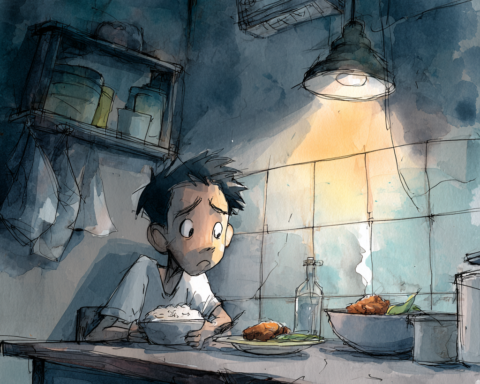
Behind her, two boys break apart bones, pulling small bits of flesh onto a spoonful of rice. The stall doesn’t sell rice, only the viand. Rice they get at home, or bring from a nearby carinderia. The meat is the prize.
She tells me she started during the pandemic, but others did it before her. “Yung lola ng kapitbahay ko, dati pa. Pero karne lang. Hindi ‘yung mga may sauce.” Just meat, never the saucy stuff—it’s harder to re-fry. Too messy. Too suspicious.
A woman crouches by a crate, tossing out cabbage stems and limp eggplants. The pile beside her spills across the walkway. A fly lands. A hand shooes it off. Vegetable vendors toss the ends of sitaw, the yellowing pechay, the small tomatoes nobody bought. A woman gathers some into a sack. Not for selling, she says. “Para sa baboy.” For her pig. She boils the discarded greens with rice bran and salt.
The pig eats better than most.
In Cubao, a man sells menudo made from meat scraps. He buys them in bulk from fast food joints’ prep areas—ends of chicken thighs, cracked bone knuckles, cartilage trimmed from pork belly. He says you can still smell the gravy if it’s not rinsed twice. His broth masks it. Strong with black pepper and oily achuete. “Hindi naman malalaman kung saan galing.”
He tells me his brother supplies him leftover chicken skin from fries stations. Those get re-fried crisp. Bone slivers picked clean with banana leaves. Small enough to vanish into sauces. Big enough to sell by weight.
At the end of the row is the fish cleaner. The air’s sharp there—brine and blood and a whiff of vinegar. She lines up tails, heads, and backbones. A kilo for forty pesos. They’re gone by morning. Fried crisp, she says. Good with lugaw or kamatis.
She learned to save from her mother, who cleaned fish before the supermarket came. “Walang sayang noon. Wala kaming tinatapon.” No waste.
By one estimate, the wet markets of Manila discard hundreds of kilos of edible produce each day. Unsold gabi leaves, kangkong roots, okra with blemished skin. They rot in bins behind the stalls. Some get swept straight into the canal. Some get snagged by old women with baskets and turned back into soup.
“Yung hindi pinapansin, minsan ‘yun ang pinakamasarap,” a veggie seller mutters while trimming stalks. The things nobody wants? Sometimes they taste best.
But not everyone can take or sell what’s tossed. Most wet markets have rules: no recovery after closing, no scavenging near the bins. A man once got cut sorting through broken ketchup bottles. Another nearly arrested for taking pork bones.
So people take what they can. Early.
Official programs quote zero waste goals. Some barangays enforce composting—the morning smell at the back of the palengke gives it away: fruit rinds, ginger ends, once-bruised bananas now almost sweet. Steamed lightly, blended into feed. Or dried on mats. Rot slowed down by heat and work.
One man dries tofu crumbs and pechay hearts by the gutter, flipping them every few hours. He lays banana leaves on top by noon to keep the flies off. “Diskarte lang,” he grins.
Even in the dump, the rules live. One woman tells me they no longer call it basura. “Pwede pa kainin eh bakit ko itatapon?”
She pulls a plastic basin filled with shredded cabbage and three pieces of burnt chicken. One is whole inside the rice crust. Chicken joy turned chicken job. She presses each gently, elbow resting on a wooden beam. Rinses. Then rinses again.
“Sango,” she says. A mix of stuff. She’ll sauté it later, add soy sauce, maybe oyster sauce if there’s a sachet. Sell it by the metal spoon in the alley. Back near where I started.
As I leave, the first vendor has changed pans again. The oil is darker now, newer pieces crisping too quickly. She stirs them anyway.
“Walang maarte pag gutom na pinag uusapan” Perfection can wait. Hunger comes first.
Smoke rises from the pan. The boy returns with another coin in hand. Still hot. He smiles. He eats.