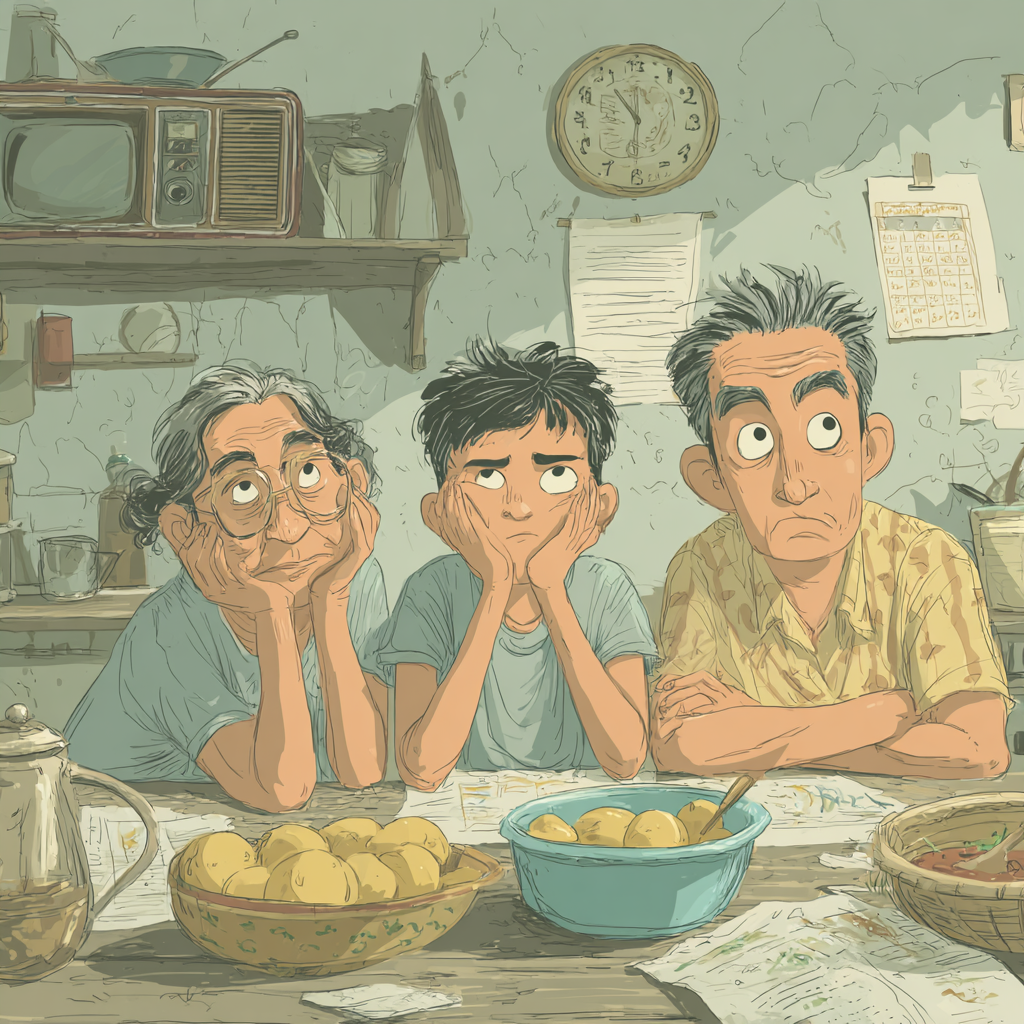
Filipino root crops sit on the table in a chipped enamel bowl. The surface shines with thin coconut milk, a little oil breaking into small circles, like tiny moons. The gabi is pale, dull, not purple at all, though in my head it was. I taste it and the itch starts at once on the tongue, a faint tingling burn that means someone hurried with the washing. A hot noon. Corrugated roof ticking above. Outside, the yard soil has cracked into plates.
I remember that year as the year without rain. No, not that year. Earlier. The poso handle felt heavier, each pull slower, the metal squeaking in protest. My lola shook her head at the rice jar, tapped the side, heard the hollow sound, and reached instead for what waited under the house. Cured roots. Mud brushed off, dried, their skins shriveled like fingertips left too long in water. Not poor at all, she muttered, even while the phrase pagkain ng mahirap floated in the room from someone, somewhere. It stayed there, like steam that would not clear.
In stories about hunger, rice is always the main character. Rice fails. Rice withers or drowns or turns golden too soon. The camera stays on the fields. Yet in many places the real work of survival rests quietly in the ground, away from the sky and its moods. Filipino root crops hold their breath while fields burn or flood. Kamote tucked into high dry corners. Gabi kept in damp ditches. Ube sleeping under weeds. Not heroic, not noble. Simply there, still there, stubborn.
In schoolbooks, the charts placed rice at the top. A proud grain, center of the page. Root crops appeared in the lower box, almost a footnote. On the chart taro, cassava, sweet potato sat in a tiny box at the bottom edge. Not crammed, exactly, more like forgotten and then shoved in late, as if someone remembered them only when the page was already full. Substitute. Second choice. The words shaped how children spoke in the yard. When someone brought boiled gabi with grated coconut for baon, there was a small curl of the lip from a classmate. Rice with canned meat meant progress. Root crops pointed backward, to hardship, to the province, to brown feet in irrigation canals.
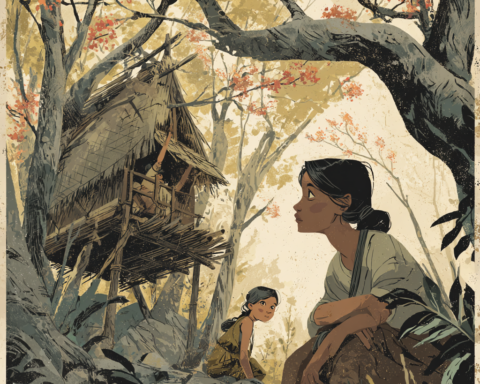
Yet long before those charts, long before polished rice in sacks, the ancestors dug more than they harvested. Archaeologists speak of early tuber use in the islands, of taro traces on tools, of gardens layered with roots and vines where we now expect flat fields. Rice arrived, gained prestige, tied itself neatly to ritual and tax and empire. Filipinos learned to treat tubers as backup, something to fall on when the grain failed. Status settled on the plate without a vote. A root that had fed many generations turned into evidence of lack.
Recent seasons bring a different reckoning. El Niño stretches across months. Typhoons swing in odd directions. Farmers weigh risk in new ways, talk about varieties that hold water better, or need less, or survive when rivers jump their banks. Agricultural studies push drought resilient crops. Extension workers visit upland communities with laminated charts, talking about gabi, kamoteng kahoy, ube, how these roots stay firm when fields crack. On paper the language shifts. From poor mans food to climate smart choice, though the soil does not care for slogans.
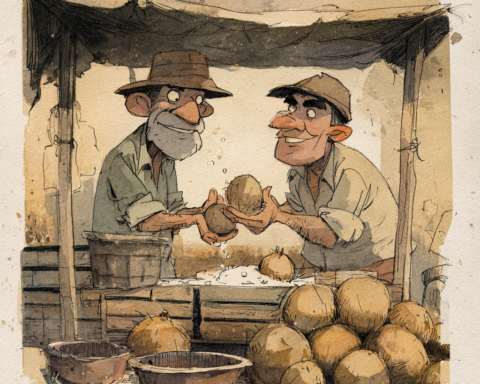
In the city, the story runs on another line. A café lists taro chips fried in coconut oil as a gluten free snack. A salad bar sprinkles roasted gabi cubes on imported greens. In Sydney or Singapore, a bowl named “Island Roots” or “Pacific Energy” might feature Filipino root crops, although the staff have no map for their names. The same tuber that once drew snickers on a school bench now sits in a white bowl under soft light. Same itch on the tongue if preparation slips. Same old memory hiding under the plate.
At home in the province, older relatives still speak with a small shrug when gabi appears on the table. Wala nang bigas, kaya ito na naman. No rice, so we’re eating this again. The sentence carries both shame and relief. Relief first, if one listens closely. Something to slice, to boil with coconut milk, to share. Then shame, arriving after, taught by many years of ranking food by price and polish. Root crops lack shine. The double feeling sits in the pot. Warm. Heavy. Hard to stir away.
One afternoon I followed my uncle to the low part of the land, where a thin trickle of water still slid through. The mud smelled sharp, green and sour at once. We stepped over flat stones. He pointed with his foot, there, there, dig there. The stalks of gabi looked tired, leaves drooping like old hands. My first thrust with the bolo missed the corm and sliced only wet earth. Wet earth, wet earth, the phrase repeated in my head, sticky. When the root finally came loose it felt cold against the palm, smooth, almost shy. I dropped it once. Bent down and grabbed it again. Wiped it on my shorts without thinking. When I saw the gray streak on cloth and the same color on my hand, I paused, irritated, at both mess and root, then said nothing.
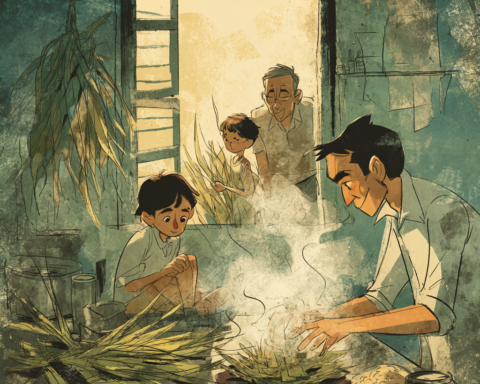
Cooked, that same gabi thickened our thin coconut broth. It made the stew feel more than it was. Or perhaps I only thought so, trying to persuade myself. My lola added dried fish, singed on the wood fire, and a handful of pepper leaves. The dish had no grand name. No restaurant version yet. No English on the menu. Beside it on the table sat a small saucer of salt, and for those who wanted, crushed sili in vinegar. We ate quietly. Small sounds of chewing. Spoons knocking on enamel. Under it all, the light itch on the tongue from a bit of gabi not washed enough, the kind of small mistake no one bothers to mention. Hunger stepped back for a while. Tomorrow stayed uncertain, but the riverbank still held a few more roots. For now that was enough.
Today, climate reports speak in numbers and curves. Degrees, millimeters, yield loss. Policy papers mention Filipino root crops as part of adaptation, nearly as an afterthought, though their role sits at the center of lived survival in many barangays. The graphs feel far from the cracked plates of soil in the yard. Yet each time someone bends down to pull gabi from heavy earth, a quiet negotiation with weather takes place. No ceremony, no speech. A hand closes around a plant that stayed alive under stress. A decision made generations ago continues, almost unnoticed, almost casual.
Now when drought comes back in my head, I do not picture a rice field lying flat and dead under the sun. I start instead with the chipped enamel bowl in my hands, still a bit warm, rim worn thin and dark from years at the sink, and my mind stays there longer than feels comfortable. Inside, Filipino root crops, soft and silent. Gabi sliced into thick wedges, some pieces already falling apart, giving up starch to the broth. The memory itches a little, like the tongue after a hurried meal. Pride and embarrassment mix in the same spoonful. Poor mans food, the children once teased. Climate food, the experts now say. For those at the table it is simply food. Enough for one more day. Enough to remember that resilience often waits underground, out of sight, until someone reaches down.