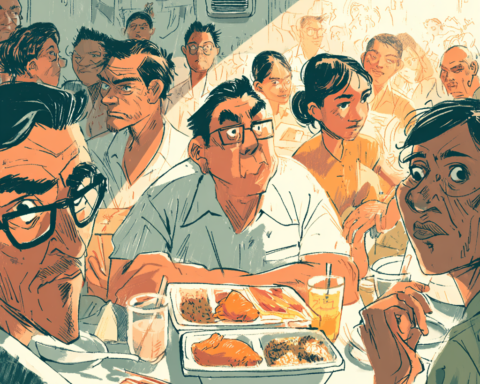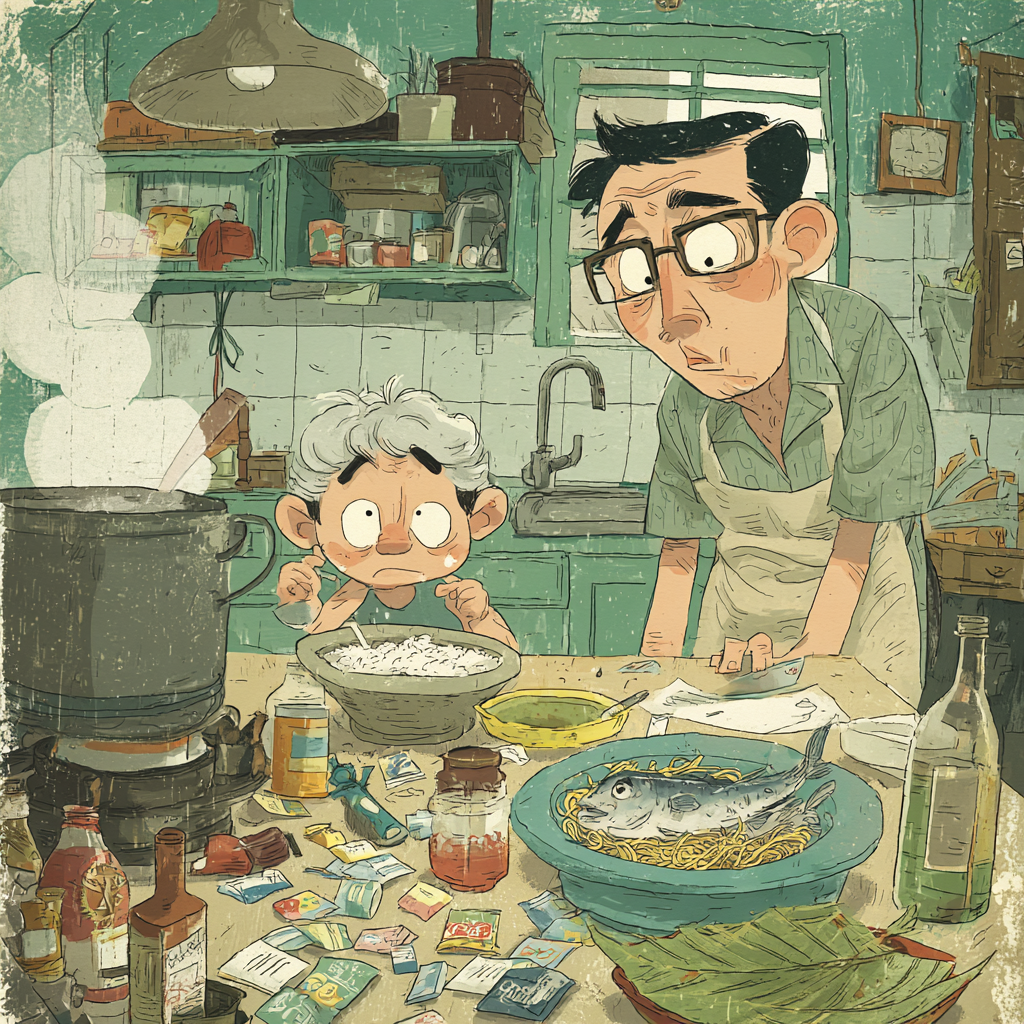
The packet tears with a quick hiss, a bright line of soy sauce sliding over leftover adobo on white rice. On the table there is no glass bottle, no heavy garapon. Only small limp envelopes of flavor, lined up beside the spoon. In that quiet moment, with plastic corners piling near the plate, Filipino sachet culture sits there without speaking, yet guiding how the meal looks, smells, and feels.
In many homes the kitchen drawer now holds more foil and plastic than metal. Pouches of suka, powdered sabaw, instant kape, dishwashing liquid in thin envelopes, shampoo for tomorrow’s bath. The sari sari store on the corner sells breakfast, laundry, and merienda in the same form, hanging from wires like prayer flags of corporate color. Filipino sachet culture touches the first sip of coffee in the morning and the last rinse of plates at night, often without any thought about how this habit took root.
Before this age of hanging packets, flavor usually arrived in heavier forms. Vinegar in reused soft drink bottles that sweated in the palengke air. Soy sauce in tall glass containers behind the tindera, labels faded from repeated washing. Sukang paimbabaw in the karinderya traveled in reused beer bottles or small recycled jars, the neck sticky from constant pouring over grilled pork or isaw. Even the act of refilling held its own rhythm. A child walked to the store with bottle in hand, stood in line, smelled the salt and sour while waiting. That walk trained the tongue as much as the taste itself.
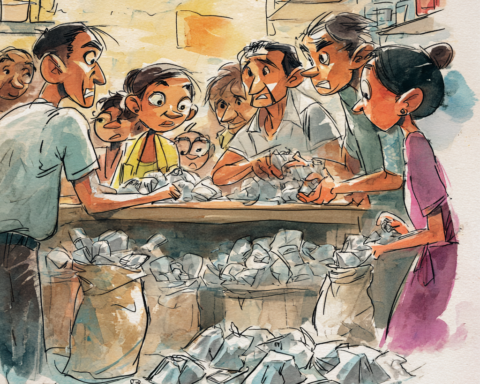
Filipino sachet culture grew on top of another old habit, the culture of tingi. Buying only what fits today’s budget, not tomorrow’s. World Bank reports describe the country among the largest users of single portion plastics in consumer goods. Yet tingi long existed before foil. It lived in the sari sari store that opened a pack of biscuits so one piece went with a five peso coin, or counted three pieces of kendi into a child’s palm. Previous generations practiced tingi through human hands, scooping sugar, tilting a jar of cooking oil, deciding how much credit to extend. The sachet did not invent smallness. It industrialized it.
Inside the modern supermarket, the logic of Filipino sachet culture stretches from toiletries to food. Vinegar and soy sauce appear in lines of tiny triangles, priced for the shopper who pays day by day. At the frozen section, marinated meat already swims in sweet orange liquid inside plastic. Street grilled chicken intestines travel from factory to sidewalk in sealed bags of marinade, their story written in barcodes instead of the handwriting of a local tindero. The step between field and plate grows crowded with logos, expiry dates, and tear lines.
There is a price for this convenience, counted not only in centavos but in texture and smell. Sarsa sa bilao for pancit at a birthday once came in a bowl, thickened by the cook’s hand, skin forming on top during the jeepney ride. Today it often arrives portioned into identical plastic packs, each one squeezed like toothpaste over noodles already slick with oil. Vinegar for chicharon travels in clear sachets taped to the plastic tub, sharp and thin, flavored to last on a shelf instead of a day at the stall. The ritual of dipping into a communal bowl, of smelling the sour before tasting it, shifts into the quick habit of biting a plastic corner with the front teeth.
Step away from the sink. Past the damp shirts near the drum, out through the small iron gate, the street opens up. In the barangay the canal beside the tricycle line sits low and brown, smelling of detergent and old rain. Empty sachets float along the edges. Old packets of soy sauce and shampoo lie next to powdered juice and instant noodles, the print on them rubbed almost white by the dirty water. Some sit tangled in the roots of the kakawate; one is pinned under a flattened tsinelas that seems to have belonged to the canal for years. A dog sniffs at the water once, loses interest, and trails after the taho man. In another town by the sea, a fisherman stands ankle deep at dawn, shaking out his net, and finds a thin strip of plastic stuck to a piece of galunggong scale between his fingers. He flicks it away, shakes his head, and mutters, basura na naman, not quite a joke, not yet a complaint. Environmental studies now name the Philippines among the big sources of plastic in the sea, much of it traced back to the world of single use sachets that fits the rhythm of low daily wages. Each tear across a tiny corner feels light, almost weightless. Multiplied by millions of meals, the gesture shapes rivers and shorelines.
Yet judgment falls too easily on the poor household that depends on these packets. Refrigerators cost a month’s wage. Large bottles of condiments lock up cash that needs to stretch across fare, tuition, rent, and sudden illness. For many, Filipino sachet culture solves the daily problem of how to flavor food when money arrives in pieces. A one peso packet of soy sauce turns plain rice and egg into something that feels closer to ulam. The sachet answers a real hunger, both for taste and for short term survival.
Still, elders remember another system of access. The bote dyaryo buyer roamed the streets, exchanging empty glass for coins. Refill stations at neighborhood groceries topped up bottles of vinegar and soy sauce from larger drums. In some towns this practice survives, but often at the small, idealistic health store rather than the everyday corner shop. Where refill stations remain, the conversation with the vendor includes discussion about strength of vinegar, saltiness of soy sauce, and where the batch comes from. Taste becomes negotiable, not fixed. Without the sachet’s pre measured authority, cook and seller share responsibility for flavor.
In many provinces, food still arrives wrapped in banana leaves or layered in bilao lined with dahon. Fresh kakanin sweats gently inside leaf packages tied with sari string. Fish from the market travels home in woven bayong instead of plastic bags when older habits persist. These older containers shape the food. Rice flavored by banana leaf picks up a faint grassy scent. Sticky rice pressed against thin plastic picks up only condensation. The leaf decomposes in the backyard. The plastic waits in a dumpsite for a future flood to move it along.
For the Filipino kitchen, the hard question rests not only on pollution but on memory. What stories grow out of the daily act of tearing small packets with the teeth. A child who grows up with sachet soy sauce and vinegar might never learn the difference between sukang Iloko, sukang tuba, and the bright synthetic vinegar in mass market packs. That child’s map of flavor aligns more with supermarket shelves than with regions and seasons. Filipino sachet culture does not erase tradition overnight, yet it nudges the tongue toward a narrower, more standardized taste.
Some families quietly push back. In the weekend market, a mother stands in the crush of bodies with two old glass bottles pressed against her ribs so her hands stay free for her purse and change. When she reaches the front she sets one bottle on the table for vinegar, then slides the other forward for soy sauce, counting out coins with the same tired hand. Later, back at the sink, dishwashing liquid waits in a cloudy soft drink bottle, refilled from the big container at the neighborhood store. Above it the nail where sachets once hung sticks out of the wall, bare. They ask the ihaw ihaw stall to pour suka into a reused container rather than hand over fresh plastic. These small gestures sit beside larger efforts from environmental groups and local governments that experiment with refill centers and plastic free sari sari stores. None of these efforts look as neat or as glossy as the sachet display at the mall. Yet each one keeps a little more conversation, and a little more taste, alive.
Filipino sachet culture will not disappear in a single ordinance or viral campaign. Too many livelihoods, habits, and price points tie into it. Perhaps the more grounded question sits at the table. When vinegar arrives at your next meal, how does it travel. Through a bottle wiped by many hands, a clay jar once used by a grandparent, a leaf folded around dipping sauce, or one more small rectangle of plastic. Each choice plants its own memory. One day, a child will reach for flavor. Their fingers will remember what they held.