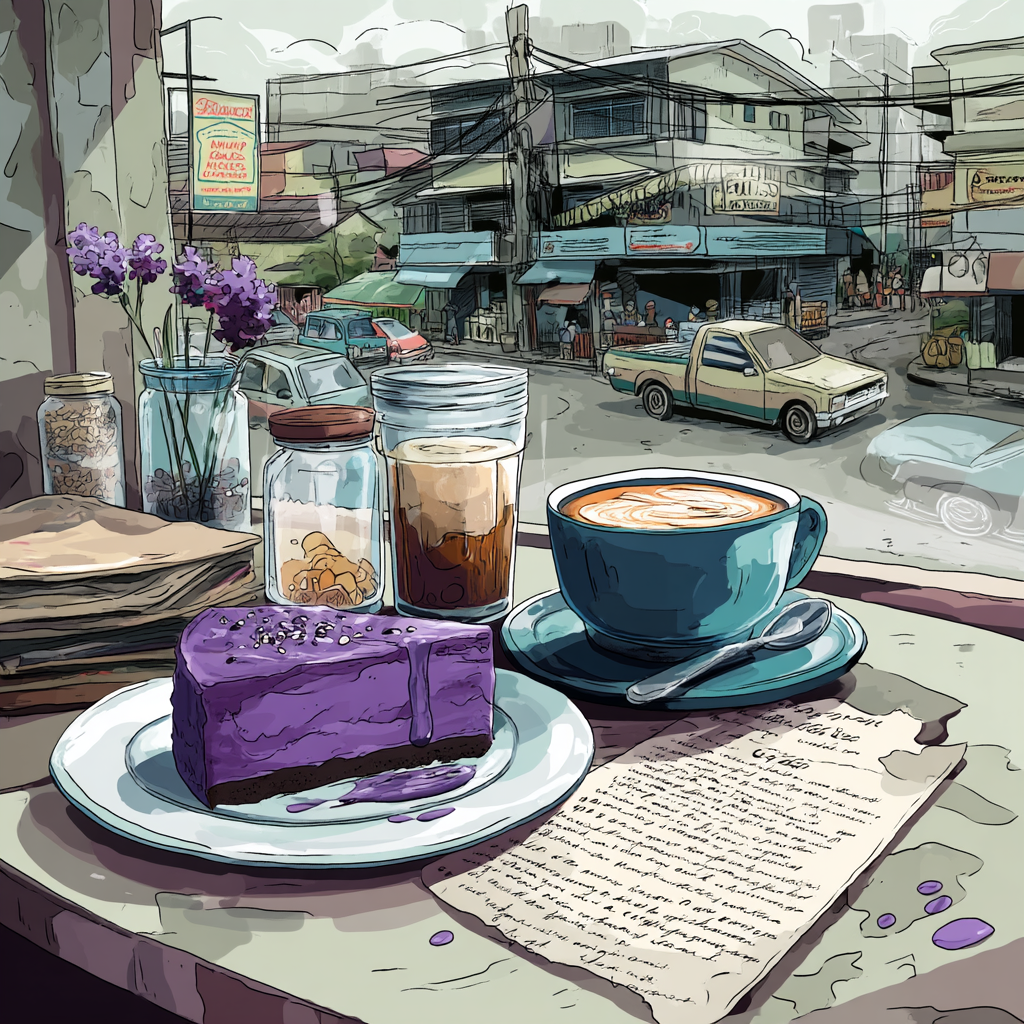
The latte arrives with a thin violet swirl on top. Sweet steam rises in the small cafe. At the next table, someone raises a phone before they taste it.
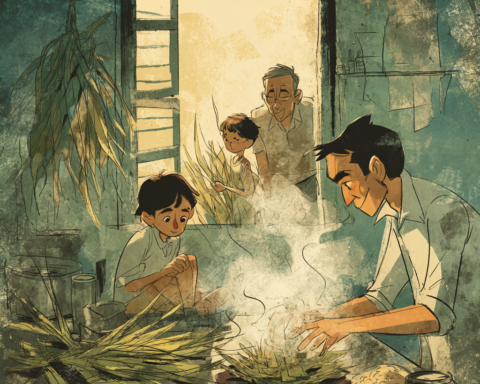
In another kitchen I remember a different violet. My mother leans over a wide kawali, arm moving in slow circles through mashed ube which clings to the spoon. Sugar, butter, condensed milk, the smell of toasted milk and root. This is the labor which turns a plain tuber into ube halaya, the base for many a Filipino ube dessert at home.
The root itself long predated the word dessert. Ube, the purple yam, once sat with other kakanin on banana leaves, folded into rice, pressed into cakes which lived beside daily meals rather than after them. Spanish friars wrote about yams in the islands, but grandmothers knew them in the hand, peeled, boiled, pounded. Long before the present trend, Filipino ube dessert existed as something quiet, sticky, and local.
On the highway out of town I watched for the first scrap of cardboard with ube halaya written in marker. A man from the next barangay dragged out a plastic table and lined up jars while the lids were still warm from his kitchen. Jeepneys stopped in a short line as drivers bought one jar each and pushed it in beside bundles of pechay or a rolled banig. By evening in Cubao, an aunt stepped off a Baguio bus with halaya and peanut brittle swinging from her wrist, the thin plastic stretched white at the handles.
Then the violet moved. It spread into halo-halo, ice cream tubs, bakery rolls on metal racks at the neighborhood panaderya. The color carried memory. A scoop of ice cream on top of shaved ice still hinted at long stirring in the kitchen, even if it came from a factory. The idea of Filipino ube dessert still leaned on home.
The present wave looks different. In cities like Los Angeles, Dubai, Melbourne, even Tokyo, ube lattes and cheesecakes sit in chilled glass cases beside other colored sweets. Often the first move comes from Filipino bakers who miss flavors from home and test them in the neighborhoods where they work. They tuck ube halaya into brioche and work it into laminated dough, sometimes streaking it through basque cheesecake. Filipino ube dessert walks into a global script where matcha and chai already have a place.
Screens shape the next layer of the story. One week a baker posts a short clip of violet dough on TikTok. A home cook follows with a tray of ube cinnamon rolls on Instagram. Soon a food writer calls ube a trend for the year. Color moves quickly through these feeds, outrunning the slower stories of harvest, grating, and long stirring at the stove.
Then come the larger players. International chains test an ube doughnut for one season. A hotel pastry chef adds a purple layer to a tasting menu. An algorithm favors the most saturated photo, so the lightest tint seems dull beside the electric violet of artificial color. Soon the idea of Filipino ube dessert risks flattening into a shade on a screen.
Something is gained in this spread. Ube brings Filipino food into conversations where only ramen, pho, and Korean fried chicken once stood. A diner in London learns to say the word, even if the first plate arrives as a neat cube of flan on a white plate with a single violet smear. Diaspora families feel a small shock of recognition when a cafe abroad offers anything tagged as Filipino ube dessert. Pride travels through those menu boards.
Yet something leaks out in the process. In many global kitchens, the tuber itself never appears. Powder, extract, and imported jam stand in for a root which stains fingernails during peeling. The story narrows to color and sugar. A croissant filled with sweet purple paste does not carry the memory of watching an elder test the halaya with the back of a spoon. Filipino ube dessert becomes portable, but thinner.
In our neighborhood the bakery sat half hidden behind a line of parked tricycles. The glass case fogged each morning, so the first sight of ube ensaymada or ube pandesal came through a blur of sugar and breath. Office workers in worn barong lined up with schoolkids, calling the owner by nickname and pointing at trays instead of naming each piece. Across the avenue, years later, a new cafe tried one purple bun on its menu. The staff kept asking one another if it was selling well enough to stay, as if the flavor itself were on probation.
Filipino cooks still push back in quiet ways. Some insist on fresh root when they manage to find it abroad and accept the extra work. Others write long captions under their photos, naming ube halaya and crediting parents or lola. A few bring back context through tasting menus which pair ube courses with stories of sugar rations, wartime scarcity, or long bus rides with plastic tubs of halaya on a lap. In those rooms, Filipino ube dessert regains weight.
The question is not whether ube should travel. It already has, through migration, balikbayan boxes, and instant mixes in luggage. The question sits in who shapes its meaning on the table. When overseas Filipinos run kitchens and businesses, the trend links to remittances, rent, and the wish to see their own histories taken seriously. When others adopt the flavor with little interest in its roots, the violet turns into another seasonal color, easy to replace when the next thing arrives.
Still, even in the most staged setting, a spoonful sometimes does its work. Someone raised on plain butter cake tastes ube and wonders why the sweetness feels rounder, why the aroma sits closer to roasted nuts than candy. A guest at a potluck compares the glossy cafe tart with the dense square of homemade halaya beside it. Inside those small tastings, Filipino ube dessert widens again, linked back to the root in the ground and the arm tired from stirring.
Ube will continue to move through lattes, cheesecakes, and croissants, through turon fillings and party cakes in violet frosting. The work ahead lies in keeping the link between color and context, trend and labor. Each time we name the root, remember the stirring, and choose where to buy our sweets, we help decide what Filipino ube dessert means, and who it feeds first.