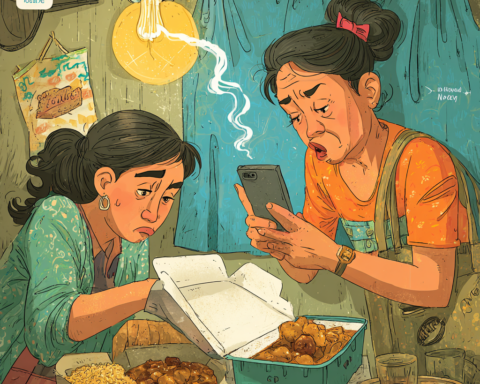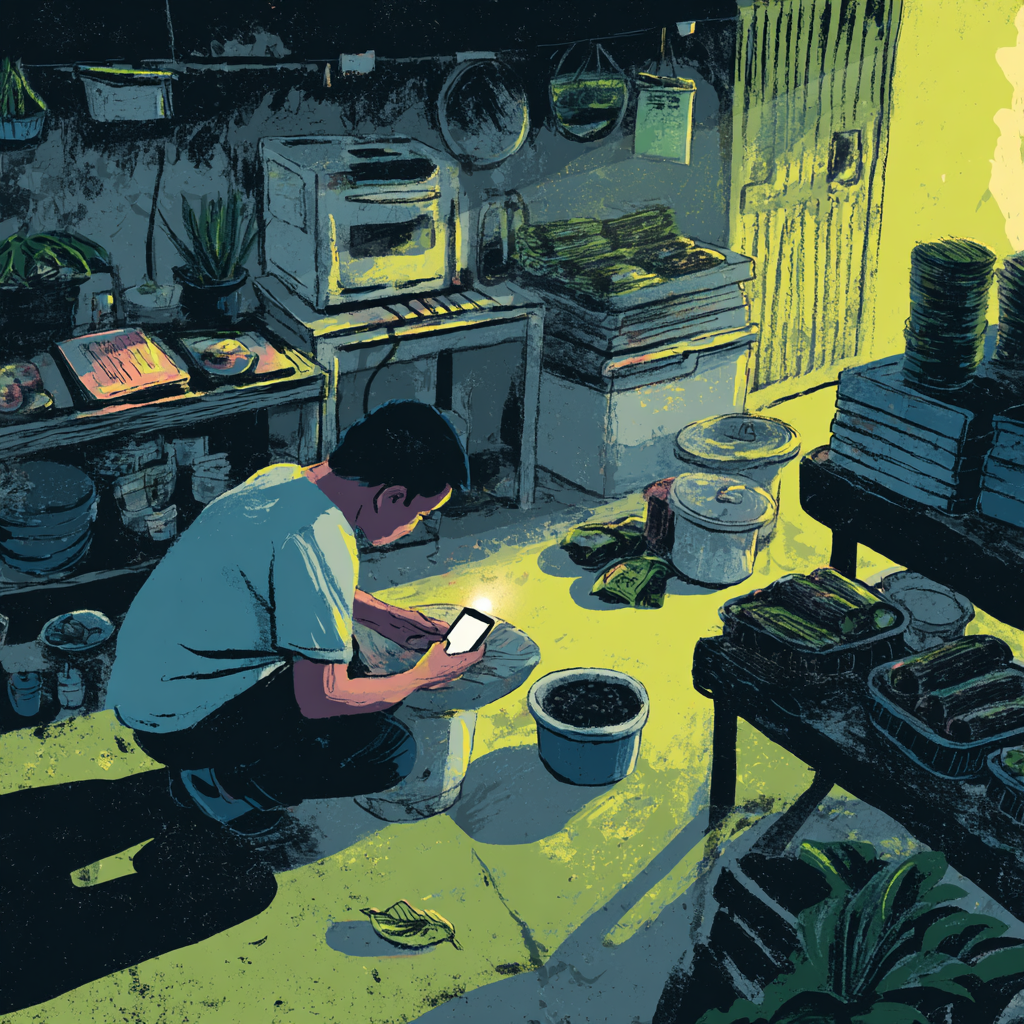
The foil sticks to itself in the heat. She peels it back carefully. A hiss of steam. Inside: finely chopped pork, bits of fat curled, an egg that looks like it barely made the trip still whole. Rice packed tight beneath. Above the washing machine, plastic tubs—stacked, labeled—catch the light from the bulb.
She clicks the lid shut. “That’s the last sisig today.” She checks the address on the phone screen. Two taps, and it disappears.
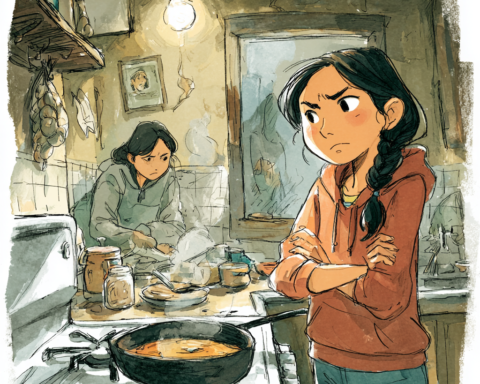
We’re not in a restaurant. We’re in her garage. A box fan whirs near a wooden prep table. One fluorescent tube overhead casts the place in blue-white.
“No walk-ins,” she adds. “They’re not supposed to know it’s a house.”
The signage is digital now: a phone name on the app, a photo cropped just right, and three rows of heart emojis below a caption. She runs three brands out of this one kitchen. Sisig Republic, Lumpia Luz, Kare Kare Central. Different colors. Same rice pot.
She used to run a carinderia two corners down. It had a rusty tin roof and repurposed school chairs. In the afternoons, tricycle drivers filled the tables. One man always asked for extra sabaw of nilaga, even in summer. She gave it free. “He paid in kind,” she says. “Recos to others.”
When lockdowns came, she stacked the chairs, closed the front, and scanned receipts she couldn’t pay. She looked at the Facebook group for home cooks and saw someone recommend FoodPanda logistics. “So I tried. At first just for friends. Then I got orders from barangays I’d never been to.”
It worked. But something shifted.
Before, food meant table. Meant bodies side by side, spoon passing over plate, shared sauce in chipped bowls. She misses hearing customers argue about fish bones. Kids running around legs. Someone yelling at the TV above the fridge.
Now, just the ping of a phone. Names she doesn’t recognize, phone numbers with no voice attached.
She moves behind me, flicks open the rice cooker. Steam clouds her glasses.
“They want the picture to feel like a proper plate,” she says. “That’s what the egg is for.”
She holds up a plastic laminated menu for Sisig Republic. No address. Only an order number and an estimated time.
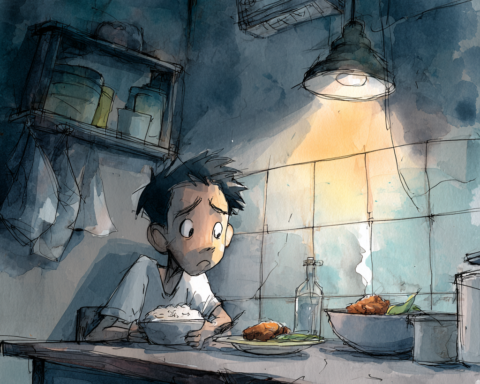
“Before,” she says, scooping rice into a box, “you didn’t eat alone without a reason.”
You shared tapsilog with classmates after P.E. Ate laing beside coworkers inside a packed sari-sari. Waited for rain to pass while biting into tokwa’t baboy still too hot. Even if you ordered quick, someone asked, “Kumusta? Regular?”
The noise mattered. The sight of pans being refilled. An auntie calling from the back, “Mabilis lang ’to.” The sound of someone laughing over a bone pile.
When she started delivery, she still said “thanks” to riders. Some came, nodded, left. Others gave exact change wordlessly.
“Now I just leave the bag at the gate,” she says. “Para mabilis.”
She reaches into the freezer and pulls out pre-packed longganisa. Hometown-style, a little sour. “Ilocos type,” she says. “Request ng isang suki.”
Does she still see the same people who used to eat at the carinderia?
“Maybe,” she says. “But on the app, I’m just another icon.”
She tried putting her real name as the store once. But she got a message from the platform, advising against using person-identifiable names for branding.
So now it’s all brand logos, tidy icons, filtered dish shots.
We sit for a while on a stepstool—her only chair. She watches the screen tick. Another order flashes: kare kare, extra bagoong.
“I keep doing what I know,” she says, tightening a lid, wiping sauce off the edge with a rag. “Same bagoong my mother taught me. You dry-fry the shrimp before mashing. Keeps longer.”
There’s pride in that. But it lives behind orange containers now. Food you eat while scrolling. Delivered by someone who doesn’t know where it was cooked.
She remembers a family who came every Sunday. Five of them, always sharing kaldereta, passing forks. The father would ask about rent prices nearby. The mother liked her banana turon. After weeks of silence, she saw their surname again online—on a new order.
“Was them, I’m sure,” she says. “They picked the exact same meal. I checked the names and guessed by the address.”
She didn’t include a note. Doesn’t want to pull people out of their illusion.
“But I added extra rice. Old habit.”
I ask if she misses the carinderia. She takes a long pause before answering.
“I miss knowing their faces.”
There’s a silence between pings. The room smells of sealing tape and used oil. The fan sputters.
But she doesn’t stop moving. Lids stack neatly beside tubs. Her fingers press rice to the edges, forming a canvas for the main dish. She places the kare kare carefully, sauce on one side, greens on the other. Then a strip of white label glued firm.
She says, “They’ll eat at different tables now.”
She doesn’t say it like grief. Just a shift. A change in where the food lands.
“But if it tastes close enough to memory,” she says, handing me a box, “maybe they’ll feel someone still remembers them.”
We both pause. Then she calls out: “Next rider’s almost here.”
The gate creaks. The world outside keeps going.
And inside the garage, one more spoonful of bagoong gets packed with care.