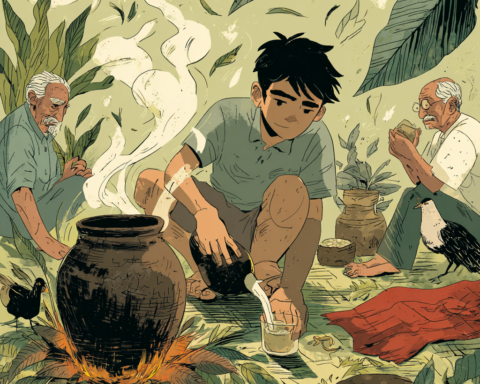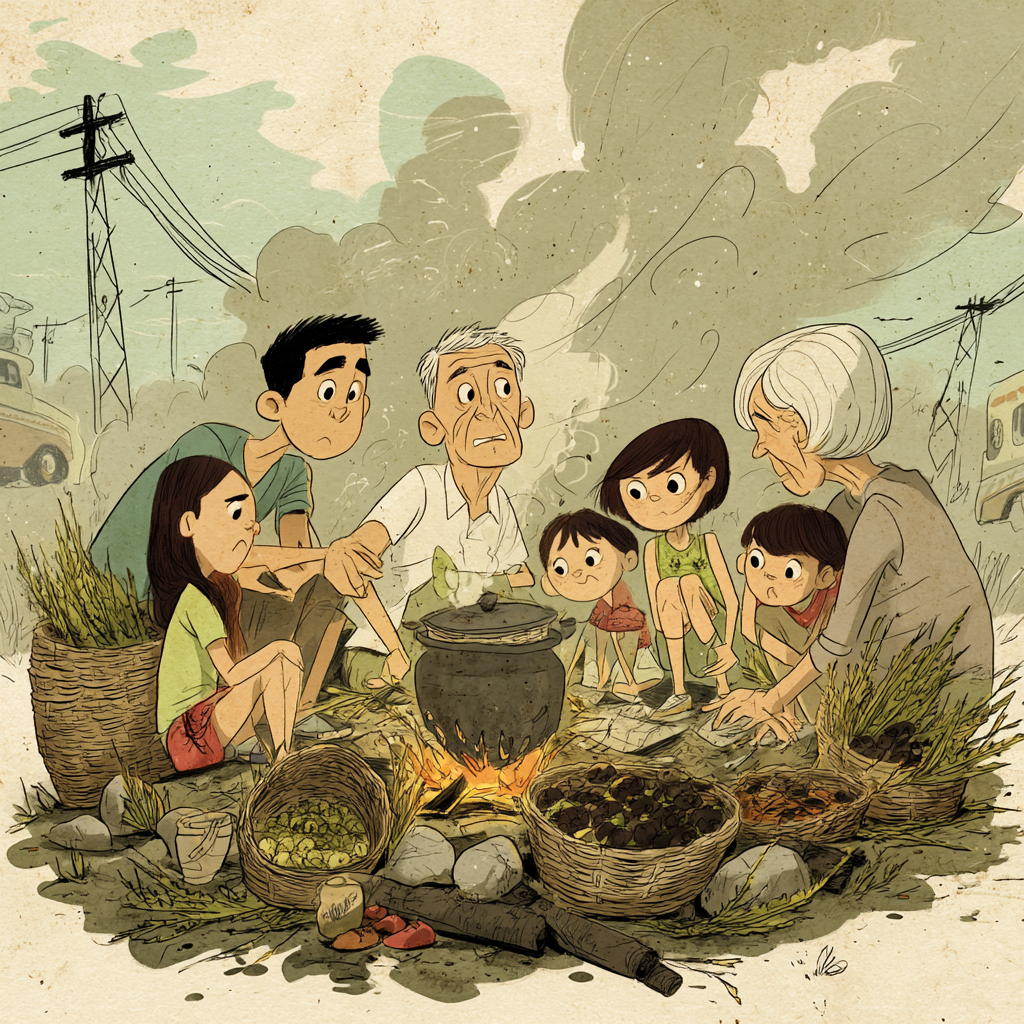

Indigenous food systems sit in the thin smoke from the fire beside the forest edge. The pots blacken again. A boy waits with a woven kaing, half awake, feet still damp from the path. First smell is sharp, like rust and banana peel. No, more like young talahib leaves burned too long. Someone laughs at his face.
On the ground lie greens that look ordinary, even a bit tired. Pako, kangkong from the creek, tender shoots of rattan, a crooked pile of ube and gabi with mud still clinging. No labels. No prices. Only the quiet clink of bolo against stone and the soft call of names in a local tongue that city people rarely hear. Slow naming. Then slow washing in the cold flow where the mountain meets the deeper trees.
The elders say the forest is not a pantry. It is, somehow, a pantry. This double instruction sits in the boy’s head while he watches his aunt slice fern tips with a dull knife. He hears rules that sound simple, almost casual. Leave the smallest. Leave the mother plant. Never strip a slope bare. A rule, then another rule. Later he learns that each rule echoes a story about a year of thin harvest, an illness, a river that carried away soil after someone cleared too much.
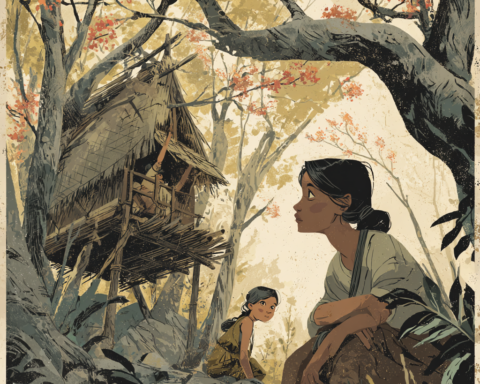
You stand at that same edge, years later, and the scene shifts. A government map colors this land in one block: public forest. Ancestral domain exists in another layer of paper, in signatures that still wait for offices to move. On the ground, though, ownership feels different. Children recite where a clan stops and another begins, not with fences, but with a bend in the river or a particular old lauan tree. Food lines and kinship lines overlap, then pull apart, then meet again.
These are indigenous food systems in daily clothes. Not policy words, but feet on a slippery log bridge, hands in cold soil, baskets softened by too much rain. A cousin wakes before sunrise to check silag traps along a ridge, yet returns with more leaves than meat because meat travels fast among houses. Tubers stay longer in the ground, so tubers wait. The logic feels rough at first. Then you see the pattern of who eats first when storms rush in. Children. Old ones. Widows. Some weeks the hill seems generous, then clams up, then loosens again in a way no one fully trusts.
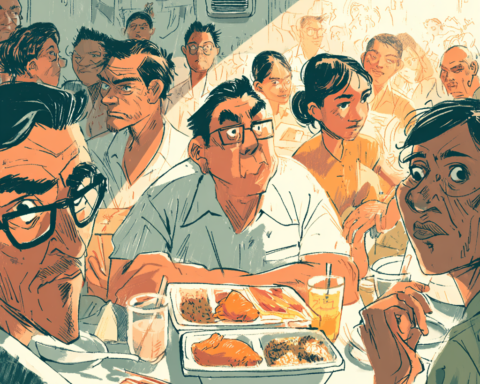
What they pull from the trees does not stay up there in the shade. They travel outward through habal-habal rides, sacks on jeepney roofs, buckets that drip on bus floors. In the lowland town, fern fronds sit in plastic tubs at the palengke, near cabbage from Baguio and imported apples. A vendor calls them “native vegetables” in a quick, flat voice. In a health store beside a pharmacy, similar greens appear again, now framed as “wild foods” on a small handwritten sign. Price climbs with each step away from the ridge.
At the mountain house, no one uses the phrase indigenous food sovereignty. The idea lives in other words. Wag ubusin. Mag-tira para bukas. Leave a patch of kamote untouched, keep one tree of bayabas for birds, never hunt in the same gully twice in one week. These rules sound like old auntie nagging. Still, they work as a rough code for biodiversity conservation long before the term reaches the barangay hall. One elder shrugs and says, “Kung ubos na, kawawa tayo.” Then falls quiet, because the thought of empty hills does not sit easily in the mouth.
The boy grows, leaves for school in the lowland city, and sits in a classroom where forest appears as a line in a textbook. Production, extraction, protection. Three neat boxes, no mud. He hears classmates say forest communities live on “subsistence.” The word slides past his ear like a small insult. Subsistence, as if the meal beside the fire at dawn lacks surplus thought, surplus story. Later he reads papers about indigenous food systems and feels a strange distance. The terms match his memory, yet the smell of smoke goes missing between the paragraphs.
He returns one December and finds the path wider. Motorbikes reach almost every house now. A small store near the chapel sells instant noodles, tinned meat, pale bread in plastic. Children like the salt and the sweet. Their parents say the food is fast, easier on days when rain cuts off the trail to the old gathering grounds. Convenience enters, then stays. On some mornings, pots still simmer with pako and wild ginger. On others, aluminum foil from instant meals glints near the river stones. Two pantries now. One from the forest, one from the sari-sari shelf. Both helpful, both risky in different ways.
Here the contradiction bites. The forest rules once grew from hunger and care. Take only part of a stand of langka seedlings. Share meat from a trapped wild pig until nothing remains but skin and stories. Today, stronger cash needs creep in. School fees, phone load, transport fares. A hunter who once waited for the right season now faces a buyer who offers a lump sum for more meat, more rattan, faster. Reciprocity pulls against the tug of quick money. You feel the thread strain. You hear someone mutter that the river feels thinner, that the old swimming hole looks smaller, then fall silent mid-sentence, as if the thought overshoots itself.
I used to think the phrase indigenous food systems belonged to reports or conferences in distant hotels. No, the phrase belongs here first, where a grandmother lifts a pot lid and checks if the forest flavor turned too bitter, then throws in a handful of tagbak seeds to balance the taste. She tastes, frowns, laughs at her own mistake, then adjusts. Self-correction lives in her hand. What she knows does not sit still on a shelf somewhere far away. It shifts in her hand each time she reaches for one fern tip for a child, then pauses, and leaves another shoot alone for seed.
You listen to her talk to a young girl. The lesson sounds simple. Count the fruit, leave some. Do not pull the roots of this vine, slice near the tip instead. Walk the same trail twice in one morning to see what changed. The girl repeats the steps, a little bored, yet follows. You hear the rhythm of repetition. Ganito lagi. This is how practice enters the body, not through speech about heritage, but through sore legs after a day of walking uphill with a heavy basket. Heritage tastes like boiled ube dipped in salt while rain rolls over the ridge.
From outside, observers describe systems, strategies, links between forest and nutrition. Those views help, in their own lane. Inside, people speak more about relationships. To spirits, to specific trees, to unseen owners of a hunting ground. A gathering trip opens with a small offering, sometimes only a pinch of rice or tobacco at the foot of a trunk. The act appears small, nearly nothing. Yet in that pause sits an old idea: you do not take alone. You ask, even when no answer comes. Reciprocity, pushed into muscle memory.
One afternoon, along the forest edge, a boy points to a slope where an outside company once planned a plantation. The project did not proceed, after protests and paperwork and weather. He says the hill still remembers. Fewer birds there. Fewer mushrooms on rotting logs. His words feel half-belief, half observation. He pokes at the soil with a stick and watches ants shift a seed. In that restless gesture, you read both worry and stubbornness. The mountain pantry shakes, yet still offers. For now.
For a reader far from these ridges, the phrase indigenous food systems might sound distant, even abstract. Yet the lesson sits close to your own kitchen. Take enough, leave some. Know the names of what feeds you. Listen when a place says rest. A pantry is not only storage. It is a record of every hand that filled it and every hand that reached in. When the forest stands at your table, in a bowl of greens that once grew in deep shade, the question turns back on you.