The bartender drops ice into the coupe. A clean, bright sound—one you don’t hear from a mug at the sidewalk sari-sari. With two fingers on the stem, he turns the glass slightly and wipes the rim without looking. There’s a bottle at the center of the counter—lambanog, but dressed up with gilded serif type and a cork top.
He shrugs when I ask how long it took.
“Almost three months,” he says. You’d think it was a weekend project the way he shrugs.
He chuckles. “Used to be people were scared of it.”
He measures a precise ounce into the jigger. The bar smells like charred herbs and machine-cooled air—clean, controlled. Nothing like the sweet rot of fermenting sap just off the tree. He twists a peel of dayap over the glass. The oil makes a slick bloom on the surface.
He places the coupe on a slip of napkin and says, “We call it The Archipelago.” Like it’s a passport.
It looks like gin—clean, even cold—but the breath rising from the glass is unmistakably coconut. Raw. Slightly sweet, slightly off. Like something still growing.
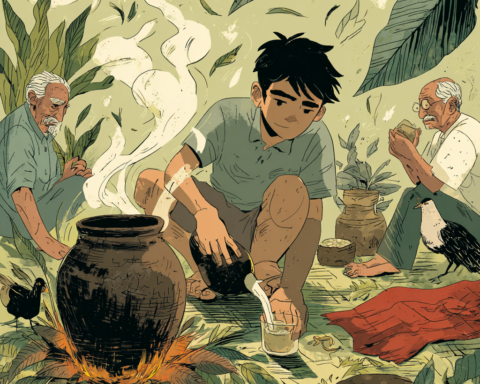
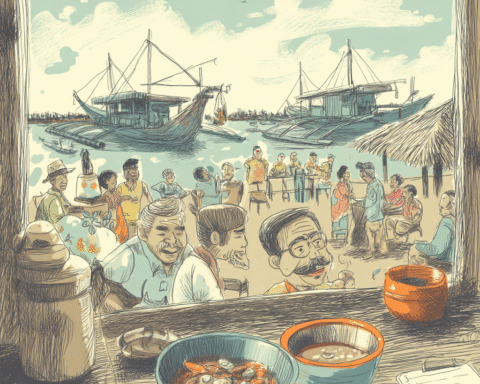
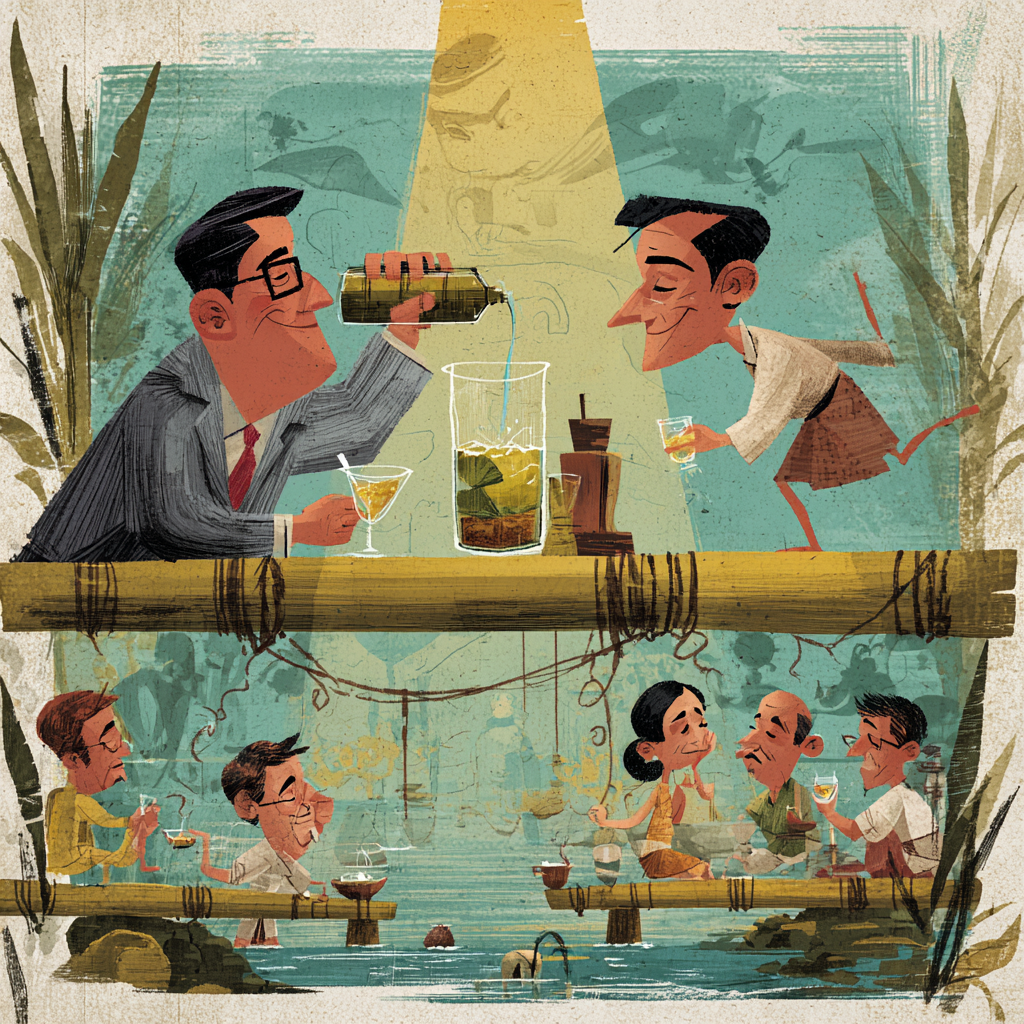
In the provinces, lambanog isn’t poured into coupes. It’s shared. One glass that travels from hand to hand. The tagay circle is a singular rhythm of one glass for many mouths. After drinking and wiping the rim, you pass it. The sugar in the gut needs sumsuman—green mango dipped in salt, or sizzling sisig from a plastic-wrapped plate. That drinking has heat. It shakes the dust out of your body.
Here, it’s curated.
The young man two stools down adjusts his phone to catch the light. He asks the bartender about the distillation.
“We double distill,” the bartender says. “Takes out the impurities. Keeps the notes.”
The young man nods once, then lifts the glass halfway, waiting a beat as if checking again for the scent before sipping.
“Not what I expected,” he mutters, eyes still on the liquid. “Thought it’d bite like rum.”
He sets it down but doesn’t push it away.
Lambanog and tuba weren’t always welcome in places like this. They were the cheap pours. Spirit handled without pretense. Something bought in reused Coke bottles and passed under trees, not served beside rosemary smoke. Seeing it now, glinting under a spotlight, printed in antique typeface, feels like triumph.
But I wonder what had to be trimmed to make it fit on that shelf.
Tuba, the coconut wine, never lasts long in the city. By afternoon, it starts turning. The drink is meant to be caught in motion—just sweet, on the edge of sour, smelling of air and tree. You drink it before the sun flips. Once bottled, it pauses. Once stabilized, it forgets.
The bartender brings over another glass—deeper in color.
“Aged lambanog,” he says. “Like brandy.”
I tip it. Smooth, smoky, almost respectful. The coconut’s there, tucked under the wood. It tells its story in the language of gin and whiskey. It doesn’t interrupt—it fits in.
He walks bamboo pathways strung between trees. No harness. Just grip, timing, and the slope of each trunk. The sickle rides his waistband, his collection tube light against one shoulder. The sap foams as it drops in.
When it gets here, none of that speaks. The label says “craft” and “heritage,” but not “danger.” Not “barefoot.” Not even “tree.”
The bottles on the back shelf all face front. Labels squared. Lit from below like a stage. Nobody reaches for them without asking first.
“Foreigners love it,” the bartender says. “They say it tastes like tequila but floral.”
He sounds pleased.
The kitchen teaches us to refine. Strain the sauce. Skim the fat. Clarify the stock. It’s cleaner, yes. But sometimes that means it stops tasting like the thing we started with. Spirits do this too.
This one is precise. The bite held back, the floral leaning in just enough. A chill that lands properly. On paper, a success.
But a little lonely.
Everyone here drinks their own glass. No passing. No checking who’s next. No slow arguments about old songs. The drink was lifted. But when it rose, the table fell away.
Up here, the place is calmer. More polished. But something’s missing in the quiet.
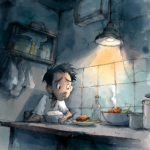
I finish the last sip. The warmth lingers in the chest, full and steady. It brings a kitchen in Lucban into view—squat, two windows, plates piled in a basin. A mug passed across the table without asking. Laughter mixing with gossip. A lolo at the door, arguing with the dog. No recipe. Just repetition.
The bartender offers water and aligns the bottle again.
I shake my head. “No, thanks.” More water, maybe. Not another rewrite of something already whole.
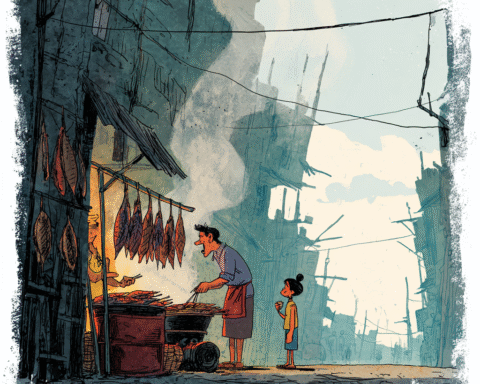
The bartender brings the check in a small cup. I glance at the amount, then picture the mangagarit squinting under midmorning sun, waiting for the bamboo pole to fill. When I push open the bar’s glass door, the air outside grabs my neck. I don’t make it to the tricycle stand before my shirt clings.
It was a good drink. A very good one. But walking away, I missed the rougher version. The one that didn’t ask to be remade. The one still climbing trees.
Meaning doesn’t always come from polishing. Sometimes, it lives in the parts we were told to leave behind.