Philippine rice farmers listen to the sky before they trust any calendar. At noon in Nueva Ecija, the field looks wrong. Hairline cracks slice through the mud where water usually sits brown and glossy. A thin smell rises, not the usual wet-earth smell. At first he thinks it is sweet, then realizes it is closer to straw forgotten in some hot church storeroom. The boy climbs off the pilapil, pushes his heel into the soil, expects a little give around his skin. The ground hardly responds. Hard, almost like road. His father bends, lifts a lump of earth from the crack. He holds it in his palm for a moment. When his fingers close, the soil is already falling apart, dry across his hand.
At home the kitchen keeps its own small stash of rice, in a corner sack or a plastic tub, never fully empty. On the table it feels simple. Bigas becomes kanin becomes leftover bahaw without fuss. The path from field to plate used to follow a rhythm that felt old and sure. Philippine rice farmers remember that rhythm in their bodies. Plant when the first real rains come, harvest when the wind turns a certain way, call the neighbors for pahina when the grains bend heavy. Now the rain comes early then stops, or comes late and hard, or arrives in the wrong month altogether. A forecast says wet season. The dust at their feet says something else.
In Camarines Sur, an old farmer describes the new pattern and then shakes his head because pattern is the wrong word. He says the rain used to arrive with a steady walk. This week it came as a rush, crashing down during flowering, knocking some of the palay flat. The month before, when they needed water for transplanting, the sky stayed white and empty. The river slid low along its bed, quiet, pretending to be smaller than it was. Philippine rice farmers in the barangay start joking that the monsoon has become makalimutin, forgetful. The joke sticks in the throat. It feels less like a joke when fertilizer washes away in a single night.
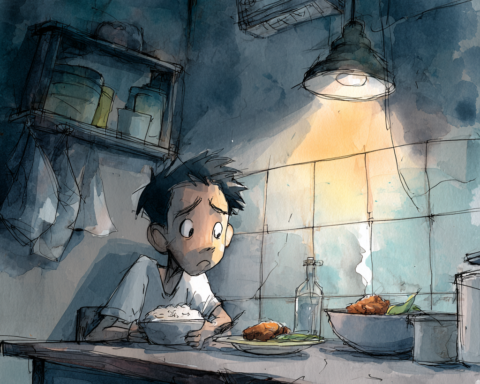
Taste changes first in small ways, almost private. A family in Isabela sits down to dinner after a long day replanting the same patch where seedlings dried out last week. The rice on the table looks normal. White mound in the middle, steam lifting in a slow column. But the child chewing at the edge of the table frowns. The grains cling in clumps, some soft, some with a hard center that refuses to break. The flavor is fine at first bite, then there is a faint bitter edge near the husk. Stress lodged in starch. The mother spoons more sabaw from the tinola pot, thinking extra broth will hide it. The rice soaks, yet the unevenness stays. One part swollen, one part stubborn.
Philippine rice farmers notice these small shifts more than the city shopper reading a label in the supermarket. Drier fields, shorter water in the canal, heat that presses down late into the evening. All of this folds into the grain. A drought year leaves the kernels lighter, more chalk in the center. A year with sudden floods leaves patches of the field yellow, so harvest bags carry mixed stories from the same plot. At the mill, the sound of husks hitting the floor does not change, but the owner weighs each sack and sees the difference. A few kilos missing here, a few there. Numbers that do not shout. Numbers that nag.
Many Philippine rice farmers are told to shift to new climate smart varieties. Shorter growing period. Stronger stems. Better survival when floodwater rises too high or when heat clings overnight. Extension workers bring small packets of seed in bright plastic. They speak of resilience, of risk reduction, of future losses avoided. On trial plots these seeds hold on when old varieties fail. In the kitchen, though, arguments start quietly. The new rice feels different between the fingers when washed. A lola mutters that it lacks fragrance, that her lugaw cools faster, that suman made from the new grain does not hold together in quite the same way. She still cooks it. The family still eats. Yet in her voice there is a small, steady grief for a taste that slips out of reach.
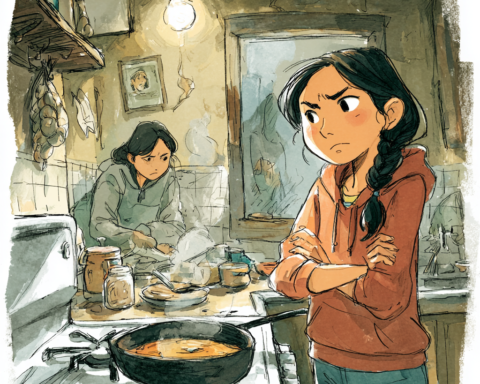
In Pampanga, a father stands by a withering field and tells his son that the land is tired. Then he corrects himself. Not tired. Confused. The plants are still green in parts, the leaves sharp against the sky, but the soil below cracks in lines that grow deeper every day. It looks tired and alive at the same time, which feels like a contradiction he cannot solve. His son, fresh from senior high, talks about working in town, about an opening at a hardware store with air-conditioning. The father tries to say the field needs him. The words stall. He switches and says instead that the family needs someone who understands both soil and salary. The thought hangs there. Not finished.
Across the archipelago, many Philippine rice farmers age in place while their children leave. The average farmer grows older each year. Knees worn from decades of bending and straightening in water, backs shaped by sacks lifted over and over. Some still want their children to inherit the fields. Others quietly hope the kids will find work where rain is a story and not a threat. In one small town, a daughter who studied agriculture returns to help her parents plan irrigation, map planting dates, read new rainfall data. She sits with them at the wooden table, draws boxes on paper for dry and wet spells, then looks out the window and laughs in a short, tired way. The rain does not read charts, she says. The rain should know. The rain should know.
The body keeps score of these shifts. Hands crack a little more in hot years. Feet sink deeper in sudden flood after weeks of dust. Sleep comes in short pieces on nights when the radio talks about El Niño, when neighbors swap news of pumps that stopped working. Philippine rice farmers get up before dawn anyway, sit for a while, listen hard for any sound on the roof. A few soft taps, a scrape of branches, they try to guess from those scraps whether rain intends to stay or is only passing by. Many mornings it turns out to be plain wind, leaves rubbing against each other, and they lie back down with the same tight feeling in the chest. Not sickness, more like the body bracing for another dry day.
In the city the plates keep filling. Morning rice with tuyo, then again at lunch beside ginisang upo, then the same grains from the fridge fried with garlic and egg close to midnight. People grumble when prices jump or when the rice at a carinderia turns out too wet or stuck together, or worse, half basa, half tutong. The words spill out toward the server, maybe toward the next customer in line, then fade as soon as the meal is finished. By then the story of the grain is already long. It has passed through delayed monsoon, scorching noon, sudden downpour, low dam level, fuel hikes, trader negotiations. The spoonful in the mouth contains all of that, even if most eaters never taste it. Or do taste it but do not have the words for what feels off.
When the rains forget their schedule, the work of Philippine rice farmers becomes a series of adjustments that do not always add up. Change planting date. Change seed. Change fertilizer timing. Change crops entirely in some seasons. Each decision tries to answer a sky that no longer keeps steady time. Yet the table at home still expects rice, white and filling, indifferent to the algebra behind it. Some days a boy in Nueva Ecija presses his palm into the soil again, testing if it still gives way. The earth holds firm in spots, crumbles in others, so he fails to read it cleanly. His father looks up, searching the clouds for old signs his own father once trusted, and the shapes feel off, stretched, slightly wrong. In the kitchen a battered rice cooker starts to hiss, water rolling over a few cups of grain, and no one knows yet what kind of harvest sits inside.