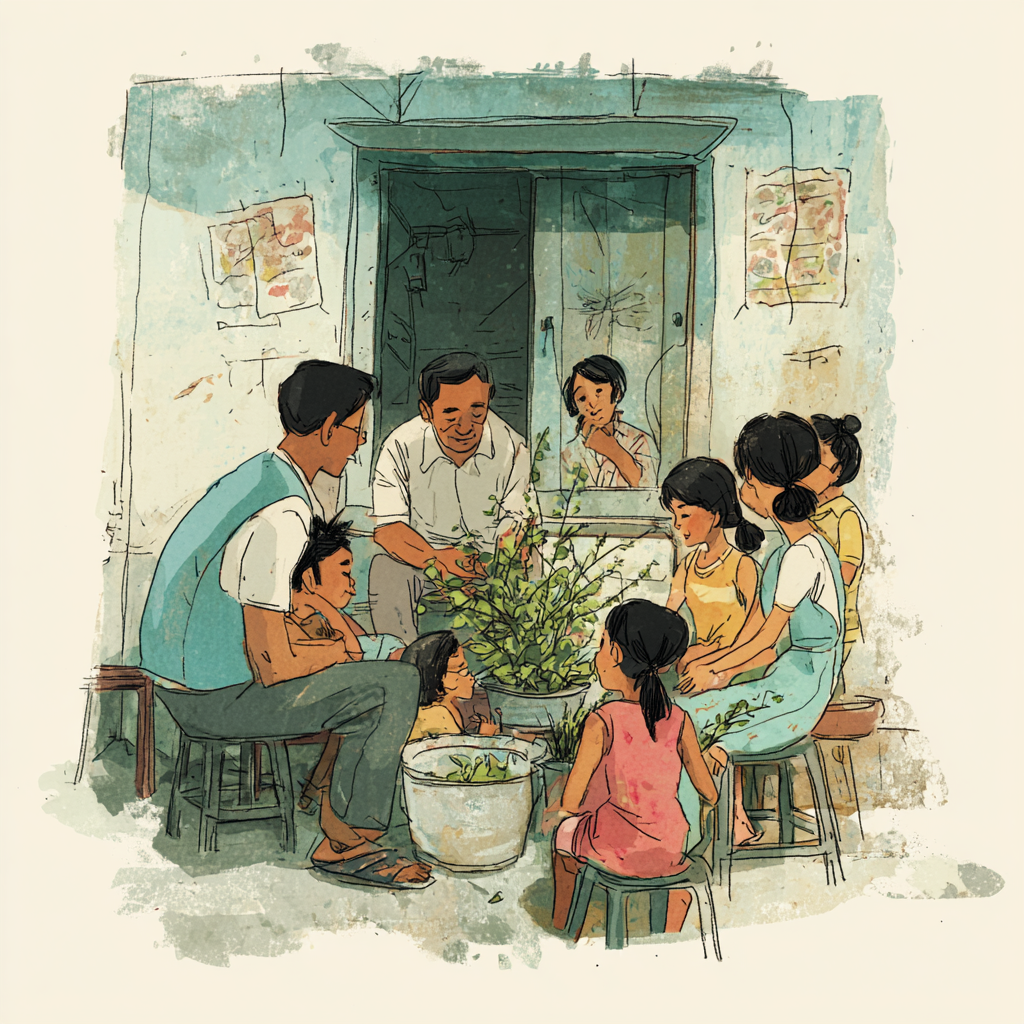
Inside the barangay health center it smells mostly of rubbing alcohol. Boiled leaves leave a fainter smell behind it. Under the open window, a low table holds a plastic basin. Fresh herbs lie on old newspaper beside it. A row of small plastic chairs stands near the basin. Children fill each seat and lean forward.
A community health worker in a faded green vest lifts a stem of sambong. The leaves look soft from a distance. Seen up close, the edges show tiny teeth while the surface holds a faint fuzz. She crushes one leaf between her fingers. A sharp smell escapes, like camphor with a hint of wet ground.
She asks the children what it is for. Silence sits between the chairs. A boy in a Spider-Man shirt finally raises his hand and says it must be for cough. The girl beside him guesses fever. One child shrugs. He says the plant grows beside the canal, near the wrappers and old slippers.
The worker nods at each reply, then adds her own words. She explains that sambong helps the body release water it no longer needs. Doctors reach for it when stones begin to form in the kidney. Behind her, a laminated poster from the health department lists the same leaf in block letters. The children glance at the poster, then back to the basin, as if the drawing and the plant occupy different worlds.
She sets the sambong aside and picks up another bundle with darker leaves. These belong to lagundi, she tells them. The shrub likes empty lots and the ground near hollow block fences. She talks about its work during asthma. She describes nights when breath comes short and cough will not leave. Many of the children know the syrup that carries this name. They can hum the tune from the commercial. The branch in her hand still looks unfamiliar.
A girl reaches out and touches the stalk with one finger. The worker laughs and moves the bundle closer. Children step forward in single file. They sniff the leaves and wrinkle their noses. A low giggle starts near the front. It spreads as the smell catches in their throats. No one claims a bush like this behind their house.
During a short break, the worker steps outside. I walk with her to the narrow strip of earth behind the building. A thin dusting of soil lies over broken concrete. Plastic wrappers cling to tufts of grass. Near the downspout, a clump of sambong has taken root on its own. She points with her chin. That one arrived without anyone tending it, she says. Children pass it every weekday morning. They never call it by name.
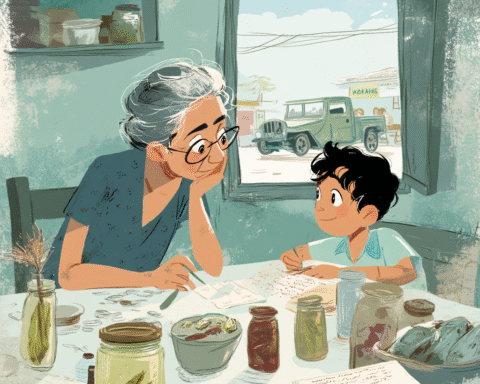
She tells me her grandmother once filled a small yard with plants like these. In the afternoons of her own childhood, the older woman would hand her a plastic palanggana and give instructions. Sambong for bathing a cousin with fever. Bayabas leaves for washing a scraped knee. The girl could not return until she carried the right stems. Her grandmother checked each leaf for shape and smell before it entered the pot.
Now, she says, most parents arrive at the health center with small packets of coins and a list of symptoms. They talk about headache or stubborn cough. Some parents point to a stomach that turns loose. Hands fall quiet on the table while she writes the name of a syrup on the pad. She does not blame them. Medicine on a printed label feels safer than a handful of leaves. She looks at the strip of earth behind the center and thinks of errands that no longer exist.
We step back into the room. The herbs still wait on the newspaper. Children sit in their chairs and swing their legs. The worker lifts a new bundle with smaller round leaves. Yerba buena, she says, the mint that cools a restless head or a sour stomach. She explains how some mothers once boiled it at the end of laundry day. Steam fogs the lone kitchen window in her telling. Another person might chew on a leaf near a stubborn tooth.
A boy frowns. At home, he says, everything with a sharp fresh smell carries one name, mint. He sees that toothpaste has it. Wrappers near the counter carry the word. He taps the table. A question follows about whether this plant tastes like the sweets near the sari-sari store counter. The worker smiles. She tells him this taste belongs to work. Someone must light the stove and wait beside the pot. Another person stands outside near the plants. Yard light thins while that watcher points to the right stem.
When the lesson ends, she lays fresh leaves into each folded paper packet. A strip of sambong goes in first with a piece of lagundi beside it. She adds a small sprig of yerba buena on top. The children line up for their turn. She tells them to bring the packets home. After that she asks them to look for someone in the house. That person should still know the names. An older neighbor. A lola who keeps plants in broken pails.
The children push through the doorway. Slippers slap the floor and voices rise. One boy tears his packet before he reaches the gate. A leaf falls near the drainage canal and clings to the damp concrete. He almost steps on it. The worker calls his name, then walks over to him. She stoops to lift the leaf. Her hand presses it back into his palm and repeats the word sambong. He repeats the name under his breath. The packet disappears into his pocket next to a small toy and some coins.
A light draft comes through the open window and shifts the last stems. Their smell sits on top of the alcohol in the room. In one corner, old vaccination cards sit in a short stack on a table. A thin film of dust dulls the top card. A woman passes the health center with a toddler on her hip. Her steps ease when she notices the bundles of green on the newspaper. Her eyes move from sambong to lagundi. They rest last on the smaller leaves of yerba buena. Her mouth shapes the names without sound while the child on her hip reaches instead for the bright posters of syrup on the wall.