The first time we put a turkey on the garage table, my uncle stabbed it with a fork and said, “Parang malaking manok lang.” It sat in the middle of the plastic table, shiny from butter, while the real smell in the air came from the tray of pansit on the side. Soy, calamansi, garlic almost burnt. Cold New Jersey wind slipped under the garage door. Somebody shoved an old towel in the gap and said grace in a hurry before the food got cold.
That year the turkey came free from the supermarket. Spend enough, get one whole frozen bird. My auntie kept the receipt like a prize. She read the instructions on the plastic three times, in the kitchen light that made everything look a bit too yellow. We had no roasting pan big enough, so she used the ancient kawali, lined with foil. While the turkey roasted, the stove filled with our usual smells anyway. Pansit bihon on one burner, menudo on the other, rice steaming in the corner like it always did.
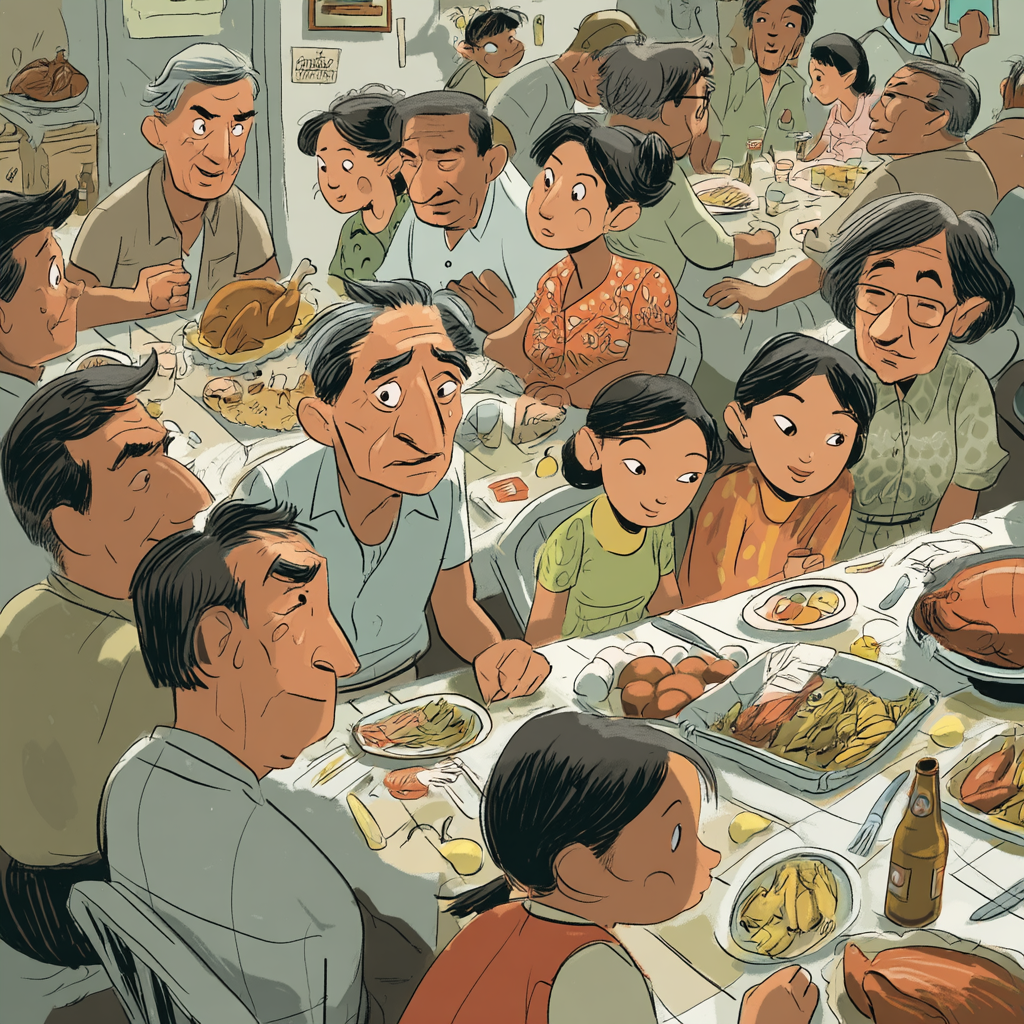
By late afternoon the garage turned into dining room, living room, and barangay all at once. Folding tables appeared from behind boxes of Christmas lights. Old sheets became tablecloths. My aunt wrote “Happy Filipino Thanksgiving” on a sheet of bond paper, each word in a different color because the markers kept drying out. She taped it crooked on the wall beside a rusted bike. No one fixed it. People had more urgent missions: find more chairs, unwrap foil, taste the sawsawan and decide if it needed more suka.
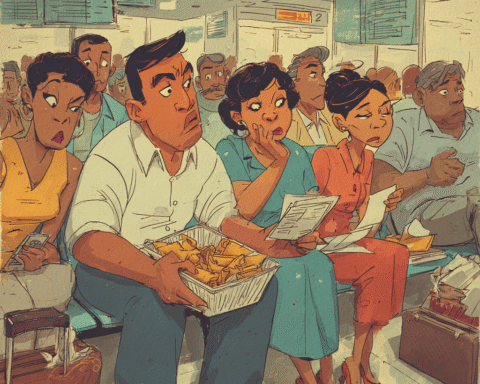
Relatives arrived in waves. A cousin in scrubs, straight from night shift, carrying the tray of pansit that always vanished first. A tito from Queens who got stuck in traffic on the Turnpike, walking in with a box of grocery-store pie and a bag of lumpia he promised to fry “mamaya na lang.” The greetings came in layers. English for the kids. Tagalog for the elders. Ilocano and Bicolano drifting in from the older uncles who slipped into their own memories when no one young listened. Filipino Thanksgiving sounded like that: overlapping tongues, all competing with the hiss of the deep fryer.
The turkey took the center only because the table had no bigger space. Around it spread the real map of the family. One rice cooker sat in the corner, light still on. Another waited on the floor, cord wrapped around its feet, in case more people showed up. On the table, pansit canton rose in a small mountain, cabbage and carrot sliced so thin the pan looked fuller than the freezer that morning. A shallow pan of lechon kawali, skin still singing in tiny crackles. Store stuffing, a bit sad in its foil tray beside a proud bowl of sinigang that my lola insisted on bringing, holiday or not.
At some point my little cousin built a plate that looked like a history lesson gone wrong. Rice first, of course. A scoop of mashed potatoes on top, then a strip of turkey, then two lumpia balanced like small bridges, with a clump of pansit hanging off the side. When school asked about Thanksgiving, he would show this plate in his head and then describe something safer. “Turkey and potatoes,” he told his teacher. At home, he lined up at the rice cooker like the rest of us. Filipino Thanksgiving lived in that split, in the difference between what fit in a classroom and what fit on the plate.
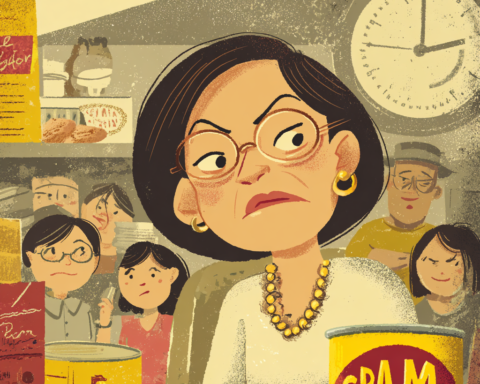
The elders watched the kids more than they watched the turkey. They wanted to see which dish the small ones loved enough to finish. One niece scraped off cranberry sauce and ate pansit with her fingers. Another poured gravy over rice and ignored the turkey. Someone’s teenager took only salad and one lumpia, rolling eyes at everything, then came back later for lechon kawali when they thought no one looked. The aunties noticed. They filed each choice away like small, private data on survival. Filipino Thanksgiving, version for parents, meant tracking how much of the old flavor still stuck to the next generation.
The American neighbors drifted in and out too. In the suburbs, smell travels faster than chismis. One neighbor followed the scent of garlic and charcoal through the driveways, arrived holding a bowl of supermarket mac and cheese like an offering. He stared at the lechon kawali a little too long, then took a piece when my uncle pushed a plate into his hand. On his plate, the turkey sat on one side, the pork on the other, rice underneath both, confused but happy. No one explained anything. Filipino Thanksgiving had no program, only refills.
Later, when the noise dropped a bit, the turkey finally got its moment. Someone carved it with the same knife used for lechon earlier. The slices looked neat on the plate, pale against the darker meats nearby. We ate it with gravy from a packet, tasted fine, nothing to write home about. The real comfort sat in the corners of the table. The pansit that clung to the last bit of sauce. The forgotten end pieces of lumpia, still crunchy. The last square of cassava cake that stuck to the pan, which my lola scraped and ate standing by the sink, shaking her head at the mess and smiling anyway.
Cleanup told its own story. Turkey bones into a pot for soup because nothing went to waste. Leftover pansit into old ice cream tubs, labeled by a tita with a ballpen that skipped. “For Kuya night shift.” “For kids’ baon.” The pumpkin pie, barely touched, slid back into its box. The ube ice cream went first. As soon as the cover popped, the titas and kids shared spoons and dug in, scraping purple streaks from the corners. When the driveway emptied and the garage went back to its old echo, we were left with folded tables, the smell of garlic stuck to the walls, a faint oil mark on the floor, and one sad plate with a cold lumpia and half a slice of turkey cooling by itself.
In the days after, Filipino Thanksgiving continued in quieter rooms. A nurse reheated pansit and turkey in a staff pantry that smelled of microwaved popcorn. A kid opened a lunchbox in the school cafeteria, felt the garlic hit the air, weighed the usual choice between pride and pretending. At home, my mother stood in front of the fridge, eyeing the containers, planning new combinations. Turkey for arroz caldo. Bones for stock. Pansit fried again with extra garlic. No one framed it as “heritage” or “fusion.” It came down to this: food within reach, and people still gathered enough to eat it together. In that sense, Filipino Thanksgiving worked, even when the turkey turned out dry.