The pack sits on the counter beside the till. Bright green letters, grease-blurred from too many fingers. “Chilimansi,” it says. Below it, a photo of noodles tangled in themselves, glistening. A slice of calamansi, a bright red chili, a fork creased into the staging. The girl behind the counter shrugs when I lift one and ask if this one’s better than the original.
“Has extra kick. That’s all,” she says.
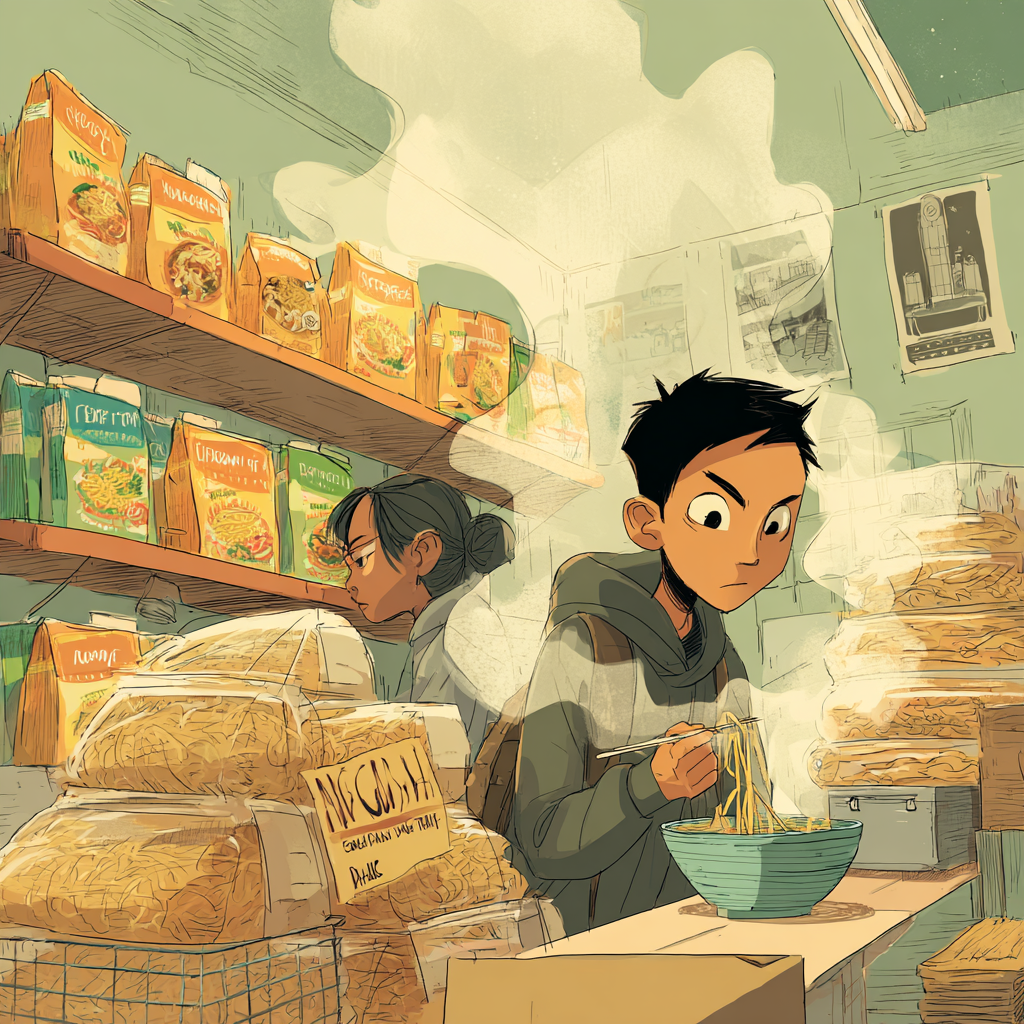
The shelf behind her holds Lucky Me! by the box—chicken, chilimansi, original. Singles sit below it, seventy-five cents each. On top, a sign written in Sharpie: NO COOKING INSIDE.
Her name is Reanne. She wears mascara heavy enough to flake, and a name tag from Burlington Pharmacy even though this is Manila Calling—a store that sells prepaid load cards, Emperador brancy, banana ketchup, and pancit canton by the case.
A boy comes in while we’re talking. White hoodie, no hood. Filipino nose, American voice. He heads straight for the instant noodles, doesn’t pause, grabs the orange one. The original. As he checks out, Reanne nods toward him. “That one. Every Friday lunchtime. Says it’s his sabaw.”
She laughs, then calls after him. “Hoy, leave us some next week, ha!”
He smiles without turning.
When the place was new, Reanne says, the owners stocked frozen longganisa, bangus, tuyo. But nobody wanted to cook. Nobody had stoves. “They just want the taste,” she says. “Easier if it’s in a sachet.”
She takes an expired pack, cracks it open, drops the brick into a bowl. Presses the microwave button with her elbow—:45 on the clock.
While we wait, another customer appears. High school backpack, school polo shirt, fake AirPods stuck under messy hair. He gets six. Three chilimansi, two sweet and spicy, one original.
“No calamansi left?” he asks. Reanne points with her chin toward the empty row.
He leans closer. “My ate mixes that one with vinegar and egg. But I just eat it straight.” He taps the pack. “You can’t ruin this. You just—” and he does a twisting mime with his fingers, the gesture of kneading flavor into noodles.
She doesn’t offer him a bag. He shoves them into his jacket and leaves.
The pack turns inside the microwave, spinning slowly. The air picks up a mechanical garlic and soup base smell. Dry at first, then oily.
Reanne offers me a forkful. Not warm enough to burn. Still hits hard—onion sharpness, garlic oil heavy, sweetness that hangs. “It’s not real pancit,” she says. “But it’s the one people know.”
None of these kids know how to stir-fry, she says. “My Lola had a karinderia in Las Piñas. Real pancit canton. With chopped repolyo, bits of liver, slices of carrot styled like flowers. I can still do it—if I visit her—but here? No space. No wok. Just this.”
She taps the plastic bowl.
Her story isn’t unique. Across Canada, like in the US and UK, there are Reannes stocking boxes flown from Manila, watched for by third-generation kids who associate pancit not with smell-of-gisa but with cellophane and supermarket fluorescent. Ask them about pancit and they picture sachets, not steam. “They feel Filipino,” Reanne says, “because they eat this. It’s weird but cute.”
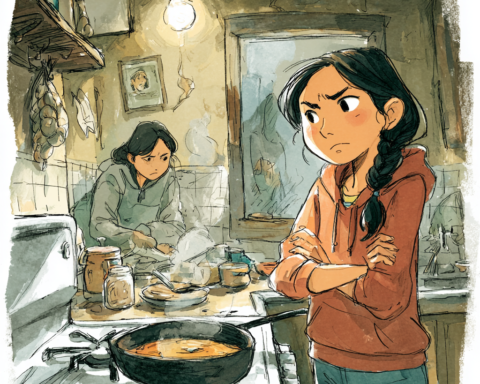
Some open the packs inside dorms where the windows don’t open all the way. Microwave on top of a borrowed mini-fridge. No plate. Just the bowl the noodles came in. They squeeze the oil, tear the soy, shake the powder like they’ve done it all their lives—even if it’s their first year living apart from anyone who cooked.
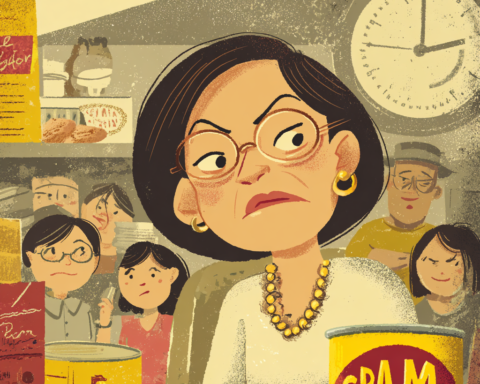
There’s a grandma who comes in twice a month. Retired nurse. Lives in a building with other widows from Pangasinan, Reanne says. Still wears white sneakers. She buys fifteen.
“She tells me: ‘This is for my apo. They like noodles, but no want mine. Only Lucky Me. They say it’s how their friends know they’re Filipino.’” Reanne laughs. “She says at least they want something.”
That phrase again—at least.
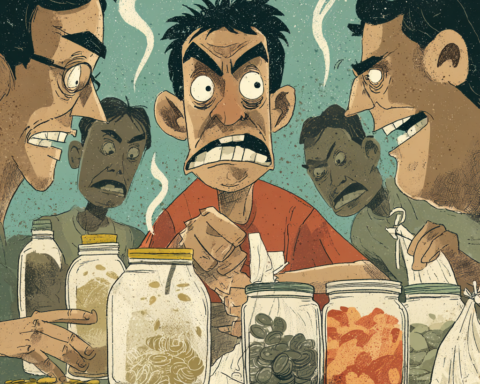
Around the shelves, Filipino identity exists in packets: ube polvoron, banana chips, Mang Tomas, pinipig. But only the instant noodles disappear fast enough to require restocking weekly. Everything else gathers dust. You can eat this in a dorm with no kitchen—just a bowl, a shared spoon, and clean hands to tear the sachets. The oil slips everywhere if you’re not fast.
Some kids doctor it. Add shrimp, egg, spinach. Slice in leftover lechon from their parents’ handaan. But most? They eat it as pictured. No changes. The photo is not suggestion; it is anchor.
Even the name—pancit canton—makes them laugh. “Sounded fancy when we first heard it,” one girl told Reanne. “Canton, like fine dining.” She only knew the noodle on the wrapper—the one she could make herself.
Faded photo near the stockroom shows Manila choked in cars and wires. The old Twin Towers barely visible beneath the glare of afternoon.
Between the shelves and the microwave, the smell never quite leaves. Two sachets’ worth of garlic-onion-oil saturation. It drifts outward even when nothing’s been cooked for hours, nosing its way under shelving units and into shirts.
“Some people come in just to smell it,” Reanne says. She doesn’t mean that day—but once in a while, someone will say it reminds them. Of lola’s kitchen. Of a bus terminal. Of market rain and warm oil.
Reanne tilts the bowl toward the sink. The noodles dark from soy, strands clenched together.
“Me?” she says. “I still eat it. Not always. But sometimes when the store’s empty and it’s raining. I make it. I sit back here. And I eat it slow, like it came from home.”
The microwave hums. A new pack turns inside. Two packets left on the shelf. The air, again, thick with seasoning pulled from foil. The door jangles. Coins hit the counter.
Same sound, same steam, every time.